




| Islam and Politics | |
| 15 Jul 2011, NewAgeIslam.Com |
| Will Al-Ghannoushi Transform Tunisia into an Islamic State? | ||
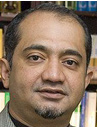 Al-Ghannoushi, who was in exile in London, has returned to Tunisia after the Jasmine Revolution and has already made a mark as the most important voice in Tunisian politics. Many secular intellectuals and politicians in Tunisia fear that Al-Ghannoushi and his movement may use the democratic process to transform Tunisia into an Islamic state and undermine the civil and political liberties of those who do not share his Islamist vision. Tunisia has made considerable strides in terms of granting women equal rights, and there is a genuine fear among young women that Al-Nahda may seek to convert Tunisia into another Iran. -- Muqtedar Khan Al-Ghannoushi, who was in exile in London, has returned to Tunisia after the Jasmine Revolution and has already made a mark as the most important voice in Tunisian politics. Many secular intellectuals and politicians in Tunisia fear that Al-Ghannoushi and his movement may use the democratic process to transform Tunisia into an Islamic state and undermine the civil and political liberties of those who do not share his Islamist vision. Tunisia has made considerable strides in terms of granting women equal rights, and there is a genuine fear among young women that Al-Nahda may seek to convert Tunisia into another Iran. -- Muqtedar Khan | ||
| Will Al-Ghannoushi Transform Tunisia into an Islamic State? | |
By Muqtedar Khan
The Islamist Al-Nahda Party has emerged as a major player in post-revolutionary Tunisia. But what does it stand for, asks Muqtedar Khan
I was in Tunis last week participating in a conference that brought together the main political viewpoints now competing for ascendancy in Tunisia. Several American scholars who study transitions to democracy or Islam and politics were also there. The conference was organised by the Center for the Study of Islam and Democracy, a Washington-based think tank that has been promoting democracy in the Muslim world for over a decade.
Sheikh Rashid Al-Ghannoushi was at the conference, and he spoke about his vision for Tunisia and the importance of recognising the long and enduring non-secular heritage of Muslim societies. Al-Ghannoushi, who was in exile in London, has returned to Tunisia after the Jasmine Revolution and has already made a mark as the most important voice in Tunisian politics.
His movement, Al-Nahda (Renaissance), is expected to be one of the major, if not the major, players in the Constituent Assembly that will write the new constitution of the Free Tunisia. The elections for the Constituent Assembly are scheduled for October 23 2011.
Many secular intellectuals and politicians in Tunisia fear that Al-Ghannoushi and his movement may use the democratic process to transform Tunisia into an Islamic state and undermine the civil and political liberties of those who do not share his Islamist vision. Tunisia has made considerable strides in terms of granting women equal rights, and there is a genuine fear among young women that Al-Nahda may seek to convert Tunisia into another Iran.
Needless to say, Al-Nahda and its leadership deny these allegations, describing them as fear-mongering and insisting that they are just another political party, albeit one that places a greater emphasis on the fact that Tunisia is a Muslim country and one that believes that Islamic values can contribute much to political governance.
The success of Tayyip Erdogan and his Justice and Development Party (AKP) in Turkey has given hopes to secularists that Islamist parties elsewhere can thrive in a democratic context without undermining or endangering democracy. It has also given Islamist parties a roadmap to legitimacy. Will Al-Nahda become another AKP, or will Al-Ghannoushi subvert democracy, once he has benefited from it? Everyone wants an answer to this question.
The situation with the Muslim Brotherhood in Egypt is similar, even though the Egyptian context is more complicated than the Tunisian. Al-Ghannoushi is also different from other Islamists. He has benefited from the political asylum provided by Britain and has lived in a liberal democracy for years and understands how it works. It is to be hoped that by now he has also recognised and understood its virtues.
Al-Ghannoushi has also departed from other Islamists and has in the past argued in favour of pragmatism over ideology, rejected the idea of killing religious apostates, accepted the necessity of coalitions and expressed willingness to share power with non-Islamists. Among all the Islamists aside from Turkey's AKP, which insists that it is not an Islamist party, Al-Ghannoushi's Al-Nahda comes across as the most democracy-compatible of the Islamist parties.
However, many of his critics, especially in Tunisia, are not convinced, and allegations of "double-discourse" are frequently made. The argument is that Al-Ghannoushi says one thing when the secularists and the West are listening and another to his followers. Critics also insist that while he, given his unique experience and education, may genuinely be democratic and even liberal, the rank and file of Al-Nahda are not, as is evidenced from the frequent undemocratic sentiments expressed by many of its youth leaders.
Al-Ghannoushi has conceded that his party could do better on discipline. During the question and answer period at the conference, I asked him whether he realised that if he won a significant share of the Constituent Assembly seats, one of his primary goals, while framing the country's new constitution, should be to protect the rights of those who did not vote for him from those who did.
Will you be able to do this, I asked him. Why don't you put all the fears and suspicions about your intentions to bed by releasing a draft constitution before the elections, and thereby let everyone know what Al-Nahda is striving for?
I was disappointed with his answer. I was hoping for something in the nature of -- "what a great idea: we'll release a draft constitution before the elections," or, "we have already thought of that and are in the process of doing it." But instead all he said was that Al-Nahda was not going to the polls without a programme, and that 150 university professors were currently working on drafting it.
There was no comment on sharing what he or his party would like to see in Tunisia's constitution. Nor did he express a commitment to defending the rights of those who did not vote for Al-Nahda.
I hope that the Tunisian people will demand that all the country's political parties, Islamists and non-Islamists, release a draft of the kind of constitution that they envisage for Tunisia. At the moment, the political environment is full of mistrust, suspicion, and even fear. Self-disclosure that effectively commits the political parties to certain fundamental principles before the elections would reduce the tension and enhance cooperation.
As the Arab Spring spreads across the region, similar disclosures could help reduce the suspicions of those Islamists who claim that they believe in and will work towards establishing democracies. Such disclosures would also force them to commit to democratic principles before they get involved in writing constitutions.
The writer is an associate professor at the University of Delaware and a fellow of the Institute for Social Policy and Understanding.
Source: Al-Ahram, Cairo
|
 9:38 PM
 Moderate Islamist here


 This disregard for a fundamental tenet of good journalism pains me deeply. I am a Syrian national and have been a correspondent of Al Arabiya for the past two decades. These have been decades of turmoil in my part of the world. I have therefore, perforce, spent most of this time covering wars and insurgencies. In all this time I have never knowingly violated the cardinal rule of good journalism, which is to verify my information before airing it – check and countercheck it and do my best not to mislead viewers. To me, therefore, it is all the more distressing to see these principles being treated so casually by so many of my long-time colleagues. Today, my country is threatened with turmoil and destruction at a time when it is the last beacon of secularism and modernity in the Arab world. --
  At the meeting with muftis, Mr. Medvedev returned to the same topic. He noted that Moslem religious organizations are doing a lot to make the Caucasus peaceful. “Sometimes, a religious leader must be very bold to openly say that real Islam has nothing to do with violence,” the president said. “In the last year, over 20 muftis, who tried to withstand extremist interpretations of Islam, were killed.” “Unfortunately,” he continued, “we cannot do away with terrorism overnight. But it is inspiring that we are united in our aims and our efforts. At present, many people of non-Moslem nationalities, who have fled from the Caucasus because of unrest, are coming back to their once abandoned homes. It is up to Moslem organizations to create a friendly atmosphere for these people.”--
  Summer temperatures regularly reach over 40ºC (104ºF) in Iran, but women are not allowed to wear shorts or loose hijabs. Those accused of wearing “western-style” clothes, as well as women whose headscarves fit too loosely, or whose clothes fit too tightly, face humiliation, fines and arrest by the so called morality police. For Iranian women, the feeling of wind blowing in their hair is something they can only dream about since the Islamic clergy came to power. Actresses must wear veils even when portraying indoor activities, such as sharing a meal or sleeping. Iranian people from the various classes, led by women, university students and intellectuals, have risen against it. --
 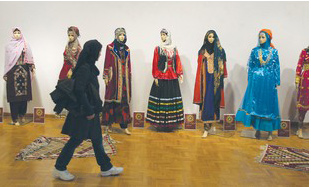 Following the revolution, mixed-gender schools and night clubs were banned, and the hijab became compulsory for any woman living in Iran or visiting the country. Women have had to follow a very specific and restrictive set of dress codes – an ankle length chador or complete headscarf plus long overcoat are the only forms of dress accepted by the ruling clergy.
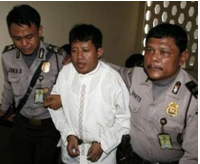 On Dec. 18, 2010, the United Nations General Assembly voted overwhelmingly in favour of a moratorium in respect for the use of death penalty. Had there been a worldwide moratorium, Ruyati and the lives of other Indonesian citizens on death row could have been saved. The time has come for Indonesia to ask itself whether it is really worth keeping the death penalty as a criminal punishment. There is a range of factors that suggest it is now in Indonesia’s interests to abolish or at least have a moratorium on the use of the death penalty. Experience and statistics from around the world indicate that the death penalty is not a greater deterrent then lengthy prison terms. If it is to be an “eye for an eye and a tooth for a tooth” this will soon be a blind and toothless world. --
 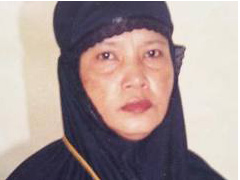 Ruyati was a poor, hard-working 54-year-old housemaid who went to Saudi Arabia to save money for her family. As a domestic worker employed overseas she was vulnerable. According to reports, she killed the wife of her Saudi employer in circumstances of self defence. Other reports suggested Ruyati was often abused by her employer. Her case passed through the Appeal Court and the Supreme Court in Saudi Arabia. It appears the death penalty was sought and justified by Qishas (on the principle of “an eye for an eye”).(Photo: Ruyati: The woman who was beheaded)
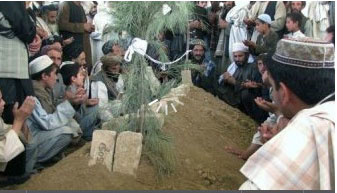 Mumbai Blast: LeT hand? Cops told to tread cautiously