Pages

Friday, July 30, 2021

Liberal Muslims of India Have Always Opposed Cow Slaughter


By S. Arshad, New Age Islam

30 July 2021

A Section of Muslims Have Always Favoured Ban on Cow Slaughter

Main Points:

1. A consensus is emerging among Muslim intelligentia in favour of a ban.

2. Mughal emperor Babur had advised Humayun against cow slaughter

4. During 1857 Revolt and Khilafat Movement Muslims voluntarily abandoned beef.

5. A small section of hardline Muslim clerics opposes beef ban.

-----

Cow slaughter has been a cause of Hindu-Muslim disunity in India as Hindus revere the cow. It is not known when was the sacrifice of cows for Qurbani or for general consumption started in India which has been a Hindu majority country since ancient times. It was most probably started during the Muslim rule but it is also a truth that Muslim rulers had also started to realise that cow slaughter in India was not a right practice as it hurt the religious sentiments of Hindus. According to eminent legal expert Mr Faizan Mustafa, Babur had advised Humayun not to allow cow slaughter as it would offend religious sensibilities of Hindus. The greatest Mughal emperor Akbar who had taken a number of administrative and cultural steps to promote communal harmony among the Hindus and the Muslims, had banned cow slaughter to honour his grandfather's will. However, his move was opposed by the Sufi Mujaddid Alf Sani Shaikh Ahmad Sirhindi who was of the view that Muslims should not be prevented from cow slaughter under a Muslim government.

However, in certain periods of pre-Independence and post-independence India Muslims have not only advocated a ban on cow slaughter but have themselves taken initiative to abandon cow slaughter for the sake of forging Hindu-Muslim unity for a bigger political and national cause. Muslims had abandoned the practice of cow slaughter during the revolt of 1857 to bring greater unity between the Hindus and the Muslims to fight against the East India Company.

The most successful campaign against cow slaughter was started in 1919 by the Muslim leaders of Khilafat Movement like Maulana Mohammad Ali Jauhar, Maulana Shaukat Ali, Hakeem Ajmal Khan, Maulana Hussain Ahmad Madani, Maulana Abdul Bari and others. The purpose was to bring Hindus closer to Muslims to form a powerful platform against the British government. Under this campaign, Muslims not only abandoned cow slaughter but also rescued cows meant for slaughter and returned them to Hindus.

The movement received another shot in the arm by an ideological campaign run by one of the greatest Urdu writers and a Sufi of Chishtiya order Khwaja Hasan Nizami who wrote a book titled Tark-e-Gaukushi (Abandoning the practice of Cow slaughter) in 1921. In his book, he presented arguments from Quran and hadiths against cow slaughter in a multicultural society. Therefore, these political and ideological campaigns had a great impact on the collective Muslim psyche and cow slaughter was discouraged, though not totally abandoned, among the Muslims of India.

Interestingly, before the partition of India, Muslims in the Sindh, Balochistan region had mostly sacrificed goats, sheep and camels. They did not sacrifice cows much. This may be because Rig Veda was composed in this region and the region was a centre of Vedic culture before the advent of Islam. Therefore, Muslims of this region respected the religious beliefs of Hindus and did not eat beef. After the partition, Muslims migrating from India brought their habit of beef consumption to Pakistan. And gradually, cow slaughter and beef became popular in Pakistan. Still, buffaloes, bulls and goats are widely sacrificed in Pakistan because of the traditional and cultural background.

In post-Independence India cow slaughter has remained a major cause of social conflict between the Hindus and Muslims. To prevent this conflict, more than 20 states have banned cow slaughter. Recently, the union territory of Muslim majority Lakshadweep banned cow slaughter.

Some prominent Muslim leaders and clerics have called for a central law on cow slaughter to stop communal incidents of Hindu Muslim riots or mob lynching. In 2015, an activist of Hyderabad Maulana Syed Hussain Madani had started a campaign against cow slaughter. Many clerics and Islamic scholars of Andhra Pradesh including Maulana Anwar Ahmad of Jamia Nizamia and Maulana Anisur Rahman Azmi of AIMPLB had joined the campaign and asked Muslims to adopt a pragmatic approach on animal sacrifice on Eid-al-Adha in the light of the Quran and hadith and in view of the communal conflict arising out of cow slaughter. Prominent cleric Maulana Mahmood Madani also demanded a central law banning cow slaughter to end the acrimony between the two communities. Darul Uloom Deoband also issued a fatwa advising Muslims to avoid the sacrifice of cows on Eid-al-Adha and instead sacrifice small animals to avoid communal conflagration.

On the other hand, some hardline Muslim clerics have opposed a ban on cow slaughter terming it a violation of religious rights of Muslims. Recently when activist Hussain Madani advised Muslims to avoid sacrifice of cows on festivals, a cleric of Bengal Maulana Sharafat Abrar opposed his advice. Similarly when the J&K High Court issued an order asking the state government to strictly implement the already existing law against cow slaughter in the state, some prominent Muslim clerics including Mir Waiz Umar Farooque opposed it saying that cow slaughter ban in a Muslim majority state was against the rights of the Muslims.

However, such imprudent voices are in minority. Majority of liberal Muslims have always asked Muslims to avoid cow slaughter both for ritual sacrifice on Eid-al-Adha and for general consumption. Therefore, thanks to the campaigns of Muslim intellectuals and liberal clerics against cow slaughter and the evolving social and political crisis due to cow slaughter in India, a consensus is gradually emerging among the Muslim intelligentsia in favour of the ban on cow slaughter in the country.

-----

S. Arshad is a columnist with NewAgeIslam.com.

URL:   

New Age Islam, Islam Online, Islamic Website, African Muslim News, Arab World News, South Asia News, Indian Muslim News, World Muslim News, Women in Islam, Islamic Feminism, Arab Women, Women In Arab, Islamophobia in America, Muslim Women in West, Islam Women and Feminism

Syria at Crossroads: Violence versus Counter Violence


By Mushtaq Ul Haq Ahmad Sikander, New Age Islam

30 July 2021

The Vicious Cycle of Uncontrolled Violence Has Destroyed Syria

 Main Points:

1.    Arab Spring has retrograded to Arab Winter.

2.    The regime is depicting no seriousness for a political settlement but it uses only the language of power against its political opponents.

3.    The use of Social media like Facebook, Twitter and video sharing website You Tube was made to support or oppose the regime.

4.    In Syria the tussle between the protagonists of Arab spring and status quo still continues at the heavy cost of millions of lives.

----


Revolt in Syria: Eye-Witness to the Uprising

By Stephan Starr

London, Hurst & Company, 2012,

Pp 226. ISBN: 9781849041973

-----

The phenomena of what is known as Arab Spring started in Tunisia in 2011. Since then it has spread over most of the Arab world, with dictatorships and monarchies falling apart under the mass peaceful protests of people. The Arab Spring received an arousing welcome in many Arab countries and it spread quickly to others. Wherever the Arab Spring bloomed it had varied influences, impacts and ramifications. The spring resulted in somewhat peaceful transformation of power in Tunisia; the change of guards was good in Egypt too. Libya after some reluctance and bloodshed ousted Colonel Gadhafi.

The dynamics of the Arab spring are quite different in each place and it is difficult to predict the future of these nations that came under the sway of Arab Spring. But one fact must be acknowledged that Arab Spring didn’t bring any permanent revolutionary change in its wake as most of the previous political and social institutions remained untouched. A number of reasons can be cited for the fragility of this phenomenon.

The fruits of the Arab spring were temporary and in some places it soon lurked back to Arab winter. The fate of Syria in the wake of Arab spring that has retrograded to Arab Winter there is the best testimony of this fact. In Syria the tussle between the protagonists of Arab spring and status quo still continues at the heavy cost of millions of lives.

The book under review by the freelance Irish journalist Stephan Starr documents the arrival of Arab Spring in Syria, the response of Syrians to it and how this phenomenon had a deep irreversible impact on their lives that were thrown into disruption. In his Prologue, Starr vividly describes the regime of Bashar al Assad as, “The regime has no interest in peace, only in keeping power. As with past plans, it will use this chapter to carry out further crackdowns. Thus far it has successfully faced down the international community which once proposed UN resolutions calling for Assad to step down. It routed the rebels in Baba Amr, Idlib and elsewhere around the country in February and March 2012. On a certain level, it has never felt stronger and more convinced it can win than it does in April 2012. But perhaps this arrogance will lead to its downfall” (P-xi).

Despite Starr’s surmise he lambasts the apathy of world and disunity in Syrian opposition. “Neither the political or armed opposition have particularly endeared themselves to the millions of Syrians sitting on the fence or to elements of the international community keen to stop the regime’s violence” (P-x). Starr also describes his relation with Syria and how the circumstances later on forced him to leave. He ends the Prologue with a surmise about the future of Syria in these words, “In the long term the regime simply cannot win this fight. Too many have suffered too much. But nor can the opposition win outright in the near future. Syria seems set for months and perhaps years of economic stagnation, brutal repression and divisions” (P-xii).

Besides the Introduction the book contains eight chapters each dealing with a different facet of the resistance, politics, protests and public life in Syria. Starr vividly describes the beginning of the waves of protests against Alawite regime headed by Bashar al Assad lead by masses who were inspired by the successful downfall of the regimes headed by monarchs and dictators in their neighbourhood.

Starr very well brings forth the denial mode of the State and its authorities who were labelling these indigenous protests as being fuelled by outsiders and trouble makers who were enemies of Syria. The Alawite minority who rule and have major stakes in Syria were claiming that these protests were held at the behest of Saudi Arabia in league with U.S. The State organized parallel demonstrations in favor of regime of Bashar Al Assad and then telecasted the same giving them coverage through the state owned media outlets, so as to prevail on the other Syrians and demonstrate that everything was fine with the regime. The propaganda and Media war thus began among the supporters and opposition of the regime. The use of Social media like Facebook, Twitter and video sharing website You Tube was made to support or oppose the regime.

Journalists who tried to be factual and file reports based on grassroots realities were questioned and made to toe the line of the regime, helping to drive its propaganda machine. The foreign journalists who refused to do the same were deported. It is an interesting story that Starr describes as to how he survived in such a hostile environment without being deported or assassinated. Although he acknowledges the fact that he also missed to capture various issues and things due to this mode of survival attitude. Also the native papers had either to miss some issues or shut down due to lack of the advertisements. Only those survived that followed the regime’s dictums. Starr being a person related to media lucidly describes the impact of the tussle in Syria on media.

The demonstrations and protests were held on every other day against the regime, and in some cases they were followed by a pro regime demonstration too. The demonstrations and protests had their own peculiar characteristics too. Starr provides an insight to the same, as to how some of the protests got organized by the activists and how they were repressed by the State. He also describes the personal lives and political outlook of some of these protestors. He also makes the reader aware as to how the major demonstrations were confined to the outskirts and rural areas as Damascus being mostly inhabited by business community who didn’t want to rise against Bashar as that would hit their economic interests. He describes the impact of the situation on the business. Starr describes the reaction of rich and poor to the new situation. He describes how the poor taxi drivers were used by the regime as spies.

He then tries to analyse the relationship between demographic, ethnic, religious, regional and educational levels of masses viz a viz the protests. He finds that majority of the Syrian population being below thirty years of age want the change of regime but there are others who too want change but are afraid to pay the price for change because they think that civil war will accompany the change. The threat of the civil war lurks large in Syria as it is composed of various ethnicities like Kurds, Druze and others. Also the sectarian and religious division is strong too. The Syrian Christian minority is against any kind of change so are the Alawite sect. Most of the population of Syria comprises of Muslims, but majority of them belong to the Sunni sect who want the Shia Alawite regime to be replaced by a Sunni majority one. Thus these contending parties are bound to clash and this clash has opted for violence to achieve its aims and goals.

The State has also adopted the solitary option of Iron Fist policy to suppress these indigenous protests and they are in no way serious about conceding to the demands of the people by including permanent reforms in the working of the State through incorporating changes. Despite the fact that there are varied views about whether the regime should stay or go, but reforms that lead to better political participation and equal distribution of economic resources will surely put Syria on a path of progress instead of civil war. But the regime is depicting no seriousness for a political settlement but it uses only the language of power against its political opponents. The use of Shabiha (ghost) gangs, illegal irregular forces, Non state actors by the State to torture, kidnap and kill its opponents and then put the blame on Free Syrian army is only contributing to the escalation the violence in Syria.

Starr very well observes, “There is little doubt that those in power- the ministers, the presidential advisers, even the Mukhabarat on the street-are little more than a cabal of gangsters who through pure guile and willingness to create fear, installed brutality over Syria. They are not well read. They did not attend college. Their mindset of statesmanship is non-existent. They will fight to the last man on the premise that those coming to take their places (Sunni, simply because Syria has a predominately Sunni population) want to kill them for being Alawites. The notion that the Sunnis were coming to take over because some Alawites have used/misused their power was never a reality for them. They will not negotiate because the concept is alien to them in their everyday lives, never mind in the game that is international politics” (P-206). Thus due to this ‘only me’ attitude the conflict in Syria will continue without any positive breakthrough.

The meticulous articulation and academic worth of the book doesn’t get diminished despite its flaw of chronicling the events till June 2012 only. This book has the privilege of being the primary source and first-hand account of the events that shaped/are shaping the contemporary history of Syria. This book traces and tracks the multi-dimensional impact of revolt and conflict in Syria has on various fields of polity, economy, ethnicity, education and public life. It is an important contribution to the studies of Arab spring in general and Syria in particular. No person having interest in contemporary Arab can afford to miss this book. It remains a recommended read on contemporary Syria and its worth in the coming years would increase with further citations and references. A powerful and welcome read indeed.

-----

M.H.A. Sikander is Writer-Activist based in Srinagar, Kashmir

URL:   https://www.newageislam.com/books-documents/syria-arab-spring-violence/d/125147


New Age Islam, Islam Online, Islamic Website, African Muslim News, Arab World News, South Asia News, Indian Muslim News, World Muslim News, Women in Islam, Islamic Feminism, Arab Women, Women In Arab, Islamophobia in America, Muslim Women in West, Islam Women and Feminism

Allah’s Best Favours Are for the People Who Favour His Creation


By Arman Neyazi, New Age Islam

30 July 2021

Is There Any Reward For Goodness except Goodness’ Is a Confirmation of Rewards by Allah for Them Who Favour His People with Kindness and Compassion

Main Points:

1.    Allah the Most Gracious has a treasure of rewards (ثواب) for everyone who performs good deeds in favour of His people.

2.    Allah, the Most Gracious is All-Knower hence He better knows all that we do, good or bad and rewards us accordingly.

3.    The God-given inborn qualities of a man excel them in everything good that they perform.

4.    Even the smallest of favours have great rewards in the life hereafter and bring help from the unseen powers in here.

-----

Allah the Most Gracious has a treasure of rewards (ثواب) for everyone who performs good deeds in favour of His people. Allah, the Most Gracious is All-Knower hence He better knows all that we do, good or bad and rewards us accordingly. The verse of the Holy Quran, ‘Is there any reward for goodness except goodness?’ (Surah ar-Rahman: 60) is not a question but an answer. And the answer is that Allah will bestow upon the people His goodness in response to the goodness performed by them. This Ayat is a confirmation of rewards by Allah, the Most Gracious, for them who favour His people with kindness and compassion.

Human beings are one of the best of all the creations of Allah, the Creator of the Universe, hence they are born ingrained with all the positivities of a human nature that includes humility, love and compassion for the fellow being. These God-given inborn qualities of a man excel them in everything good that they perform.

Helping people to cross the road, lifting thorns thrown on the pathways, providing water to the thirsty etc. are also favours to humankind. These are the favours that are unnoticed by the people and the man himself but these do not remain unnoticed by Allah. These are small favours in nature but have great rewards in the life hereafter and brings help from the unseen powers in here.

The word ‘Ehsan’ in Urdu means, 'obligation' and in Arabic, it means, ‘favour’. The Holy Quran has various Ayaat describing the value of favour. Humankind's favour for the fellow being and Allah’s favours for His people.  The meaning of Ehsan (favour) in the Arabic language can also be taken as gratitude, help, favour and reward.


Consider some of the verses from the Holy Quran in favour of the favour Allah, the Most Gracious rewards us for every single (even the smallest) favour we do to help the creation of Allah, man, animal or nature.

هَلْ جَزَآءُ ٱلْإِحْسَٰنِ إِلَّا ٱلْإِحْسَٰنُ

Is there any reward for goodness except goodness? (Ar-Rahman: 60) - Dr Mustafa Khattab

The answer to the question that Allah, the Most Gracious asks is hidden in it. Allah, the Creator of the universe says that there cannot be any other reward for a favour except favour. The human being will therefore favour himself by favouring others.

صراط الذين أنعمت عليهم

“The path of those upon whom You have bestowed favour…” (Qur’an, 1:6)

The above-mentioned verse is a supplication that asks Allah, the Most Gracious to count us among those He has chosen to favour. The human beings acts of favour and the Dua will result in the best life here and hereafter.

But those who attain to faith and do righteous deeds - [and] We do not burden any human being with more than he is well able to bear - they are destined for paradise, therein to abide. (Al-A`raf: 42) - Muhammad Asad

Above mentioned verse provides us, the believers the confirmation of us not being tried more than we can bear and acts of favour for His creation with the patient forbearance will destine us for paradise.

O humanity! Remember Allah’s favours upon you.... (Surah Fatir: 3) - Dr Mustafa Khattab

The above-mentioned verse commands the human being to remember Allah’s favours bestowed upon them and act good for mankind to be bestowed unlimited favours of Allah.

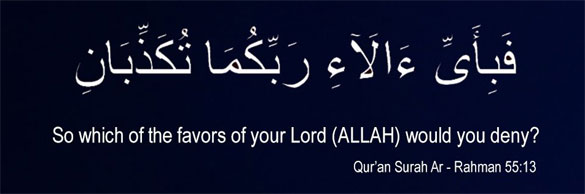
So, (O mankind and Jinn,) which of the bounties of your Lord will you deny? (Ar-Rahman - 13) — Mufti Taqi Usmani

The above-mentioned verse from the Surah Ar-Rahman (called the heart of the Holy Quran) has thirty-one times repetition in the verse. Allah, the Most Gracious reminds His people of the favours bestowed upon them and asks as to what is there that they will deny having received.

Our Favour in Response to Our Fellow Beings Favour Is In Our Favour

The materialistic race has engulfed mankind in a way that all but materialism has come under a dark cloud. The spiritual minds of the world know the reason behind this ethical downfall of human beings, and that is the inability of the people to pay for the favour being done to them, whether in kind or otherwise.

In worldly parlance, the worst thing that has happened is that we do not feel obliged in response to favour. In the world today politicians are not obliged to the favour of their voters, students are not obliged to their teachers and this mentality continues from top to bottom. Not answering favour from favour has brought the world to the pass where disfavour has taken the form of a tradition. This tradition is being religiously followed now. People who do not favour and worst the people who are not thankful for the favours received by their fellow beings are the reason for the cultural downfall of society. This attitude has ultimately invited many horrible wraths of the Almighty Allah.

We should be thankful to Allah for providing us with an opportunity and making us able to favour somebody. This way Allah is bestowing upon us His choicest favours that are a guarantee of a heavenly life hereafter. Consider the Hadees, Abu `Isa At-Tirmidhi recorded that Jabir said, “The Messenger of Allah went to his Companions and recited Surat Ar-Rahman from beginning to end for them, but they did not say anything. The Prophet said;

“I recited it to the Jinns, on the night of the Jinns and their response was better than yours! Whenever I recited Allah’s statement: (Then which of the blessings of your Lord will you both deny). They said, “None of Your favours do we deny, our Lord! All praise is due to you”, and says, ‘“None of Your favours do we deny, our Lord! All praise is due to you.”’.

And Allah Knows the Best.

-----

Arman Neyazi is a columnist with NewAgeIslam.com.

URL:   https://www.newageislam.com/islam-spiritualism/allah-creation-favour/d/125148


New Age Islam, Islam Online, Islamic Website, African Muslim News, Arab World News, South Asia News, Indian Muslim News, World Muslim News, Women in Islam, Islamic Feminism, Arab Women, Women In Arab, Islamophobia in America, Muslim Women in West, Islam Women and Feminism

Aversion to Reading Books and Magazines among Urdu-Speaking Muslims Has Caused Serious Intellectual Drawback in the Community

 Many Urdu Magazines Closed Because Of Lack of Readership

Main Points:

1. During the 70s Urdu publishing industry flourished.

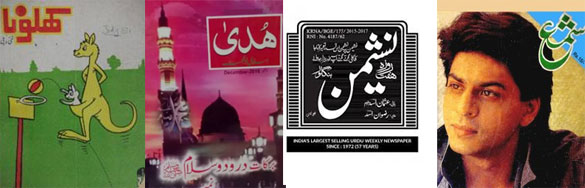
2. Shama, Biswin Sadi, Khilona and Huma were popular magazines in the 70s.

3. Wajeda Tabassum, Razia Butt and Ismat Chughtai were very popular among women.

4. Ibn-e-Safi popularised detective novels in Urdu.

5. Magazines on films, sports and health also survived.

6. Increase in religiosity with increase in literacy discouraged 'un-Islamic' literature.

-----

New Age Islam Staff Writer

30 July 2021


'Iqra' was the first word revealed to the prophet of Islam. Pursuit of knowledge has been ordained to Muslims and seeking knowledge has been made a religious duty for every Muslim man and woman. But unfortunately, Muslims have not shown that degree of keenness for learning and study.

If we look at the situation in the Indian context, we observe that the habit of reading books and newspapers among Muslims, particularly among Urdu-speaking Muslims is fast receding. This reflects in the circulation of Urdu newspapers and Urdu periodical magazines in India. This negative trend was distinctly observed since 80s and assumed alarming proportions in the 90s. As readership of Urdu magazines receded, many popular literary, religious and family magazines closed publication. Many Urdu newspapers also had to close down because of lack of readers and advertisers. Today Urdu speaking Muslim community has almost given up reading academic or literary magazines. Only some religious magazines have been striving to remain alive on the readership of a section of intellectual Muslims who subscribe to a particular sect. Today, the general Muslims are interested only in basic religious books like books on Namaz and other basic religious knowledge. Science magazines, magazines for women, and magazines on various fields of knowledge are few and those available strive to find readers.

This was not the picture, say, before Partition. Urdu magazines and newspapers were sold in large numbers. Magazines on various subjects were published and each magazine had its circle of readers. For example, the circulation of Maulana Abul Kalam Azad's periodical Al Hilal was 50 thousand. But it may be because during the period non-Muslims would also read Urdu.

After Partition too, Urdu speaking community had a good habit of reading, and different people had different tastes and interests so far as the books are concerned. Magazines on health, politics, films, literature, science, children's literature, sports, crime, detective literature, women, and business and economy were published and had a good number of readers and subscribers.

Interestingly, though literacy among Muslims was low, both literate men and women had the habit of reading. Fiction (Afsana) and novels were in great demand. Novels of Razia Butt, Ismat Chughtai, Wajeda Tabassum, Qurratul Ayn Haider and other women writers were very popular among Urdu speaking women while novels of Nasim Hejazi, Ilyas Sitapuri, Nadim Sitapuri, and Seraj Anwar were popular among Urdu-speaking men. During this period, Ibn-e-Safi popularised detective literature in Urdu with his series of detective novels. His detective novels had great literary value because of his diction, style and standard. His novels were said to have taught correct Urdu to thousands of its readers. His success inspired Shama publications of Yunus Dehlavi/ Idrees Dehlavi to start the publication of a regular detective magazine Mujrim. Another magazine named Jasoosi Duniya was also published.

Wajeda Tabassum took Urdu feminist novels to another height during the 70s and 80s. Her novels mainly depicted the life and culture of Hyderabad’s middle class women. Her novels like Nuth ki Qeemat, Nuth Utrai etc. greatly appealed to Urdu speaking women.

Periodicals like Biswin Sadi and Shama were very popular among Urdu speaking men and women. Shama had a circulation of about one lakh and had readers in Urdu speaking diaspora of Europe as well. Because of the interest of Muslim women in literature, Shama group of publications had started publishing a women's monthly magazine Bano. Taufique Farouqee's Khatoon Mashrique was the second most popular women's magazine in India. Though the magazine was considered below standard by the literary circle, it served to keep the reading habit of Urdu speaking women alive. It also had a circulation of 50,000 at a point of time. The popularity of Biswin Sadi, Bano and Khatoon Mashrique led to the launch of other women's magazines like Baji, Gulabi Kiran, Mashriqi Dulhan, Mashriqi Aanchal etc. But they could not win much popularity.

This was a period when Urdu Digests were also very popular. Mehrab, Huma, Chahar Rang, Hazar Rang and Shabistan were some of the popular Urdu digests during the 70s and 80s. These digests catered to the tastes of a diverse group of readers as these digests had writings on fiction, hunting, detective stories, stories on crimes, politics and current affairs, literature, religious issues, history, science etc. More often these digests would include a complete novel for those who liked novels. A religious digest Hoda by Mustafa Siddiqee was also popular among the religious section.

Blitz (Urdu) of Dr R.K. Karanjia and Nai Duniya of Abdul Waheed Siddiquee were equally popular Urdu weeklies of the 80s. The former was a neutral news magazine without the spice of religion in its content while the latter was a newspaper that exploited the religious emotions of Muslims, their victimhood, the 'conspiracies ‘of the RSS and the Jews and reminiscences of the lost glory of Muslims. That Blitz survived along with Nai Duniya reflects the fact that Urdu speaking Muslim community at least till that time had a rational and liberal section that preferred the journalism of Blitz over that of Nai Duniya. Of course, Azad Qalam (last page column) of legendary journalist and filmmaker Khwaja Ahmad Abbas also contributed to the popularity of Urdu Blitz.

One Urdu weekly that deserves special mention was Nasheman. Published from Bangalore, this 8 page weekly reached Urdu households in every part of the country punctually because of its countrywide readership.

As for children's literature, the period was also successful. Khilona was the most popular children's Urdu magazine along with Phulwari, Noor etc. With the closure of Shama group, Khilona also went down into history.

In later period that is in the 90s crime magazines like Jaraim and Bhayanak Jaraim became popular.

But by the end of the millennium, the scenario of Urdu readership completely changed because of gradual recession in Urdu readership. The reasons for this are very difficult to understand. During this period, literacy among Muslims increased, number of schools, colleges and departments of Urdu in universities increased many fold but Urdu readership decreased. Because of lack of or decreased readership, many popular Urdu magazines and periodicals went out of publication. Huma, Bano, Chahar Rang, Biswin Sadi (now only two issues of Biswin Sadi are published yearly), Jaraim, Bhayanak Jaraim, Baji, Gulabi Kiran, Shama, Payam-Taleem, Bachon ki Nirali Duniya, etc have shut shop. Those which are still into publication complain of lack of readership. They are not visible. The golden period of Urdu language and literature seems to be over.

Presently magazines are published but they are printed in hundreds. And the variety is missing. Variety in publication is the proof that a language is alive and growing in every sphere of life. Nowadays, Urdu publication is limited to literary magazines and periodicals. Magazines on science, health, economy, films, sports and medicines are rare and those published have very few readers. During the 80s and 90s, periodicals and magazines on sports and films were published but now that period is over.

Literary magazines like Ajkal (published by Publications Division) and literary magazines published by state Urdu Academies and privately owned literary magazines are in circulation but their readership is also very limited. Common Urdu speaker does not buy literary magazines. Only poets and writers are the buyers of literary magazines. In another words, Urdu books, magazines and periodicals are not read in majority of Urdu speaking households today.

One main reason for the lack of readership among Urdu speaking Muslims is the increasing religiosity among them. Since a wrong interpretation of knowledge among Muslims was circulated that only religious knowledge is encouraged by Islam and all other fields of knowledge are un-Islamic, spending money on magazines and books on science, fiction, poetry, history, Jasoosi Adab, Sex and erotica, sports, film, business etc. was considered a waste of money. As the literacy increased, so did religiosity. Copies of the holy Quran, some small collections of hadith, books on Namaz and basic religious duties remained in Muslim households and all other books and magazines were shown the door. Magazines or periodicals on films, sports etc. became extinct. Urdu book stalls, therefore, only have Quran, hadiths and books on religious issues or school text books. They do not have novels of Wajeda Tabassum, Razia Butt, Manto, Krishan Chander, Bedi or novels of Ibn-e-Safi or Ilyas Sitapuri because they have no takers today.

Blaming all this on the reach of internet to every member of the society and the preoccupation of people with social media can't be blamed because the aversion of Urdu speaking community to reading had been witnessed long before the advent of internet and android phone. Of course, internet and social media has only aggravated the problem. Otherwise, in otter languages, people still read books, magazines and periodicals inspite of being active on internet and social media. In Bengal, for example, all the leading Bengali newspapers publish voluminous special issues on Durga Puja ever year. These books are a part of celebration. This is not the tradition among Muslims because books are not part of celebrations or festivals in the Muslim community. Therefore, the real problem is that we have attached learning with religion. Books that are not part of religion are not part of a Muslim's life. This interpretation ignores the fact that the holy companions sometimes asked the holy prophet pbuh questions on conjugal lie and sometimes on cure of some physical ailments. The Quran asks Muslims to do scientific research. Therefore, books on science, health including sexual health, history etc can't be un-Islamic.

This aversion to books and loss of reading habit has caused immense loss to learning in the Urdu speaking Muslim community. Lack of readership has caused drawback in research work and obstacles in the dissemination of knowledge among the general Muslims. They are unaware of the new trends and developments in various fields of knowledge. Our government organisations and NGOs and educationists need to sit back together and chalk out a long term plan to cultivate an interest in books and reading among the Muslim community.

URL:   https://www.newageislam.com/islamic-society/urdu-muslims-community-magazines/d/125149


New Age Islam, Islam Online, Islamic Website, African Muslim News, Arab World News, South Asia News, Indian Muslim News, World Muslim News, Women in Islam, Islamic Feminism, Arab Women, Women In Arab, Islamophobia in America, Muslim Women in West, Islam Women and Feminism