By Syed Tahseen Raza, New Age Islam
26 December 2020
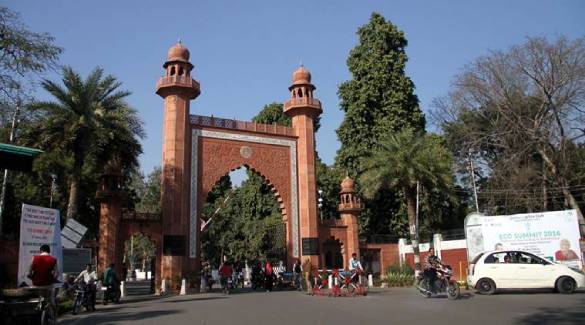
When ‘grandiose gate’ and ‘history capsule’ become the marker, for the centenary celebration of an institution whose founder spent the entire ounce of his being to extricate the people, for whom the institution was established, from these very gullible tactics of the then campradar, evaluating the progress of the institution during that entire century, particularly in the light of the founder’s teaching could be anybody’s guess.
Mere pompous centenary celebration ‘doesn’t make a university’, and particularly so, if the extravaganza of the illusory celebratory impulse is mediated during a global pandemic. Moreover, when the retirees of the institution, who gave the productive years of their entire lives, to the building of the institution whose centenary is to be celebrated, have to make do with only half of their pensions during the tough times of this deadly pandemic, even a call of celebration of any sort would be anything but a tribute to the institution and the founder. Mere bricks and mortars are not what constitutes a university. A university is known by the values it upholds, the culture it develops and the elan with which it promotes its foundational principles.
It is really a time for self-introspection and therefore, rather than ‘celebration’ the AMU fraternity would do well to seriously introspect AMU’s contribution in arenas lying both in its immediate set of priorities in terms of university’s excellence and its broader long term mandate with respect to the development of minorities.
-------------------------------------------------------------------------------------
Also Read: PM Modi at AMU: Concrete Action Should Follow Laudable Thoughts
-------------------------------------------------------------------------------------
The increasingly myopic academic administrators particularly since the last few terms have failed to take head-on the festering problems, hibernating since long in such a minority institution. Though it might seem a bit too harsh a criticism of a minority institution mainly, when in the post liberal public education milieu, Indian universities as a whole leave a lot wanting in terms of their functioning. Yet, being a minority institution, it must be remembered, AMU can’t afford the luxury of ‘erring’ on the points other of its ilks easily ‘can’ and comfortably get away. Being associated with minorities, more so a religious one, in this time of populist right wing upsurge, it cannot fail. Therefore, eternal vigilance, perennial alertness, closer scrutiny and being cautious of the long term impact of each and every move, for a minority institution is not just required but a fait accompli for its survival and sustenance.
This is never to suggest, bogged down by the incessant right wing slurs, AMU should in anyway feel intimidated. The purpose here is to reaffirm the faith in the founding ideas of this institution brilliantly espoused by the founder and later enriched by visionaries and freedom fighters like Zakir Hussain.
AMU was to be a practical experimentation of Sir Syed’s idea of utilising the liberatory potential of education arising out of the basic Islamic principle of ‘Iqra’, and ‘Amr bil Maroof Wa Nahi Anil Munkar” (commanding right and forbidding wrong), emanating from Prophets exhortation for adherents of Islam to, ‘stop with hand, if they see any wrong or injustice being done. If not capable enough to do that, say it loud and wide that it is wrong, If they can’t do even that, at least assume in their heart that it is wrong. But this is the last stage of Islam’, meaning by, even tacit support of wrong or injustice by adherents of Islam carries the danger of their loss of faith, and Gandhi ji’s vision of ‘the Good of the Last Man You Have Ever Seen’ enunciated in his talisman, symbolising Indian civilisational ethos of care and fellow feeling. That is why concepts like AMU had been a hope not just for the newly founded nation state of ours, coming out from a torturous colonial past, but with the successful functioning of AMU as a place for inculcating modern scientific spirit and culture of scientific rationality along with adherence to Islamic values, had emerged as a model for other countries in similar situation.
In the light of this, AMU unfortunately cuts a sorry figure, if accounted for on the scale of the existing nepotism, provincialism, elitism, unenterprising attitude, promotion of mediocrity and the likes prevalent within the campus. Under the current epoch of the brazen anti-Muslim tirade all over, which as all the existing signs foretell, are going to assume even more lethal proportions in coming years, our university can’t afford to continue with, ‘but these things happen elsewhere’ too attitude.
The very name of the university carrying Muslim in its nomenclature makes it a special target, for even slightest of divergence. Things like internal breeding, nepotism, obligatory appointments, extremely local nature of contract allocation, acquire additional gaze. Extra liberal use of the ‘emergency powers’ which has been specially provided to the university for emergency situation, by the university authorities for expedience sake, may no longer continue to elude the ‘strategic gaze’. The ‘Five Yearism’ syndrome which unfortunately seems to have captured the imagination of current times and over ambitiousness of those who matter, with their penchant for instant result, by any means, are traits which are disastrous for any institution. For an institution like ours, they may prove to be more lethal.
Universities are not just places for teaching and research. They are meant to be spaces to act as ‘role model’ for the society. AMU seems reluctant to take a leading role on such issues where it could precipitate positive domino effect in the society.For example, providing more visibility to women by having them in decision making process. But the near absence of women from relevant high ranking academic-administrative positions in the university underlines the obvious. Similarly, urgently required intervention in terms of robust academic and popular narrative from AMU on important issues, also remains seriously amiss.
_NewAgeIsla.jpg)
AMU with its founder’s special emphasis on ‘Tarbiyat’ meaning principles to follow for a meaningful life, will not just do a disservice to the founder but will actually destroy the nation’s trust reposed in it too, if it fails to resist the compelling temptation of the neo-liberal ethics, which among other things blind the decision makers, to look beyond what seems the obvious, in the immediate context. Weighing everything in terms of immediate profit and loss, doing things not for some higher aims but to manage ‘constituencies of different sorts’, selectively focusing on issues within the university weighing their pay-off potential in terms of immediacy of result, keep postponing the urgent call for reforms in areas considered ‘potentially uncomfortable’, etc., may further weaken the university in the long run and make it more distant from its founder’s dream
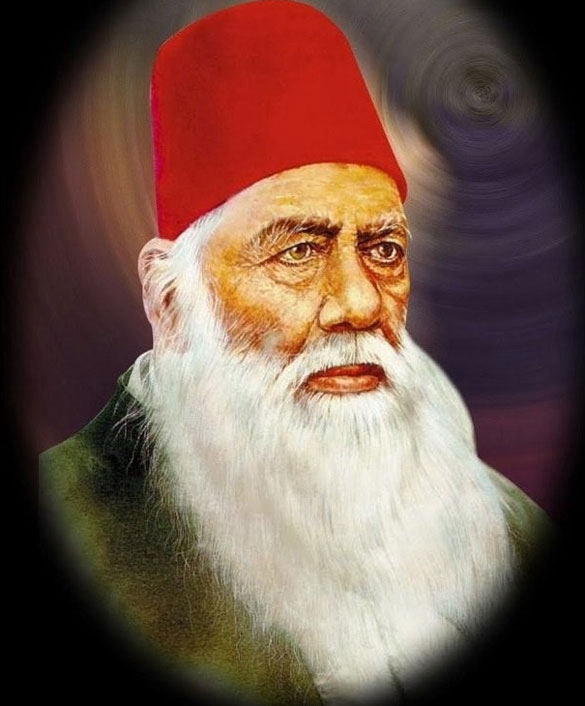
Whereas we keep extolling Sir Syed’s journalistic forays for reform within the community and championing of the cause of the promotion of scientific temper through easy to understand language, but in reality, do a great disservice not just to his legacy but to ourselves too when we miserably fail to at least pay a lip service to his ideals. A cursory look at the regular themes appearing in Tahzeeb-ul-Akhlaq (the social reform journal he started on the pattern of the Spectator) for a decade will honestly apprise the existing state of affairs.
The performance of University Press and the Public Relations Office of the university are, if not lethargic then not encouraging too in any sense of the term. Academic contribution from AMU to counter the increasing rise of Islamophobia worldwide is yet to cross the threshold. If one thing we can learn from Syed’s long struggle for his community and in turn the country, it is his firm belief in the cause of justice and fairness with dignity and self-respect along with lending a helping hand to anyone who is in need.
Mention may be made of his support in saving the lives of some British families when they were caught, at a time when his own family members were dehumanised by the very triumphant British forces. His writing of ‘Asbab-e-Baghawat-e-Hind’ , boldly telling the empire of its follies when many shied away from mincing words in front of the powers that be, as also his many other such actions, may act as a pertinent reminder to the current custodians of his legacy, if at all they are really interested to keep him relevant. Not to speak of the ‘politics of convenience’ so shamelessly applied by those in leadership position of the Alig community, including the vast majority of teachers and students of AMU, they have brazenly failed to uphold Syed’s legacy of tirelessly working to sanititise the prevailing narrative, which habitually misrepresent and disempower the minorities and the marginalised.
Syed’s writing of Khutbaat e Ahmadiya and his continuous write up for Christian-Muslim understanding, his liberal, sometimes even extra liberal too, interpretation of religious texts etc., were all part of his strategy to not let the bigots of that time win the war of perception. In the current post truth era, the AMU fraternity would have done well to take cue from this aspect of Sir Syed’s strategy. AMU’s conspicuous absence from the mainstream narrative on issues of importance, for whatever reasons, can never go in line with Sir Syed and his missions’ spirit.
More so, if AMU still considers itself, to be a continuing movement for Muslim reforms, which in all earnestness it must, if it considers itself custodian of Syed’s legacy, it must not shy away from publicly discussing the issues specific to the minorities and other marginalised - issues like internal democracy, the management of Waqf, issues of women, growing Islamophobia worldwide etc.,. In the recent vilification of Muslims during the pandemic or the latest ‘Bureaucracy Jihad’, AMU’s silence would be seen as abdication of responsibility and may justifiably too, be considered as hovering around criminal-negligence. For those proudly underlining ‘Tarbiy’ and culture and not just simple ‘educational degrees’ as their USP, remaining silent on such important issues , puts a serious question mark on their claim.
The times of pandemic, indeed confronts us with immense challenges. AMU with its vast network of Alumni associations in almost all important cities of not just the country but the whole world, may have acted as a role model in reaching out to the needy. In many Indian cities, for example, the administration by collaborating with the District Alumni Associations, might have reached to the needy students during such a testing times. But unfortunately, the vast network of alumni network, despite their immense potential, barring a few notable exceptions remain more content with one day Sir Syed Dinner or yearly Mushairas. Pandemic, thus, did provide a chance to AMU fraternity to showcase its unique potential and contribute, and am happy to underline few people associated with the university did come forward with their much appreciated initiatives but institutional support exemplified by the leadership, which would have accrued the much needed positive optics for the institution, was not just amiss but was severely lacking.
When dialogue and interaction give way to one sided monologue and the university space becomes a place where the academic administrators have to resort to extraordinary measures (emergency provisions) for the normal functioning of the university quite often, when conversation among and between the stake holders of the university take the form of ‘news’ from outside media outlets, when things pertaining to the university are decided not with the formal stakeholders of the university in mind, but the outside optics it will entail, under such a situation, the university may be progressing by the current standard of the populist swing, but the founder of the institution Sir Syed would never approve of such a progress.
Ambitions of some over enthusiastic so called Muslim leaders from various quarters of AMU fraternity, impatient to break into the mould of new power brokering Muslim elite with the power to bargain at the cost of average Muslim citizens’ aspiration, reminiscent of earlier era, should be discouraged at all costs. No one should be allowed to trade-off the hope which AMU still elicits among the weak and marginalised particularly from the minority sections.
If the founder’s idea had honestly been followed, during these testing times of pandemic, rather than expending considerable time and energy in useless celebration, the entire university machinery would have geared itself whole-heartedly towards lessening the harmful impact of the pandemic; orienting itself towards developing better pedagogies for the special times, increasing the reach of education through innovative means by utilising its widespread alumni network, providing education at doors etc, but sadly the vision required for such urgently needed interventions are strikingly absent. The current fad of ‘packaging’ and ‘repackaging’ ‘showcasing the past achievements or the current result of earlier works’ in high decibel and cleverly opticised media glare, hitherto the trait of the corporate culture, gaining acceptability on the political plane of the country, has unfortunately slowly seeped deeper into the university set-up too. Our university, though unique in many sense and by withstanding the test of times has even developed resilience of a novel kind, but the compellingly temptation of the current fad seems to sweep it off its feet this time.
It may be worthwhile to recall the Gandhian wisdom distilled through AMU’s history of trials and tribulations. Whenever the university is in doubt, it should judge its action on the touchstone of the twin principle of ‘Sir Syed’s idea of utilising the liberating impulse of education for the cause of upholding justice and fairness’ and the Gandhian idea of the ‘welfare of the last person’. All else are mere gimmicks, optics and theatrics which may get some brownie points to some people in the short term but history proves to be a ruthless judge always.
It is a patent truth that the universities are not sacred spaces, they don't exist in isolated terrain and so they can’t remain immune from what is happening outside. Universities have a duty to dispel passionate intensity of any sort and certainly they must discourage certitude of all kinds be it ‘over enthusiastic optimism’ or ‘perpetual pessimism’. Universities, particularly in a situation like this must tread its course, as Gramsci suggested, in another context, with a judicious mix of both the ‘pessimism of the intellect’ and ‘the optimism of the will’
When such carefully crafted ‘opticised’ theatrics of ‘celebrations’ are enacted in the political plane of the country, though condemnable but they may be accounted for in the light of the populist sway which the current epoch witnesses the world over. However, when a university space becomes an arena of a politics of this sort, it is not just pathetically sad but pathologically mischievous.
Minority institutions of higher learning and an institution whose very name carries ‘Muslim’ with it, need to be immensely cautious of the historical legacy it carries and as such due care must be taken so as not to let the immediacy of the ‘short term pragmatism’ mar the more than a century of its ‘distilled wisdom’. Amateur pragmatism based on short sighted vision may prove to be a poisoned chalice in the long term.
The idea of transactional relationship, the ethos of trade-offs, the notion of reciprocity etc may work well in this era of triumphant neo-liberal ethics, in terms of personalised behaviour, or in view of running a business start-up and the likes. Universities, institutions even for that matter states, particularly with long histories run on long standing ethos, built consensus and long held principles, because what makes institution resilient to the vagaries of time are its principles. The sooner, the AMU fraternity realises this, the better it will be. Sir Syed’s tomb has long back echoed the wise counsel worth repeating here
Tu Agar koi Mudabbir hai to Sun Meri Sadaa
Hai Dileri Dast e Arbaab e Siyaasat ka Asaa
(Listen to my advice if you are any statesman
Courage is your support if you are a leader of men)
Arz e Matlab se Jhijhak Jaana nai Zeba Tujhe
Nek hai Niyat agar teri to kya Parwa Tujhe
(Hesitation in expressing your purpose does not behoove you
If your intentions are good you should not fear anything)
Banda-e-Momin Ka Dil Beem-o-Riya Se Paak Hai
Quwwat-e-Farman-Rawa Ke Samne Bebaak Hai
(The Mu’min’s heart is clear of fear and hypocrisy
The Mu’min’s heart is fearless against the ruler’s power)
The counsel carries a timely warning too which could be abandoned at its own cost:
Paak Rakh apni Zubaa, talmeez e Rahmaani hai tu
Ho Na Jaaye Dekhna Teri Sadaa Be-Aabroo
(You are a Divine pupil! Keep your tongue immaculate!
Beware, Lest your prayer’s call remains unanswered)
-----
Syed Tahseen Raza teaches at the Department of Strategic and Security Studies, Faculty of International Studies, Aligarh Muslim University, India. His most recent book ‘United States and Pakistan in the 21st Century: Geostrategy and Geopolitics in South Asia, Routledge, 2020’, has been quite well received.
 4:01 AM
 Moderate Islamist here