Pages

Wednesday, November 25, 2020

Khadim Husain Rizvi and the Weaponisation of Barelwis in Pakistan


By Arshad Alam, New Age Islam

25 November 2020

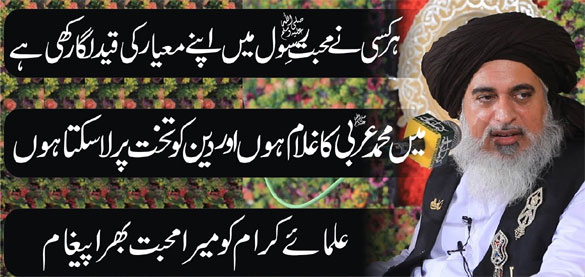
Khadim Husain Rizvi, who suddenly collapsed and died, had the dubious credential of heaping insults on those with whom he disagreed. One such insult was heaped on Abdul Sattar Edhi, the now deceased Pakistani philanthropist, whose foundation runs the world’s largest ambulance network. In an irony, which would have been lost on Khadim Husain had he been alive, the man was rushed to a nearby hospital in an Edhi Foundation ambulance. But this cleric, who rose from being a petty state official to one of the most important mobilisers of religious passion in recent times, not just insulted others. He threatened all those whom he thought had disrespected the Prophet and rallied to further strengthen the already infamous blasphemy laws. In short, he weaponised Islam and in the process, Barelwis themselves.


Barelwis were long considered moderate Muslims which the west was happy to fund and showcase. This myth got busted in Pakistan when a Barelwi got up and shot dead Salman Taseer, the governor of Punjab. His fault? He was campaigning for the release of Asiya Bibi, a Christian women, jailed on the charges of blasphemy. As the Barelwi logic goes, anyone who defends a ‘blasphemer’ becomes one himself. And the same punishment should be meted out to him, which is to kill him. A conscientious Muslim, Mumtaz Qadri, whose professional duty was to protect Salman Taseer, pumped 27 bullets in him. One of those who had inspired Qadri was Khadim Husain, who being a Barelwi ideologue had been campaigning against Taseer. After Qadri was arrested (and later hanged), Khadim Husain launched a movement to free this killer, arguing that Qadri had done nothing wrong; what he did was in accordance with the teachings of Islam. After he was hanged, Qadri was declared as a Ghazi or a holy warrior by the same Khadim Husain and millions of his followers.
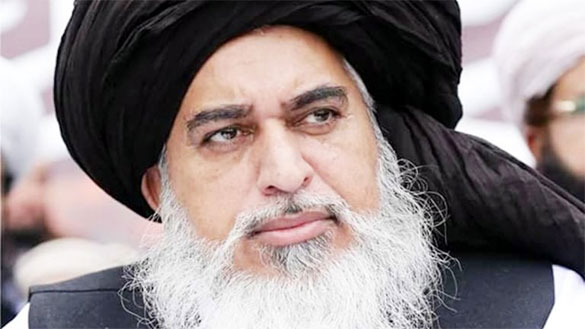


Having thus made a name for himself as the most important Ashik e Rasul, Khadim Husain set about to organise the Barelwis as a potent political force. It is true that in the past, the Barelwis have been the target of numerous terror groups in Pakistan. Wrongly understood as lax Muslims, their mosques, shrines and even some of the leadership had been bombed out of existence by groups like the Taliban, who, being Deobandis, detest Muslims going to shrines. Despite being the numerical majority, the Barelwis found themselves not only singled out for targeted killings but also out of structures of power. Khadim Husain, by taking up issues like the protection of blasphemy laws, gave voice to this beleaguered majority who were now tasting power after many years. The man and his followers had the power to bring Islamabad to a halt, bring the government to its knees and even ask the all-powerful military establishment to negotiate with the government regarding their religious demands.

But as with many sectarian movements, the Barelwis’ assertion of power must necessarily be against a perceived enemy. That enemy can may be the secular state, the Deobandis, the Ahmadiya Muslims or the Shia. And we saw this through the person of Khadim Husain whose many speeches against the Ahmadiya and Shia make them vulnerable minorities within their own country. Anyone who thinks of Barelwis as the moderates within Islam must ask the Ahmadiya and the Shia what they think of this movement within Pakistan.

But then Khadim Husain should not be held solely responsible for this anti Shia vituperative rhetoric. In many ways he was being true to the Barelwi teachings which have for long held the Shia to be astray and treated the Ahmadiyas beyond the pale of Islam. The foundational texts of the Barelwis, as represented through the writings of Ahmad Riza Khan, themselves are responsible for much of the scorn that is poured on these so called deviant sects. In their love for the prophet, the Barelwis declared anyone who did not follow their interpretation of Islam as Kafir. More nearer to our history, the Barelwis were the first to raise the issue of blasphemy in the wake of the publication of Salman Rushdie’s book. Other protesting sects were just following the lead of the Barelwis.  

It also must be said that in the context of Pakistan, various religious sects have been used against each other for many decades now. There was a time when the Deobandis and the Ahle Hadis were the favourite of Pakistani establishment, as they could be used in Afghanistan against the Soviets.

The sudden visibility of these scriptural sects was not because of the purported superiority of their Islamic interpretation but more so because the state had started to patronise them, thereby giving them more visibility as compared the Barelwis. It is not improbable that forces within the Pakistani deep state now think that courting the Barelwis will be beneficial for them and that’s why we are seeing this sect occupying the Pakistani streets.

Khadim Husain, though responsible for giving a sense of purposive militancy to the Barelwis might also have been an unconscious player in someone else’s strategic game. Whatever be the reason behind this, what is clear is that the path on which he has herded his followers does not lead to tolerance and religious ecumenism but only towards bigotry and violence in the name of religion.

-----

Arshad Alam is a NewAgeIslam.com columnist.        

URL:  https://www.newageislam.com/radical-islamism-and-jihad/arshad-alam-new-age-islam/khadim-husain-rizvi-and-the-weaponisation-of-barelwis-in-pakistan/d/123574

New Age IslamIslam OnlineIslamic WebsiteAfrican Muslim NewsArab World NewsSouth Asia NewsIndian Muslim NewsWorld Muslim NewsWomen in IslamIslamic FeminismArab WomenWomen In ArabIslamophobia in AmericaMuslim Women in WestIslam Women and Feminism

Monday, November 23, 2020

With All The Covid-19 Casualties Of The Media Men, The Pandemic Also Crushed The Indian Mainstream Media Industry

 By  NJ Thakuria, New Age Islam

23 November 2020


One more Indian journalist falls prey to the Covid-19 pandemic as Noida based scribe Pankaj Shukla  breathed his last on 20 November 2020. Hailed from Bareilly locality of Uttar Pradesh in central India, Shukla (50) was admitted at JP Hospital, Noida where he succumbed to novel corona virus infection aggravated ailments.

Shukla studied at Allahabad University and started his journalism career with popular Hindi newspapers like Amar Ujala and Dainik Jagaran.

Later the journalist with a charming personality shifted to electronic platforms like Janmat TV, Khabar Bharti, News 30, NewsExpress, etc.

Very recently Shukla launched his own you tube channel Rajsatta Express and worked as its editor-in-chief.

“India has lost 50 working journalists to Covid-19 complications, where as the worldwide media corona-casualties rise to 469 in 56 countries. In fact, it emerges as the second most affected country among media persons after Peru followed by Brazil, Bangladesh, Mexico, USA, Pakistan, UK, Afghanistan, Russia, France, Spain, Italy, Egypt, Nepal etc,” said Blaise Lempen, general-secretary of Press Emblem Campaign (www.pressemblem.ch), an international media rights body based in Switzerland.

Haryana based journalist Rakesh Taneja (51) died of Covid-19 at a Faridabad hospital on 16 November. Taneja used to work for Zee News, Amar Ujala, Dainik Bhaskar, etc and earned reputations while reporting on crime and legal beats. Orissa’s television scribe Prabir Kumar Pradhan (35) succumbed to the virus infection on 5 November. Pradhan used to work for News18 (Odia) news channel and died in the hospital.

A Tripura based video journalist Jitendra Debbarma (46) lost his battle against the corona infection on 20 October. Debbarma worked for a Kakborok language cable channel named Chini Khorang and  succumbed to Covid-19 complications at Khumulwng hospital. Mysuru based journalist  Pavan Hettur (35), who worked for Kannada daily Prajavani died of the virus infection on 18 October at a private hospital.

Patna based photojournalist Krishna Mohan Sharma (63), who worked for Times of India, died of corona complications on 15 October while undergoing treatment at  AIIMS, New Delhi. Same day, veteran cricket journalist & commentator Kishore Bhimani (81), died after contracting the virus at a hospital in Kolkata.

The robust Indian media family lost at least twelve journalists to corona-complications in September. Ludhiana based veteran journalist Ashwani Kapoor (70), who worked for  highly circulated newspaper Punjab Kesari, succumbed to Covid-19 at a private hospital on 29 September. Guwahati based news presenter in All India Radio,  Golap Saikia (52) died with corona-infections on 26 September at a city-based private hospital.

Patna’s senior journalist  Arun Kumar Verma (68), who was associated with various Prasar Bharti outlets died during Covid-19 treatment on 22 September. Indore  journalist Manoj Binwal (55), who was associated with Hindi newspaper Prajatantra, died of the virus infection while undergoing treatment on 20 September. A day back, Agra’s journalist Ami Adhar Nidar (50), who worked for widely circulated DainikJagaran, passed away with the infection.

Jammu based scribe Anil Srivastava (68), who was associated with United News of India, succumbed to Covid-19 on 18 September at a government run hospital.  Same day Jabalpur’s journalist Harish Choubey (60), who worked for popular Hindi newspaper DainikBhaskar, expired with the corona virus infection. Aurangabad  based journalist Rahul Dolare (49) died on 14 September at a government hospital.  Same day, Chennai’s popular  journalist-actor Florent C Pereira (67) died of Covid-19.

Punjab’s  Abohar based journalist  Naresh Bajaj (57), who was associated  with SachKahoon newspaper, succumbed to corona-complications on 10 September. Ravinder Kumar (30) from Himachal Pradesh, who worked for DainikJagran, died of Covid-19 on 9 September. Assam’s  rural reporter Dhaneswar Rabha (35) died at Guwahati medical college hospital on 6  September. Rabha is the first scribe in the region to die of Covid-19. Next day, senior journalist Ashim Dutta (65) passed away with the infection at   Silchar medical college hospital.

Months back, Dhanbad’s journalist Sanjiv Sinha, Gorakhpur’s photo journalist Rajiv Ketan, Mumbai’s senior film-journalist Shyam Sarma, Nellore’s scribe  Narayanam Seshacharyulu, Pune’s television reporter Pandurang Raikar, Kanpur’s television  journalist  Neelanshu Shukla, Patiala’s  photojournalist  Jai Deep, Tirupati’s television reporter Madhusudan Reddy and video journalist M Parthasarathy succumbed to infections.

The list includes  journalist Prakash Deshmukh from Mumbai, veteran journalist Ashok Churi from Palghar, television reporter Ramanathan and news videographer E Velmurugan from Chennai, news presenter Davinder Pal Singh from Chandigarh, television scribe Manoj Kumar from Hyderabad, journalist Pankaj Kulashrestha from Agra, journalists Simanchal Panda, K Ch Ratnam and Priyadarshi Patnaik from Orissa.

Kolkata’s photojournalist Ronny Roy became the first Indian scribe to die of Covid-19. Emerged as a severe health hazard, the pandemic has affected thousands of  journalists and media employees in India as they are playing the role of corona-warriors along with the doctors, nurses, sanitation workers, police personnel etc. The increase of media corona-casualties is precisely tempted by the insensitive approach of editor-managements’ towards the employees while engaging them on duties with little pre-cautions,” said Nava Thakuria, the PEC representative in India.

With all the casualties, the pandemic also crushed the Indian mainstream media industry to a larger extent. Many print media owners have stopped publishing physical newspapers and shifted to the digital space. Some print managements even closed down their editions in different places, reduced pages, cut salaries and even layoff employees including senior journalists citing the reason of shrinking advertisement revenues.

URL:   https://www.newageislam.com/current-affairs/nj-thakuria-new-age-islam/with-all-the-covid-19-casualties-of-the-media-men-the-pandemic-also-crushed-the-indian-mainstream-media-industry/d/123547

New Age IslamIslam OnlineIslamic WebsiteAfrican Muslim NewsArab World NewsSouth Asia NewsIndian Muslim NewsWorld Muslim NewsWomen in IslamIslamic FeminismArab WomenWomen In ArabIslamophobia in AmericaMuslim Women in WestIslam Women and Feminism

Forthcoming Bengal Elections, AIMIM And The Dilemma Of Secular Parties

 New Age Islam Special Correspondent

23 November 2020

The success of the AIMIM in the recently concluded assembly elections of Bihar has started a debate on the role the AIMIM may play in the forthcoming assembly elections in West Bengal where TMC is in power for the last ten years and there is no anti-incumbency factor. Still political analysts believe that the AIMIM may play spoilsport for TMC and other secular parties like the Congress and the Left.


Many analysts and secular apologists are of the opinion that Owaisi's AIMIM may help the BJP win the elections in the same way it helped the NDA form government in Bihar by wresting 4 seats from the Congress and RJD and one seat from the JDU.

The AIMIM had fielded 14 candidates in the constituencies of the Seemanchal region. The constituencies comprised Lok Sabha constituencies of Kishanganj, Araria, Katihar and Purnia but it won 5 seats of only Kishanganj Lok Sabha constituency where the Muslim population is between 60 and 70 percent.

The rest of the constituencies have Muslim population less than 40 per cent and non-Muslim population there is more than 60 per cent. That's why Owaisi's party did not fare well there as Owaisi's Muslim centric campaign only strengthened Hindu vote bank in these constituencies.

This makes it clear that Owaisi eyed only the Muslim majority constituencies where the Congress and RJD had hold over the Muslims.

This is the reason political circles believe that in Bengal Owaisi will pursue the same strategy of fielding candidates only in constituencies where Muslims have a decisive population and where secular parties --- the Congress, the CPIM and the TMC have their base. If it happens, the AIMIM may really be the cause of concern for the ruling TMC.


To understand the political situation of West Bengal first we should take a look at the party position in the current West Bengal Assembly:

TMC: 222

CONG: 23

CPIM: 19

BJP: 16

FB: 2

RSP: 2

GJM: 2

RSP: 1

VACANT: 7

TOTAL : 2

If we have a look at the number of seats Muslims have won across parties, we find that 59 Muslim candidates have won across parties. The party-wise position of Muslim seats is as follows:

TMC: 32

CONG: 18

CPIM: 8

FB: 1

Now let's find out, among these 59 Muslim candidates how many Muslim candidates were challenged by Muslim candidates. Against 32 TMC Muslim candidates, 20 Muslim candidates were runners up. Against 18 Muslim candidates of the Congress, 14 Muslim candidates were runners up. Against 8 Muslim candidates of the CPIM, 4 Muslim candidates were runners up. Against one Muslim candidate of Forward Bloc, a BJP candidate was runner up. Such seats are 39 where Muslim candidates were runners up against Muslim candidates.

Now obviiusly Owaisi will field his Muslim candidates where both the winner and runner up candidates were Muslims. He will field candidates in these 39 candidates making the contest a quadrangular one. The BJP, the Left-Congress Alliance, TMC and AIMIM. This will divide the secular votes. As a result of this divide in these seats, either the AIMIM will win all the 39 seats or the BJP will win as a result of the division of the secular votes.


In other constituencies where Muslims are not a decisive factor but have a sizeable population, the four pronged fight will only divide the Muslim votes among three secular parties/alliances giving the BJP a clear victory. If it happens in at least 60 seats, the TMC will lose 60 seats to the BJP. it will lose about 39 seats to the AIMIM or to the BJP from the Muslim dominated belt.

Therefore, the TMC is likely to lose 100 seats to the BJP and AIMIM. This will leave the TMC at only 122 seats. The required number to form the government is 148.

Why this does not seem impossible is that in the current Lok Sabha, the BJP has 18 seats from Bengal. The 18 Lok Sabha seats of BJP may realise into more than 80 MLAs. This may not be considered far-fetched due to the politics of communal polarisation to be pursued by the AIMIM and the BJP. An atmosphere of hate and mistrust will be created by both the parties which will divide the electorate on communal lines. A survey has already hinted at the possible upset for the ruling party. The results of this survey are as follows:

TMC: 165-170

NDA: 107-130

CONG-LEFT: 22-30

According to this projection a government of the BJP and AIMIM is a possibility.

The Left and the Congress don't have much to offer in these elections. The Left has not been able to win back the confidence of the people due to the populist measures of the TMC government. Congress does not believe in aggressive politics and so has not been able to take advantage of the deteriorating law and order situation or communal riots that have taken place during the TMC rule. Price rise is also an issue which the Congress could not exploit. Instead, it has aligned with the Left parties to fight against the TMC and the BJP which seems almost impractical and the alliance is unnatural. The Congress is not clear about what it actually wants to achieve by forming an alliance with the Left that suppressed and crushed it during its 33-year rule.


There is widespread criticism against the AIMIM for its policy of dividing the Muslim votes. The secularists fear that Owaisi will divide the Muslim votes and pave the way for the victory of the BJP. By doing this, they hold only Muslims responsible for the victory of the BJP. But the fact is that in the constituencies where Muslim voters were almost non-existent, Hindus voted for the BJP and rejected the Congress or other secular parties. The secular parties demand of the Muslims a commitment to secularism but do not want to change their position or policy vis a vis the BJP. The fact is that the BJP wins more due to the division of secular votes than due to Hindu votes.

In almost every election the secular parties contest independently claiming to be the true flagbearer of secularism and cause the division of secular and minority votes. The BJP's votes are not divided. Still the self proclaimed aecular political parties do not see reason and don't change their poll strategy.

That's why this time there is a suggestion from Furfura Sharif, a seat of Sufi Islam having some hold among the Bengali Muslims of Bengal for an anti-BJP alliance of all the secular parties in Bengal. Abbas Siddiquee, a representative of Furfura Sharif has given a call for a TMC-Cong-Left alliance against the BJP. He has announced that he was going to launch a political party and invite TMC, Congress and the Left to form an alliance if they really want to defeat the BJP. If a party does not join the alliance, it will be construed that the party is hand in glove with the BJP, he said.

Even if Furfura Sharif does not launch its party, it would be wise for the TMC, Cong and the Left to join hands to defeat the BJP on a realistic seat sharing basis. But it is a fact that the Left-Cong combine is more interested in TMC being toppled than in preventing the BJP. If the BJP comes, it would be easier for them to remove a communal party like BJP than to remove a secular party like TMC. This seems to be their political strategy.

Therefore, instead of blaming the Muslims for the division of votes, the political parties should wake up to the new challenges and form alliances on a realistic assessment of their vote base. Most of the time the alliance can't materialize due to unrealistic claims by constituent parties on seat share. The results of Bihar would have been different if Congress had not insisted on 70 seats.

The secular parties can prevent the BJP from coming to power only if they form a realistic alliance against it. But that would mean the Cong and the Left will have to accept the leadership of the TMC as the largest party and defeating the BJP would mean saving the TMC government for another 5 years. Therefore, the Cong-Left combine will prefer the BJP coming to power than saving the TMC government.

URL:  https://www.newageislam.com/current-affairs/new-age-islam-correspondent/forthcoming-bengal-elections-aimim-and-the-dilemma-of-secular-parties/d/123542


New Age IslamIslam OnlineIslamic WebsiteAfrican Muslim NewsArab World NewsSouth Asia NewsIndian Muslim NewsWorld Muslim NewsWomen in IslamIslamic FeminismArab WomenWomen In ArabIslamophobia in AmericaMuslim Women in WestIslam Women and Feminism

Saturday, November 21, 2020

What Is Asabiyyah (Prejudice And Bigotry) And Does It Block The Space Of One’s Mind To Experience Realities? From an Islamic Perspective


By Ghulam Ghaus Siddiqi, New Age Islam 

21 November 2020

The Arabic word ‘Asabiyyah or Asabiyyat’ can be simply expressed through several related meanings in English such as, ‘prejudice’ and ‘bigotry’, ‘sectarianism’, ‘tribalism’, ‘chauvinism’, ‘bigoterie’, ‘fanaticism’, ‘partisanship’, ‘clannishness’ and ‘party-spirit’.

The Asabiyyah refers to ‘the concept of a strong and blind adherence to a particular party, faction, cause or person’, or in other words, to ‘the concept of excessive or prejudiced support for one’s own cause, group, tribe, nation, person or thing without fair consideration of the facts’.

The Asabiyyah was deeply rooted in the pre-Islamic era. Islam abolished all the forms of Asabiyyah (bigotry/prejudice etc.) in several ways mentioned in the Quran and the Ahadith. A few of them are as follows;

Allah Almighty says in the Quran, “O mankind! Truly We created you from a male and a female, and We made you peoples and tribes that you may come know one another. Surely the most noble of you before Allah are the most reverent of you. Truly Allah is Knowing, Aware” (49:13)

This verse signifies the manner in which differences in religion, race, tribe, ethnicity, language, nationality can be sources through which the human beings attain a deeper appreciation for the reality of the human condition.

This is a late Madinian verse which denotes a revamping of the moral order of Arabia to one in which true worth is no longer determined by the Asabiyyah but by the depth of faith and righteousness (Taqwa).

The things mentioned in this verse signify the eradication of all forms of the Asabiyyah (bigotry/prejudice etc), be it in the context of nationality, race, caste, tribe, region and language, majority and minority or whatever. In several Ahadith the beloved Prophet (peace be upon him) forbade the Jahiliyyah attitude of the Asabiyyah. Some of them are as follows;

The Messenger of Allah (peace be upon him) is reported to have said, “One who is killed under the banner of a man who is blind (to his just cause), who raises the slogan of the Asabiyyat (bigotry or prejudice etc.) or supports the Asabiyyat, dies the death of one belonging to the days of Jahiliyya (pre-Islamic days). (Sahih Muslim 1850).

Having condemned the Asabiyyah in another hadith, the Prophet (peace be upon him) further said, “….Whoso attacks my Ummah (indiscriminately) killing the righteous and the wicked of them, sparing not (even) those staunch in faith and fulfilling not his promise made with those who have been given a pledge of security - he has nothing to do with me and I have nothing to do with him.” (Sahih Muslim)

It is recorded in Sunan Abu Dawud that the Prophet (peace be upon him) condemned the Asabiyyat (bigotry/prejudice), “whoever raises the slogan of the Asabiyyat has nothing to do with us, whoever kills due to the Asabiyyat has nothing to do with us, and whoever dies the death of Asabiyyat is not from among us”.

When asked about the Asabiyyah, the Prophet (peace be upon him) replied saying, “The Asabiyyah is when a man helps his people to do wrong” (Sunan Ibn Majah/Sunan Abu Dawud)

The reason of the Asabiyyah being forbidden is that Islam does not accept bigotry in any matters, but rather it repeatedly suggests that one should deal with everything on the basis of justice, truthfulness, honesty and reality and not on the basis of bigotry which blocks the minds to grasp the humane morals and ethics.  

If we ponder over the present circumstances of the world, we will find that most cases of the killing or fighting are directly or indirectly the consequences of Asabiyyah (bigotry/prejudice). Not only does the Asabiyyah lead to violence, but also to block the vast space of one’s mind and thus the one finds difficulty to experience the realities of many things in the world. Our minds are created by Allah Almighty and they can achieve higher culmination of mental development only when they are used in the correct directions which are not possible for the minds affected by the virus of Asabiyyah. We have seen above that Islam clearly forbids the Asabiyyah by condemning it. It is our collective responsibility to refrain from holding the Asabiyyah in all forms and move forward to look for solutions to numerous challenges of the modern-days.  

URL:   https://www.newageislam.com/islamic-q-and-a/ghulam-ghaus-siddiqi-new-age-islam/what-is-asabiyyah-prejudice-and-bigotry-and-does-it-block-the-space-of-ones-mind-to-experience-realities-from-an-islamic-perspective/d/123537

New Age IslamIslam OnlineIslamic WebsiteAfrican Muslim NewsArab World NewsSouth Asia NewsIndian Muslim NewsWorld Muslim NewsWomen in IslamIslamic FeminismArab WomenWomen In ArabIslamophobia in AmericaMuslim Women in WestIslam Women and Feminism

Probe Into Islamist Terrorist Easter Attacks In Sri Lanka In 2019 Exposes Serious Security Lapses: The Plight Of Muslims Post Attack

 New Age Islam Special Correspondent

21 November 2020


The government probe into the deadly Easter attacks on churches and hotels in Sri Lanka on April 21, 2019 is nearing its conclusion. Apart from establishing the link of the local radical outfit National Tauheed Jamaat to the international terrorist organisation ISIS and their involvement in the attacks, the probe has also exposed serious lapses on the part of the intelligence agencies and law enforcing agencies of Sri Lanka in preventing the attacks.

The investigations into the attacks have established the role of Zahran Hashmi, an active member of NTJ and Abdul Haque and Sadiq and other members of the group. NTJ subscribed to the Salafi-Wahhabi ideology and had already been at loggerheads with tolerant Sufi Islamic sects of Sri Lanka.

-------------------------------------------------------------------------------------------

Also Read:  The ISIS Conducted Easter Attacks on Christians to Win the Sympathy of Muslims and To Reclaim Its Lost Ground

-------------------------------------------------------------------------------------------

For example, in 2009, the imam of a mosque, Masjidur Rahman affiliated to the Natiknal Tauheed Jamaat issued a fatwa against the mosques affiliated to the Sufi Alawiyyah Tariqa and Qadiriyya Tarika. The mosques as usual had organised their annual feast which was attended by about 80,000 Muslims. The Tauheed mosque Imam said that the feast was haram and those who organised the feasts were Kafirs. This had outraged the religious feelings of members of the Alwiyya and Qadiriyya Tariqa and they had attacked the Tauheed mosque.

Zahran and his comrades were arrested after the attacks. The ISIS had also claimed responsibility for the attacks.

The terror attacks had unleashed an anti-Muslim wave in Sri Lanka. Muslims were targeted by Buddhist groups and a mob frenzy was witnessed against Muslims in many towns of Sri Lanka. The government banned face cover, Niqab and full face helmets. Muslim women were forced to unveil their faces at government places and Muslim women employees in government offices were asked to wear saris.


In the weeks and months after the attacks, many anti-Muslim riots were organised in many towns. Calls of economic boycott of Muslims were given by the anti-Muslim Buddhist monk Gyanasara of Bodu Bala Sena. Following his call, Sinhalese people stopped buying things from Muslim shops. Riots were orchestrated to destroy businesses of Muslims.

A monk staged a hunger strike demanding the resignation of two Muslim members of Parliament. In protest, the entire Muslim cabinet resigned.

A Muslim doctor Dr Shafi who worked in the gynaecology department of a medical college hospital was vilified by the majority committee accusing him of sterilising thousands of Sinhala women. Soon after this, 800 Sinhala women registered complaints against Dr Shafi. A criminal case was filed against him and he was arrested.

Muslims faced a stricter form of surveillance on them by the police and intelligence agencies. The police asked any Muslim about any visitors or friends dropping at their house. Mosques and organisations needed clearance from the police for organising any programme. The names of resource persons, details of the content of the programme and funding had to be furnished.

Members of Tablighi Jamaat who would earlier wear long robes switched to T-shirt and pants. Their women who wore Abaya now wore saris to avoid being branded Jihadis and harassment in public.

Anti-Muslim feelings among the majority Sinhalese is not new. The hatred of Muslims in Sri Lanka was revived after the end of LTTE in 2009. Politicians and extremist Buddhist monks circulated theories of rise of jihadism in Muslim minority community, particularly since 2013. The anti-Muslim campaign on television and social media often culminated into riots.

But after the Easter attacks of April 2019, the anti-Muslim hatred reached its crescendo. Every Muslim was seen as a jihadi.

However, in October 2020, Sri Lanka's Parliamentary Committee report said that the Muslims of Sri Lanka were not involved in the attacks. It was a fringe group influenced by the Wahhabi ideology that carried out the attacks with the help of the ISIS.

This brought some relief to the common Muslims of Sri Lanka who faced every kind of insult, harassment, torture and social ostracism due to the sins of the ISIS and National Tauheed Jamaat.

The inquiry commission instituted by the previous commission has now made more shocking disclosures. The former Inspector General of police, Pujith Jayasundara who had been suspended for not acting on time and not being able to prevent the attacks told the inquiry commission that he had provided intelligence input about the possible attacks to the four senior DGPs but the inputs were deleted from the telecom records at the behest of the former President Srisena's brother who was the President of Mobitel Telecom at that time.

Mr Pujith Jayasundara further told the inquiry commission that Srisena had asked him to own the responsibility of the attacks for which he was offered inducements like high post or the post of ambassador.

The head of country's intelligence chief Nilantha Jaywardana had to resign for failing to prevent the attacks. Investigations have revealed that Mr Jayewardene had received the information of the impending attacks on April 4 --- 17 days before the attacks but sat on the information. Pujith Jaysundara said that the former President Srisena should take the responsibility for the attacks.

Another shocking disclosure made by the commission was that Zahran Hashmi had been on the radar of security agencies since 2015 and an arrest warrant had already been issued for him in 2017. Still he was not arrested and was allowed to roam free and execute his plan.

Another startling fact that has emerged during the investigation is that on December 26, 2018, four months before the attacks, Buddha statues in Muwanella town were vandalised at night. The town has a mixed population of Muslims and Buddhists. The police entrusted the task of finding out the culprits with the local council member 38 year old Md Taslim. The local people told Taslim that two brothers Sadiq and Abdul Haque who had recently been radicalised and hated the Buddhists had vandalised the statues. The people also told him that the two brothers had also stocked weapons in his house. Md Taslim passed on this information to the police but strangely the police did not arrest them. Taslim was branded an informer by unknown people on Facebook and was shot at during his sleep at his home by unknown assailants fifteen days later.. He was hospitalised and was saved but he became paralysed.

Six days after the attacks the two brothers were arrested as their involvement in the attacks was established. The weapons used in the attacks belonged to them.

In October the general elections were held while the incident was still fresh in the minds of the people and the opposition took advantage of the failures of the President Srisena and Prime Minister Ranil Vikramasinghe. Strangely enough, the anti -Muslim Buddhist monk and leader of Bodu Bala Sena who was in jail for six years for contempt of court was released earlier perhaps to incite Sinhala people against the Muslims to win the elections.

The Sirisena government lost and Rajapaksa came to power.

The Rajapaksa government has not brought much relief to the Muslims. However, the disclosures have brought some relief for the Muslims. The Muslim cabinet ministers who had resigned were later re-sworn in and Dr Shafi was released on bail. But much has not change. The attacks carried out by the ISIS-NTJ have aggravated the problems of the Muslims in the island. They face greater bias, discrimination and persecution.

During the Covid-19 pandemic they faced open and brazen discrimination by the authorities. Muslims were branded Covid carriers and relatives of Muslim victims of Covid-19 were treated like dogs by the police and health authorities. The organs of deceased patients of Covid-19 were even removed without their permission.

This is how a handful of extremist Muslims of Sri Lanka influenced by the ISIS caused irreparable damage to the entire Muslim population of Sri Lanka. The radicalised youth become a tool of persecution of their own community at the hands of anti-Muslim establishment. But the Muslims are not able to realise the harm the ISIS and Al Qaida have been causing to them in the name of establishing caliphate and saving them from persecution and injustice.

URL:   https://www.newageislam.com/radical-islamism-and-jihad/new-age-islam-correspondent/probe-into-islamist-terrorist-easter-attacks-in-sri-lanka-in-2019-exposes-serious-security-lapses-the-plight-of-muslims-post-attack/d/123538


New Age IslamIslam OnlineIslamic WebsiteAfrican Muslim NewsArab World NewsSouth Asia NewsIndian Muslim NewsWorld Muslim NewsWomen in IslamIslamic FeminismArab WomenWomen In ArabIslamophobia in AmericaMuslim Women in WestIslam Women and Feminism