Pages

Thursday, October 29, 2020

The Message of Eid-e-Milad un-Nabi: ‘Acquire Knowledge And Impart It To The People’


By Dr. M.I.H. Farooqi, New Age Islam

29 October 2020

(30th November – Birth Day of Prophet Muhammad)

Muslims throughout India celebrate Prophet Muhammad's Birthday popularly known as Eid-e-Milad un-Nabi every year on 12th Day of the Month of Rabiul Awwal (3rd month of the year according to Islamic Lunar Calendar).  This day changes in Gregorian Calendar (based on solar Year). Thus this year (2020) Prophet's Birthday falls on 30th October.

 Eid-e-Milad un-Nabi is different from Eid al Fitr and Eid al Adha. Eid Al Fitr is celebrating the end of fasting during the whole month of Ramazan and Eid al Azha is celebrated to honour the willingness of Hazrat  Ibrahim to sacrifice his son Hazrat  Ismael as an act of obedience to God's command.

 On the occasion of Eid e Milad un Nabi, large meetings are organized where the Sirah (the life of the Prophet) is revisited and Islamic Scholars remind the Ummah (Community) about the teachings of the Prophet for their benefit in this world and hereafter. These meetings, popularly known as Milad or Mahfil e Milad continue with small gatherings throughout the month of Rabi ul Awwal.

 In view of the fact that presently Muslims of India lag behind in Education (knowledge), main cause of their sufferings, it is high time that Muslim Scholars should exhort Muslims to acquire knowledge as directed by the Prophet. Knowledge (Arabic - Ilm, singular; Uloom - plural) and intellectual weakness is the main cause for the decadence of Muslims in India and, therefore, only acquisition of Knowledge can solve existing problems of Indian Muslims.

 There are a large number of Prophetic Traditions (Sayings) that encourage Muslims to acquire all types of knowledge from any corner of the world. The Hadith literature (Sayings of the Prophet) is also full of references to the value of knowledge. Some such sayings of the Prophet are as follows:                                       

"Seeking knowledge is obligatory for every Muslim (men or women)"

'Knowledgeable man is more formidable against the Satan'"

"Seek knowledge though it may be as far as China"

"The ink of the Scholar (Knowledgeable person)is more holy than the blood of the martyr."

"If anyone travels on a road in search of knowledge, Allah will cause him to travel on one of the roads of Paradise. The angels will lower their wings in their great pleasure with one who seeks knowledge"

"Whoever takes a path upon which to obtain knowledge, Allah makes the path to Paradise easy for him.

"The superiority of the learned man over the devout is like that of the moon, on the night when it is full, over the rest of the stars".

"O Allah, I ask Thee for Beneficial Knowledge, acceptable action, and good provision"

"Wisdom is the lost property of a Muslim; hence collect it from whoever you find it with"

"An hour's contemplation and study of Allah's  creation is better than a year of prayers.''

"Knowledge from which no benefit is derived is like a treasure out of which nothing is spent in the cause of God."

"Acquire knowledge and impart it to the people." -

'The best thing that a man can leave behind is knowledge which is acted upon after his death.'

"Give freedom to the prisoner (of war) if he teaches four Muslims to read and write" (Order of Prophet during early period of Islam)

The only legacy of the scholars is knowledge, so whoever takes from it, then he has indeed taken the most able share.

"Who goes seeking knowledge, then he is in Allah's cause until he returns."

"When a person dies, his deeds are cut off except for three: Continuing charity (Sadaqa), knowledge that others benefited from (Urdu- Ilm Nafe), and a righteous son who supplicates for him."

"The best of charity is when Muslim man gains knowledge, then he teaches it to his brothers (others)."

 These Prophetic Sayings (Traditions) echoed throughout the history of Islam and encouraged Muslims to seek knowledge. For a believer,  life should be a "learning journey from cradle to grave". Muslims prospered for almost ten centuries because they followed these injunctions. The rise of Muslims to the zenith of civilization was due to their thirst of worldly knowledge.  Their decline started when they considered religious knowledge as the only obligation for them and then abandoned the path of modernization. Maulana Abul Hasan Ali Nadvi, well known Islamic Scholar of twentieth Century, in his book on the conflict between Islam and the West, rightly observed "Humanity greatly suffered because of severing the ties of Knowledge (Science) with religion and this separation has caused great harm to Islamic Society."

Now the best way of celebrating Prophet Birthday ( Milad un Nabi) is to appeal to Muslims to acquire knowledge with electric speed for the resolution of all their problems. Eid Milad un Nabi  (Prophet’s Birthday) is best occasion for Muslims to "Say to Allah":" Oh My Lord! Increase me in knowledge.'" (Qur'an, Sura 20, Verse 115)

------

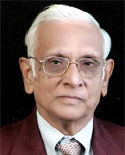
Dr. M.I.H. Farooqi (Dr. Mohammed Iqtedar Husain Farooqi) Is An Eminent Scientist Who Has Done Commendable Researches On Plant Products Of Commercial And Medicinal Value. He Retired As A Deputy Director (Scientist F ), National Botanical Research Institute, Lucknow, A Premier Institute Of India Dealing In Plant Sciences.

URl: 

New Age IslamIslam OnlineIslamic WebsiteAfrican Muslim NewsArab World NewsSouth Asia NewsIndian Muslim NewsWorld Muslim NewsWomen in IslamIslamic FeminismArab WomenWomen In ArabIslamophobia in AmericaMuslim Women in WestIslam Women and Feminism

Anti-Blasphemy Terrorist Beheadings In Nice And Paris: Muslims Must Foil The Fundamentalist Attempts Of Eulogising These Killers As ‘Ghazis’! Don’t Expect Even Sufi Ulema And Mashaikh To Go Beyond Ritual Condemnation

 New Age Islam Special Correspondent


29 October 2020


France has suffered yet another terrorist incident in which an attacker with a knife killed three people and wounded several others at Notre Dame church in the French city of Nice today. The Mayor of Nice described this deadly stabbing as an act of “terrorism”. According to Mayor Christian Estrosi, those who were killed included a woman and the caretaker at the basilica and that the suspect had repeatedly cried 'Allahu Akbar' (God is greatest).


Now there should be no dilly-dallying in honestly recognising the fact and identifying theological motivation behind this as well as the earlier gruesome terror incident in France, the beheading of a teacher in Paris. Both were inspired by an anti-blasphemy radical Islamist ideology and must be condemned in the strongest possible terms. But after we have expressed solidarity with France and the French people fighting for ‘freedom of expression’, let us now dig deeper into the ideological motivations of such terror incidents which remain equally critical to Europe as well as the Indian subcontinent with worrisome implications.


The sole motive of the anti-blasphemy killer is the extremist Islamic Prophetology, an inherent Islamic doctrine of defending Prophet’s honour which promotes the belief in the necessity (wujub) of executing a blasphemer even at the hands of a non-state actor. In this theology, such killings are considered legitimate and even expected of a common Muslim taking the law into his own hand.


At a time when an anti-France and ‘anti-Macron’ wave is flooding across the Islamic world, India has actually backed its ally France and President Emmanuel Macron, whom Pakistan, Turkey, and many other Muslim countries and organisations have not just severely condemned but also supported a public boycott of French products. In India, from the fundamentalist organisations like Jamaat-e-Islami Hind (JeIH) and Popular Front of India (PFI) to the soft-core Islamic organisations such as World Sufi Peace Mission and individuals like Shahi Imam of Fatehpuri Jama Masjid Mufti Mukarram, Mauala Mohsin Taqwi of Shia Jama Masjid (Kashmiri Gate), Islamic orator and former MP Maulana Ubaidullah Khan Azmi have all weighed in against France. They have vehemently denounced the French President against what they called ‘anti-Islam remarks’ and the insulting caricatures of Prophet Muhammad (pbuh) being publicized in France. But none of them had the temerity to turn inward and recognise the problem within. Not even as a note of caution!


The question now is: why so many Muslims around the world, including even in a multi-religious country like in India, tend to believe in death penalty for blasphemy that too by non-state actors in a secular nation state like France? The answer lies in those Islamist organisations and individuals who exploit this sensitive issue to control the masses and further their relgio-political ends. This is precisely why, during the last few years, there has been an increasingly profound and deep traction for the extremist anti-blasphemy narrative through various Urdu magazines, social media posts and proliferated Islamic literature in India and across the border. Look at the recent trends of anti-blasphemy killings and their theological justifications based on Namus-e-Risalat (protecting Prophet’s honour) and Khatm-e-Nabbuwat (Finality of Prophethood) in India and Pakistan:


On August 11 this year, violent clashes took place in the Indian city of Bangalore following the appearance of an inflammatory Facebook post on prophet Muhammad (pbuh). Some Muslims in Bengaluru reportedly provoked by the PFI resorted to wanton violence in protest against a reported incident of blasphemy against Prophet Mohammed (pbuh). Later, strict legal action against the perpetrators were demanded by a few Muslim intellectuals and human rights activists. But no one among them tried to closely look at the root of the problem. It was actually inspired by an immediately earlier incident in Pakistan. Khalid Khan—now increasingly popular as ‘Ghazi Khalid’ in social media across Indo-Pak— shot dead an American citizen accused in a blasphemy case in a Pakistani courtroom on July 29, 2020. Thereafter, the anti-blasphemy killer was instantly turned into an Islamic ‘warrior’ [Ghazi] catapulting from Pakistan to an Indian Islamist section on social media. Since then, ‘Ghazi Khalid’ is trending on several Islamic social media groups, particularly in Urdu, to the extent that he’s become the Facebook display picture of many and virtual rose petals are being showered on him. A large section of Islamic social media groups celebrated the anti-blasphemy killer. Some even eulogised him as the ‘real Ertugrul Ghazi’.


The mainstream Muslims in India and Pakistan strongly believe in Khatm-e-Nabbuwat (finality of Prophethood) and Tahaffuz-e-Namus-e-Risalat (protecting Prophet’s dignity). Therefore, they hold that anyone desecrating or claiming Prophethood is a blasphemer and must be killed. Tellingly, the killed American citizen in Paksitan Naseem Ahmad had allegedly proclaimed himself to be a Mujaddid (Islamic reviver) and Mahdi (Messiah).  As a result of similar alleged proclamations, over 62 people have been killed in Pakistan since 1990, according to a report by Centre for Research and Security Studies. The textbook example of an anti-blasphemy killer is Mumtaz Qadri—who killed governor of Punjab in Pakistan Salman Taseer. He continues to enjoy the status of a Pir (saint) for many Sunni Muslims in India and Pakistan and his grave is venerated by thousands.


In fact, the dominant Islamic theology expects Muslims to behave in a violent way when it comes to defending or protecting the Prophet’s honour being desecrated in any situation or society. Though the Quran is ambiguous regarding the penalty for blasphemy, certain hadiths from Sahin al-Bukhari and Sahih Muslim (the two topmost authentic hadith collections) are often quoted to legitimize the execution of someone known as a ‘blasphemer’. Consequently, common Muslims tend to lose all rational faculty when Prophet’s dignity (namus-e-risalat) is in question.


Certainty, many progressive Muslim scholars have also come up with an alternate theological interpretation of the related hadith texts which talk of killing an apostate or blasphemer. They argue that those hadiths should be contextualised and located in a specific situation in which the alleged apostates as well as blasphemes had indulged in a ‘sedition’ against the state and thus their execution was as a traitor rather than as apostate or blasphemer. They extensively quote from the same hadith collections of authentic reports on how Prophet Muhammad (pbuh) disapproved of violence against someone who abused or insulted him. There are numerous stories of how Prophet (pbuh) forgave those who disparaged him both in Mecca and Medina. However, all these alternate narrations remain in the textual domain of the modern Islamic scholars. They do not become part of or the final basis of the consensus theology.


In the social media as well as in the real world, the Muslim imagination and actions are largely shaped by the medieval Islamic jurists or the present-day clerics. Unless they are not confronted with the strong alternative interpretations, the minds of common Muslims are unlikely to be challenged on the issue of blasphemy. An entire social ecosystem has developed within a large section of Islamic community on social media where those who kill a ‘blasphemer’ are eulogised as ‘Ghazi’. Islamic slogans in Urdu like “Gustakh-e-Rasool Ki Saza Sar Tan Se Juda” (blasphemer’s punishment, beheading) have been doing the rounds. Contrast this slogan with the utterances of the Chechin perpetrator of the Paris beheading and the knife attacker in Nice, France. We never know when and where such slogans will translate into an act of terror.


As a note of caution, Indian Muslims must understand this evil design and foil the present and future attempts of those in India and Pakistan who are constantly trying to eulogise the murderers like the 18-year-old Chechen Abdullakh Anzorov who beheaded a teacher in Paris, or the 17-year-old Ghazi Khalid Khan who murdered an American citizen in Peshawar. Such terror empathisers who turn an immature and misguided youth into an instant Islamic ‘hero’ are actually the real culprits who vilify the peaceful atmosphere of a democratic country. Just ask yourself why PFI or SDPI (Social Democratic Party of India) jumped into the Bangalore protest and hijacked it? The reason is not difficult to see.


URL:


New Age Islam, Islam Online, Islamic Website, African Muslim News, Arab World News, South Asia News, Indian Muslim News, World Muslim News, Women in Islam, Islamic Feminism, Arab Women, Women In Arab, Islamophobia in America, Muslim Women in West, Islam Women and Feminism

Wednesday, October 28, 2020

Jamia Millia Islamia - Journey Of A Century In Overcoming The Educational Backwardness Of The Weaker Sections Of The Society Especially Muslims


By Dr. Mohammad Najeeb Qasmi Sambhali, New Age Islam

28 October 2020

20th Oct 2020 marks the 100th anniversary of "Jamia Millia Islamia". It was established on 29th Oct 1920. The sincerity of our forefathers and their great sacrifices have elevated this institution to such a high position that today JMI is considered as one of the standard universities not only in India but also in the world. The university has 9 faculties, various centres such as mass communication and five schools. Currently 25,000 students of different faiths, especially Muslim children are studying in JMI. This month, three new departments have been introduced in Jamia Millia Islamia: 1) Foreign Languages. 2) Hospital Management. 3) Environment Science.


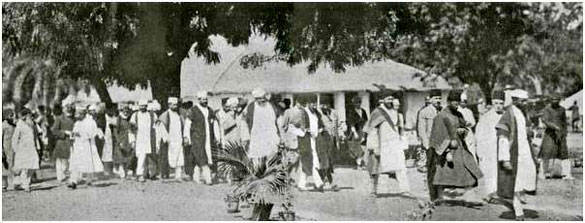
Procession at the first convocation of the Jamia in 1921. It includes Dr M.A. Ansari, Hakim Ajmal Khan, Syed Suleman Nadvi, Maulana Abul Kalam Azad, Maulana Shaukat Ali, A.M. Khwaja. Dr Zakir Hussain, Dr K.A. Hamied and Rauf Pasha. Photo: BY SPECIAL ARRANGEMENT by the Frontline.

------

Inshallah, this process of development will continue. Every stage from nursery to PhD is taught in JMI. The university has a library named “Dr. Zakir Hussain Library”. It is rich with millions of books. It was built in 2006 in the modern style in 3 Million dollars donated by Saudi King Salman bin Abdul Aziz.

For quite a long time, there is requirement of a medical college in JMI. Various governments, especially the previous government of Akhilesh Yadav had promised that the land of the Uttar Pradesh government adjacent to the university campus would be given to JMI for a medical college and hospital, but no progress has been made yet. On the occasion of the 100th anniversary of JMI, we ask the present government to provide land and extend necessary support for constructing a medical college and hospital for Jamia Millia Islamia which was established with the support of Mahatma Gandhi by Indian freedom fighters under the patronage of Shaykh-ul-Hind Maulana Mahmood Hassan.

Jamia Millia Islamia, New Delhi tops the list of Central Universities released by the Union Ministry of Education of India in the month of August 2020. In other words, in 2020, Jamia Millia Islamia is the most prestigious university in India. Jamia Millia Islamia secured the first position with 90% marks, while Rajiv Gandhi University, Jawaharlal Nehru University and Aligarh Muslim University scored 83%, 82% and 78% marks respectively. This is the university which was tried to discredit by some evil elements in late 2019 and early 2020, but congratulations to the university administration, teachers and students who did not respond to the bullets of the anti-national forces with bullets and adorned themselves with the ornaments of education. We can deal with the various problems facing the country only by getting education.


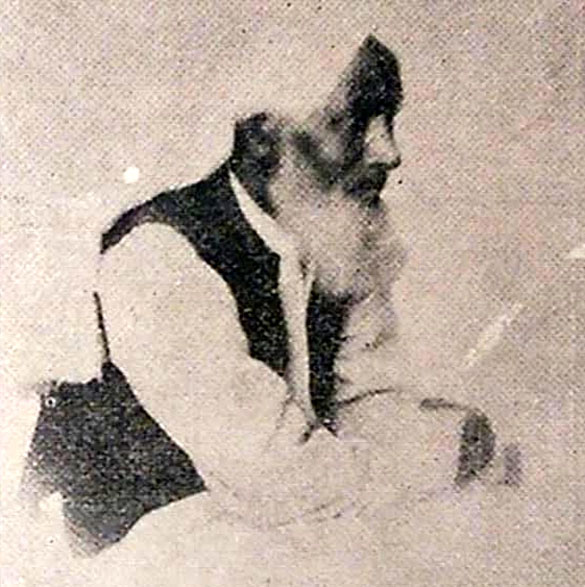
Shaykh-ul-Hind Hazrat Maulana Mahmud Hassan

-------

In 1920, under the guidance of Mahatma Gandhi, and the auspices of Shaykh-ul-Hind Hazrat Maulana Mahmud Hassan, Jamia Millia Islamia was established, which is one of the leading universities of the world today.  For its establishment and flourishment, the services of Hakeem Ajmal Khan, Dr. Mukhtar Ahmed Ansari, Abdul Majid Khawaja, Maulana Muhammad Ali Johar, Dr. Zakir Hussain, Professor Muhammad Mujib and other leaders will always be remembered. Jamia Millia Islamia is not only an academic institution, but a scholarly hub of various arts and sciences that our ancestors have raised and nurtured with their blood. The feature of this organization is that its founders were very active participants in India's war of independence. The establishment of the university came into force at a time when the independence movement was on its peak. The Leaders of the university were directly linked to the liberation movement. Thus, the Jamia Millia Islamia was formed as the cause of India's war of independence. That is why secularism, freedom, patriotism, enlightenment and tolerance are already present in the mold of the university. While the purpose of the establishment of the university is to remove the backward educational background among the minorities, the promotion of Urdu language is also important, which is why from the very beginning, the great Urdu poets and scholars used to visit the Jamia Millia Islamia.


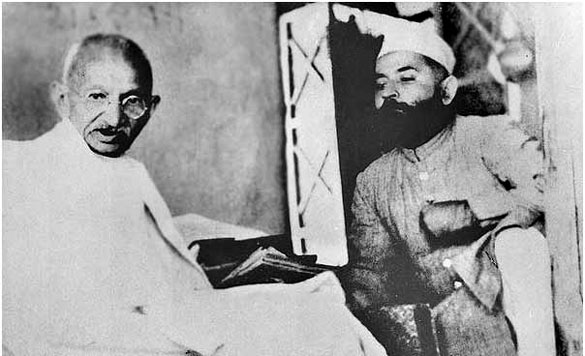
Mahatma Gandhi with Dr Zakir Husain. Gandhi was a steadfast friend of the Jamia from the beginning. Photo: The Hindu Archives.

------

Presently, Jamia Millia Islamia holds special recognition in educational fields all over the world. Not just thousands of people getting education from the university, but millions of people are serving the nation and nationality wherever they are living, while holding major positions in nation and abroad.  The world's great personalities have also been awarded the doctorate degree. Many areas of the University, especially Engineering College, Teacher's Training College, Mass Communication Center, Social Work Department, Arabic & Urdu Department etc. have a special place all over the world. Students of the university are highlighting the name of Jamia Millia Islamia in various fields in every region of the world.

Sir Syed Ahmad Khan founded an educational institution in Aligarh, but the fact cannot be denied that Sir Syed Ahmad Khan had close contacts with the British. Therefore, the freedom fighters were concerned about it, so those who participated in India's War of Independence also laid the foundation of an educational institution, Jamia Millia Islamia, in Aligarh on October 29, 1920, in the mosque of Aligarh College. In 1925, the university moved to a rented house in Delhi's Karol Bagh, where at one time, the Jamia Millia Islamia was close to be shut down, but a team of alumni came forward and offered their services. They not only pulled it out of difficult times but also paved the way for development. In 1935 the university moved to Okhla, where the patriarch Jamia bought land and dedicated it to the university.

Jamia Millia Islamia became a university in 1962 and a central university on December 26, 1988. Attempts were also made to remove the word Islamia in the name of the university, but it was strongly opposed by the beloveds of the university, especially Mahatma Gandhi. In a nutshell, the leaders of the nation have sacrificed their life, wealth and time to the Jamia Millia Islamia, which is illuminating the entire country like a bright lamp today.  After Aligarh Muslim University, Jamia Millia Islamia is such a great government university that has played an important role in equipping Indian Muslims with education.

Jamia Millia Islamia is now the prestigious Central University of India where not only thousands of students belonging to different sects of Muslims but also those from different faiths are studying in this secular institution. During the course of the university, important qualities such as kindness, tolerance, goodwill, humanity, patience and endurance were created or strengthened by interacting with others having different ideas.

Long Live The Jamia (University)

URl:   https://www.newageislam.com/islamic-culture/dr-mohammad-najeeb-qasmi-new-age-islam/jamia-millia-islamia--journey-of-a-century-in-overcoming-the-educational-backwardness-of-the-weaker-sections-of-the-society-especially-muslims/d/123297


New Age IslamIslam OnlineIslamic WebsiteAfrican Muslim NewsArab World NewsSouth Asia NewsIndian Muslim NewsWorld Muslim NewsWomen in IslamIslamic FeminismArab WomenWomen In ArabIslamophobia in AmericaMuslim Women in WestIslam Women and Feminism

Islam and Free Speech: A Reply to A. Faizur Rahman


By Arshad Alam, New Age Islam

28 October 2020

One has benefited immensely from the writings of Mr. Faizur Rahman and it is with the sole intention of taking forward the debate on blasphemy and freedom of speech that I write this rejoinder.

Reading the article, one gets the feeling that Mr. Rahman is more concerned with presenting the ‘good’ side of Islam rather than trying to understand and situate the horrors that accompanied the brutal murder of the French school teacher, Samuel Paty.

------------------------------------------------------------------------------------------

Also Read:  Blasphemy, Islam and Free Speech

------------------------------------------------------------------------------------------

To be fair, the article condemns the murder of Paty, but like most apologist attempts, it absolves Islam of all responsibility in this motivated and premeditated murder. The trouble with this obsession with highlighting the good side of Islam is that most religions (including Islam) do not come only with a good side. Islam does not come in discrete packages where one can pick and choose the good and leave out the ‘bad’. Rather it is a ‘structuring structure’ which wants to influence and direct all aspects of a persons’ life-world. The problem becomes more acute because in the process of doing this, it also wants to dictate how non-followers should behave and relate with Islam. And not everything is good about this desire of Islam to affect and alter the cultural conditions of people. Some of it may be good, but others are completely undesirable in the present context.

------------------------------------------------------------------------------------------

Also Read:  The False Binary of the Secular versus Islamic Needs to Be Broken

-------------------------------------------------------------------------------------------

Leaving out the problematic parts of Islam and concentrating on the good parts, as Mr. Rahman does speak of a certain dishonesty, which has become part and parcel of Muslim apologia. Nothing good can come out of a debate where the intention is to ‘defend’ Islam rather than to see how the religion is implicated in things and events which we no longer hold dear.

Rahman Sb. approvingly quotes Mustafa Aykol to prove that blasphemy was ‘invented’ as a criminal offence by medieval jurists. More specifically, Aykol argues that it was instituted by the Ummayads, hinting that most Muslims do not have high regard for these caliphs. The problem with this argument is that flies in the face of Islamic history and theology. Most of the Islamic jurisprudence is the product of Ummayad period. It is also true that rather than detesting the Ummayads, Sunni Muslims have long held them in high regard, for the simple reason that unprecedented Islamic expansion took place during this period. For many Sunni Ulama, this is in fact the golden period of Islam. 

--------------------------------------------------------------------------------------------

Also Read:  The Muslim Consciousness of Persona of Muhammad, the Messenger of God: Reflections on an Islamist Radical Beheading History Teacher Samuel Paty in Paris for Displaying Cartoons portraying the Prophet as a Suicide Bomber

----------------------------------------------------------------------------------------------

In order to prove the inherent good core of Islam which was corrupted by the Ummayads, Rahman goes back to the Quran, rightly arguing that there is no punishment specified against blasphemy in the holy text. While Muslims the world over revere the Quran as the literal word of God, most of them have second order knowledge of this text. The large majority depends on translations and interpretations of the Quran done by various scholars who simplify the message for the lay believers. The problem is not that the Quran cannot be accessed directly; the problem is that the text is at places so abstruse that an average reader becomes befuddled in trying to make sense of it. If this was not the case, then we would not have had the need to have a separate discipline to understand the Quran, as we have in most centres of Islamic learning.

-----------------------------------------------------------------------------------------------

Also Read:  Embrace What Is Different: Quran and Hadith Stress on Building an Inclusive Society

-------------------------------------------------------------------------------------------------

The Quran is polyphonous; it not just speaks to different contexts but also at times appears to talk to different sets of audiences. It is not a surprise therefore that there are multiple readings of the same text; often linked to social and cultural contexts in which it is read. A Barelwi reading the Quran in India and a Salafi reading it in Saudi Arabia take very meanings from the same text. Therefore, trying to locate the Quran as the centre of Islamic experience is misleading, to say the least. The motivation of the young Chechen who murdered Samuel Paty cannot be shown to be un-Islamic just because Rahman Sb. thinks that the young lad did not understand the Quran properly.

We must also understand that while the Quran is basic to the formation of Islamic law, it is not the only text which informs the organisation of Islamic worldview. The biographies of the Prophet and the Hadith (which again was started by the Ummayads) are very important sources of Islamic law. In fact, the necessity to collect and compile hadiths arose precisely because the Quran was not sufficient to provide all the answers for the emerging Islamic caliphate. Not only were hadiths collected but they were also fabricated in large numbers to suit the interests of the powers of the day. Despite this, hadith is still an important source of Islamic law. So while Quran may be silent on the need to punish a blasphemer, the hadiths are clearly in the affirmative, even specifying how the person should be killed.

Rahman Sb. also argues that the prophet of Islam forgave all those who insulted and made fun of him. Certainly, he is not just relying on the Quran for this information but also on other sources of law from which we get information about the life of the prophet. But the same sources also tell us that the prophet of Islam ordered and supervised the killing of enemies, including women. The assertion that a general amnesty was declared after Muslims captured Mecca is simply fallacious. While Mr. Rahman is certainly entitled to his own hermeneutics of Islam, he must know that he stands on a very weak ground. The hegemonic reading of the Quran and allied texts, done by important seminaries and disseminated worldwide argue the exact opposite of what Mr. Rahman intends to do. There is enough in Islamic texts which justify killing for blasphemy. The dominant reading of Islamic law from Indonesia to Egypt affirms that a blasphemer must be killed. Quoting the Quran, and that too, selectively, is certainly not going to save us from this malaise.

-------------------------------------------------------------------------------------------------

Also Read:  Is Islam Really Facing A Crisis, As French President Emmanuel Macron Said After The Beheading Of Samuel Paty

-------------------------------------------------------------------------------------------------

The other part of Mr. Rahman’s article is an ingenious attempt to wilfully misread the problem at hand. Throughout the world, there are laws which are anomalous, and the western world is no exception to this rule. The current problem in France is not the result of a skewed application of such laws but because of a resurgent Islamist politics which ends up beheading those who think differently. There cannot be any discussion on French law without first decoding the motivations of such killings. And those motivations are purely religious; they are enacted because the person believes in a particular religious ideology. The bigger concern therefore should be to counter such tendencies and condemn this religious motivation. Rather, what we get in Mr. Rahman’s article is to point fingers at the hypocrisy of French law which does not take into considerations the feelings of Muslims. Will Mr. Rahman accept India as a Hindu theocratic state if majority of people in this country feel like having it? Law certainly should not be hostage to feelings of people, but should be based on rationality and wisdom.

Mr. Rahman points to two issues in order to bring out the purported hollowness of France’s commitment to freedom of speech. He argues that there is a law which protects citizens (who are alive) from defamation and wants its extension to cover people who are long dead. Through this, he hopes that those defaming the prophet by making films and cartoons can be prosecuted. Rahman Sb. completely misreads the situation. The prophet is no ordinary being; in fact he is not just a person, but represents an idea. Mr. Rahman is telling us that certain ideas should be above any criticism. This is a huge expectation. Europe is partly built on the tradition of critique. And everything is kosher within this tradition. The sweep of this tradition was such that the critique of Christian faith was not just done by secularists but also by church officials themselves. It is only recently that such criticism has been applied to Islam because today it is an important presence in Europe. If such a law is enacted then it will be applicable to all religions, which will mean negating centuries of scholarship against this institution. Or is Mr. Rahman asking for an exclusive law applicable only to defaming Islam and its prophet? Either way, instituting such a law would be disastrous for the simple reason that no society has progressed without ceaseless questioning of the world around them. In fact, one reason why Muslim societies are regressive is because of the existence of such laws which prohibit the free exchange of ideas. Certainly this state of affairs is most conducive for an authoritarian regime. In a fascist state, one doesn’t think; one just believes.

Rahman Sb. also points out that although one can offend religious sensibilities, but there is a European law which criminalises the denial of holocaust, thus the application of ‘freedom of speech’ is selective and a design to target Islam and Muslims. This oft-repeated clever argument misses the point that the two are not comparable.

One is about a certain set of ideas, the other is about the horrible sufferings of Jewish people. There is nothing wrong in critiquing ideas or even making fun of them. Judaism, Christianity and Islam for example, have continuously critiqued and ridiculed another set of ideas called polytheism. It is rather rich therefore of Islam to expect to be treated differently by another set of ideas, in this case, secularism. Ridiculing people or communities, on the other hand, should and must be severely restricted. Denying the holocaust is not just getting trapped in conspiracy theories, but is an insult to the lives of six million Jews who perished due to the madness of racial purity. And it started with caricaturing of people: Jews were talked about as evil, scheming, pests and eventually this propaganda became the common sense of a lot of people. When you reduce a community to the level of pest, there is not much remorse that one feels when the community is obliterated. Rahman Sb. would do well to remember that such a law is needed to prevent the recurrence of such brutality. Laws must be understood in their context and the purpose for which they are made. There is already a holocaust denying industry and one hopes Mr. Rahman is not part of this fantasy.

Mr. Rahman has also suggested that Samuel Paty could have had the same argument in class without showing those cartoons. We need to understand that the classroom space is sacrosanct and that teachers must be understood as the only ones who have the authority to decide what is best suited to his or her pedagogical strategy. In India and elsewhere, we have teachers being assaulted for teaching what they deemed fit for the class. I am sure Mr. Rahman would not condone the behaviour of Hindu right wing mobs who have assaulted teachers, accusing them of hurting their feelings. If these thugs, whether Hindu or Islamic are to decide what should or should not be taught in our schools, then we should just say good bye to all criticality which comes with schooling. The need of the hour is to protect teaching spaces from such right wing assaults; not to police them, as Rahman Sb. seems to be suggesting.        

Islam demands respect from others while at the same time being extremely disrespectful to other secular or religious traditions. Respect is always earned. Islam needs to earn it through an open embrace of all epistemologies, be they of different religions or sexual orientations. But in order to do so, it first needs a deep introspection of its own theological underpinnings which reeks of supremacism.

Those who want to ‘rescue’ Islam need not just limit themselves to the ‘inherent goodness’ of the Quran, but also see how the same Quran has been used to marginalise, exclude and subdue others.

----

Arshad Alam is a columnist with NewAgeIslam.com 

URL:   https://www.newageislam.com/islamic-ideology/arshad-alam-new-age-islam/islam-and-free-speech-a-reply-to-a-faizur-rahman/d/123299


New Age IslamIslam OnlineIslamic WebsiteAfrican Muslim NewsArab World NewsSouth Asia NewsIndian Muslim NewsWorld Muslim NewsWomen in IslamIslamic FeminismArab WomenWomen In ArabIslamophobia in AmericaMuslim Women in WestIslam Women and Feminism

On Cartoons And Headscarves, Islam Should Not Be Reduced To A Cult Or Mere Optics


By Junaid Jahangir, New Age Islam

28 October 2020

Does Islam have any internal value or is it always going to be defined in opposition to some perceived external threat? This question becomes relevant as many Muslims outside France are engaging in demonstrations and boycott of French products over the umpteenth row on the Prophet’s cartoons. This question is also pertinent given that the recent policy of Faysal Bank in Pakistan to mandate headscarves is being justified by some in opposition to the French ban in government spaces.

------------------------------------------------------------------------------------------

Also Read:  The False Binary of the Secular versus Islamic Needs to Be Broken

-------------------------------------------------------------------------------------------

Often intellectuals of the Marxian bent blame colonialism for the ills of the Muslim world. While there is merit to the arguments on the role of colonialism, it is also true that Muslims had agency in response to colonialism and are not mere hapless victims of past historical events. Islam rejects the concept of original sin, so that the sins of the father do not visit the son. What this means is that we have the responsibility to not allow past ills to define the future course of our policies and actions. Borrowing from Maulana Wahiduddin Khan, based on an approach of merciless introspection, the reactionary approach of Muslims towards silly cartoons and headscarves deserves to be thoroughly critiqued.

-------------------------------------------------------------------------------------------

Also Read:  The Muslim Consciousness of Persona of Muhammad, the Messenger of God: Reflections on an Islamist Radical Beheading History Teacher Samuel Paty in Paris for Displaying Cartoons portraying the Prophet as a Suicide Bomber

The Umpteenth Cartoon Demonstrations

Muslims across the globe outside France have been demonstrating and campaigning to ban French products over the cartoon issue. This raises the question that how many French products do Muslims who are protesting really consume to make any difference? What are they really sacrificing? After all, it is not clear that these demonstrations are being supported by Muslim governments, as they continue with their trade policies based on economic realities instead of exaggerated emotions. This is true for countries like Turkey that enjoy significant trade relations with both Israel and France even as the Turkish President keeps playing the emotions of the reactionary Muslim masses.

--------------------------------------------------------------------------------------------

Also Read:  Embrace What Is Different: Quran and Hadith Stress on Building an Inclusive Society

-------------------------------------------------------------------------------------------------

All of this indicates that such protests and campaigns are merely about optics. Consider the Pakistani response if the offending country were China. It is here that neither the Pakistani Prime Minister nor the reactionary masses have raised any vocal concerns despite the existence of the education camps, which some brand as concentration camps for the Uighur Muslims. Indeed, Pakistan cannot afford to take a principled stand with respect to their strongest ally on whom they are utterly dependent especially as they lose ground with Saudi Arabia and the UAE.

 Another issue that arises is that Muslim masses are often played by hateful, lying and deceitful ideologues that instigate other people's youth to murder and terrorism. Such ideologues have often used old footage and pictures and introduced them in an entirely different context. For instance, some Muslims are circulating an old video of the French police tackling Muslims on a property rights issue and selling it in the context of the cartoon issue to incite Muslim passions to action. But this isn't about Muslim sensibilities, for several Pakistani Muslims have most recently been glorifying the Caliph Yazid who had the Prophet's grandson and his family mercilessly murdered. What becomes of the respect for the Prophet when his own family has been so badly treated by Muslims themselves?

------------------------------------------------------------------------------------------

Also Read:  Blasphemy, Islam and Free Speech

------------------------------------------------------------------------------------------

To reiterate, neither are these protests about a principled stand that warrants personal economic discomfort nor are they about the Prophet’s honour that is best upheld by his example to repel evil with that which is better. Alternatively, this manifestation of a reactionary Islamic narrative is simply about getting political mileage and remaining relevant through optics in a world where the real issues include exacerbating inequality and climate change that is leading to havoc like the current pandemic.

The Umpteenth Regulation Of Headscarves

The emphasis on optics that rests on the superficial instead of Tazkiyya Nafs (inner purification) that calls for deep introspection is perpetuated when men continue to control women’s bodies by dictating their dress codes and their bodily autonomy on reproductive rights. Most recently, Faysal Bank mandated that women employees should wear headscarves and loose-fitting clothes. Some Muslims argue that if France bans headscarves in government spaces then Faysal Bank can have laws mandating an Islamic dress code and that if you don't like it, you can take your business elsewhere.

-------------------------------------------------------------------------------------------------

Also Read:  Is Islam Really Facing A Crisis, As French President Emmanuel Macron Said After The Beheading Of Samuel Paty

-------------------------------------------------------------------------------------------------

The problem with this logic is that it defines Islam as a reaction to France and not as an entity that stands on its own. Such has been the Muslim logic for centuries whether Islam was defined in opposition to the British Empire or more recently “western values.” Another problem with the logic is that if the French violate a reasonable freedom of expression then it does not necessitate that Muslims should mindlessly follow the same violation of women’s bodily autonomy. Yet another problem with this logic is that it treats Islam as a corporate cult or a brand. A cult is a cult whether it is defined by mandatory tattoos and piercings or by beards and headscarves. Alternatively, Islam cannot be reduced to dress codes.


 One should pay heed to the nuanced scholarship proffered by Muslim women academics like Amina Wadud, Riffat Hassan, Asma Barlas, Fatima Mernissi and Leila Ahmed amongst so many others on the subject that concerns women’s bodies. Similarly, many male Muslim scholars like  Javed Ahmad Ghamidi, Moiz Amjad, Shehzad Saleem, Khalid Zaheer, Mufti Abu Layth and Farhad Shafti amongst others do not view headscarves as an obligatory practice. Additionally, headscarves have never been part of the Pakistani culture. So why should a practice from the Middle East be imported to the Indian subcontinent, especially when strong role models for Pakistani women like Fatima Jinnah referred to as the Madare Millat (mother of the nation) never wore one!


Islam should not be reduced to a cult.  If Islam is an umbrella for universal values, then one interpretation cannot be privileged over others. This means that women who believe headscarves are obligatory will wear them and those who don’t will not. Neither group of women should police each other and men should simply leave women's issues based on the Prophet’s teaching that a mu’min (believer) does not concern himself with that which does not concern him. They should live and let live.


In essence, on both cartoons and headscarves, Islam should not be reduced to a cult or mere optics. 

URL:   https://www.newageislam.com/islamic-ideology/junaid-jahangir-new-age-islam/on-cartoons-and-headscarves-islam-should-not-be-reduced-to-a-cult-or-mere-optics/d/123287

New Age IslamIslam OnlineIslamic WebsiteAfrican Muslim NewsArab World NewsSouth Asia NewsIndian Muslim NewsWorld Muslim NewsWomen in IslamIslamic FeminismArab WomenWomen In ArabIslamophobia in AmericaMuslim Women in WestIslam Women and Feminism