Pages

Monday, August 2, 2021

Palestinian Lives between War and Peace


By Mushtaq Ul Haq Ahmad Sikander, New Age Islam

2 August 2021

The Story of Palestine Is A Gory Detail of Constant War Breached By Small Piecemeal Of Peace

Main Points:

1.    The Nakba hasn’t stopped for Palestinians but they are made to live and relive Nakba throughout their lives.

2.    In Palestine Political is Private and Politics has a deep impact on the lives of individual Palestinians.

3.    Mutual co-existence with the Arab Jews was normal but when the migrant Jews came the problems started then only. Thus the creation of Israel changed the whole course of lives for Palestinians.

----
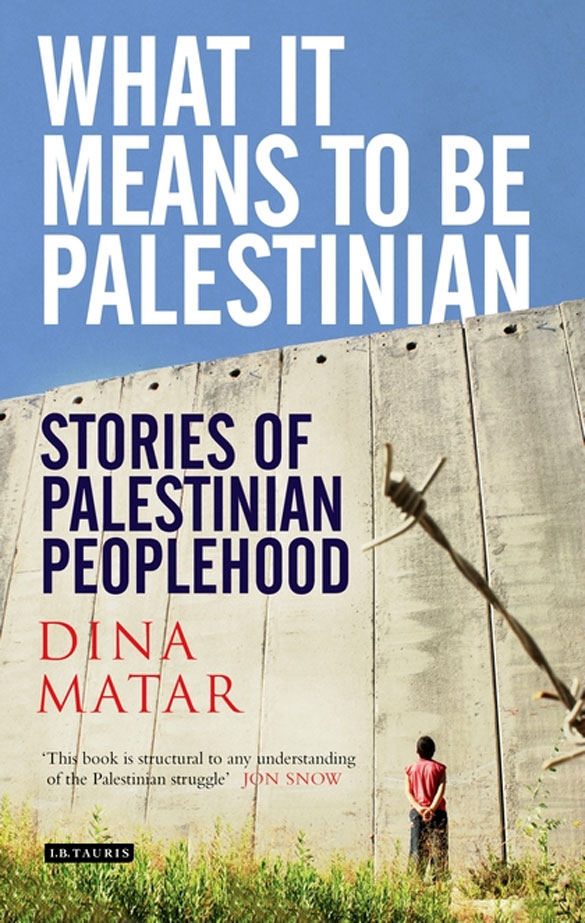


What It Means To Be Palestinian: Stories of Palestinian Peoplehood

By Dina Matar

London, United Kingdom:  I.B Tauris & Co. Ltd, 2011

Pp214. ISBN: 9781848853638

------

The problem and issue of Palestine is one of the longest running in our contemporary history. It is a legacy of the British Imperialism and attained a stature of intractable conflict with the creation of Israel that happened by displacing the indigenous native population of Palestinians in 1948. They remember this tragedy as Nakba and they commemorate it on 14 May, each year. Since the first Nakba that is synonymous with the unjust creation of Israel, the Palestinians have witnessed similar Nakbas during different phases of their contemporary history. The Nakba hasn’t stopped for Palestinians but they are made to live and relive Nakba throughout their lives. Millions continue to be homeless refugees in different Arab countries and those who inhabit the occupied territories of West Bank and Gaza of what now has remained of Palestine, live in a perpetual fear of being rendered homeless by the Israel. Exile and homelessness aren’t the only issues that are baffling Palestinians but illegal detentions, torture, blowing the homes and even assassinations are the gruesome realities that are a part of their daily lives.

The book as the name suggests isn’t a text that deals with the historical or political roots of Palestine issue, but its primary focus are the lives of the common Palestinians, who have lived and experienced the ramifications and impact of this conflict on their lives. In a way it is contemporary history of Palestine too because Palestinians and Palestine Issue can’t be separated from each other. They are so mired and entangled with each other that they overlap in any discourse about Palestine. In Palestine Political is Private and Politics has a deep impact on the lives of individual Palestinians. This book is a testimony of the same fact.

In her Preface of the book, Dina Matar explains the problems that are beset while representing Palestinians. “First that Palestinian history tends to be viewed solely in relation to Israeli history or narrative; and second that the story of the Palestinians, as ordinary human beings subjected to violent forms of power, remains a largely hidden one”. About the subject matter of the book Dina explains, “This book seeks to ascribe agency to the Palestinians, not as helpless victims of forces beyond their control, as they have often been portrayed, but as actors at the centre of critical phases of their modern history”. (P-xii).

In her Prologue, Dina describes the stories that are related in chronological order which correspond to certain phases in history of Palestine. These stories begin with the revolt of 1936 against British rule in Palestine and end with the Oslo Accords (1993). The book is based on the in depth interviews and conversations with the Palestinians that are spread across various countries and those who inhabit the occupied parts of Palestine. Thus this book is a contribution to the oral history of Palestine issue. It tries to capture the complexities of Palestinian experiences through personal stories. It is a testimony towards reliving memory and what memory can do. From these stories no conclusions have been drawn and only an epilogue has been written at the end that keep the story of Palestinians open ended.

The book is divided into five chapters. The first chapter, On the Road to Nakba: Palestine as a Landscape and a People, 1936-48, describes various stories of Palestinians who have lived that experience and how some Palestinians who left as small children, continue to harp deep imprints of the exile and still long to return but that longing and perpetual exile never came to an end. The ethnic cleansing of Palestinians started with the creation of Israel as thousands were expelled from their villages and lands that were illegally occupied through military might by the Zionists. Some of the personal stories describe how the everyday problems were resolved within a clan by a head and there was no need to approach the courts for arbitration. Courts were approached only when problems arose over land between Jews and Arabs. Mutual co-existence with the Arab Jews was normal but when the migrant Jews came the problems started then only. Thus the creation of Israel changed the whole course of lives for Palestinians. There were Palestinians who thought this displacement was temporary and they would go back to their native land again, but that desire and dream never came true.

The chapter second is titled, Living the Nakba: In the ‘Perilous Territory of Not Belonging’, 1948-64. It relates the stories of Palestinians whose severance from their land and places structured and shaped their tragic experiences. Their longing for their native land continued with the hope that they will return back one day, but with each passing day the hopes and chances of returning got diminished. This chapter also describes the stories of Palestinians living in Israel and the writers living in Israel who contributed to the Palestinian resistance.

Raising the Fedayeen: Between Romance and Tragedy, 1964-70 is the title of the third chapter. It describes the birth and evolution of Al Fatah as an armed insurgent wing of Palestine Liberation Organization (PLO) and the romance gun and armed insurgency brought with it. It describes the story of Laleh Khalid the young guerilla who hijacked an aeroplane. This period witnessed a vibrant women activism and their active participation in resistance movement. Becoming a Fedayeen was romantic and dream of most youth. But this period wasn’t without its downfalls. There were clashes and skirmishes between Palestinian guerillas and Jordanian army. Resistance lost its vibrancy and women too were retrograded to oblivion. Pessimism dawned on the resistance movement, and many resistance cadres were arrested or detained. Now the survival in jails became a priority and thus a new generation of children of resistance was born.

The fourth chapter is titled as Living the Revolution: Living the occupation, 1970-87. It describes the decadence and loss of the two decade of gains that Palestinian resistance had achieved. It describes the trauma and memories associated with this decadence. It describes the lives of Palestinians in Jordan, Lebanon, Israel and in occupied Palestinian territories. In a brutally honest manner it describes how the Palestinians were killed by Syrian army when they fell out with PLO and its leader Yasser Arafat. The situation in Lebanon was no different. Palestinians were killed and rendered homeless by Lebanese state too. The common Palestinians were disillusioned with policies and stance of Yasser Arafat who according to them left them in lurch and helpless in Beirut. The Palestinians criticize the armed struggle for the miseries it brought in its wake that included the internecine battles among various Palestinian groups. The lack of empathy of Palestinians for each other added insult to injury.

Children of the Stones: Living the First Intifada is the last chapter of the book that describes the resistance of new political motivated young generation of Palestinians who resist the Israeli occupation through stones. It then describes the culmination of what is known as the First Intifada in the form of Oslo accords. A brief reference to suicide bombing that characterized the second intifada with the Hamas coming to the fore and the armed insurgency became vibrant option again, is too described at the end of this chapter.

Overall the book is an important contribution to the oral history of Palestinians and it provides a rare insight in the lives of the ordinary and other important Palestinian individuals. The author needs to be congratulated for her efforts and pain sticking research in transcribing in black and white the experiences that Palestinians went through over these many decades. Despite the book ending at year 1993 and more than two decades have passed since then with many new stories and oral history that needs to be documented now, but that doesn’t reduce the worth of the book. It is an essential read for anyone having an interest in Palestine conflict. The stories of the book meticulously describe the impact, influence and ramifications the conflict of Palestine has over the people of this land. It documents and analyzes the different problems, Palestinians face in different lands. It is truly a recommended read and any student or scholar of Palestinian history can hardly afford to miss this book.   

-----

M.H.A. Sikander is Writer-Activist based in Srinagar, Kashmir

URL:    https://www.newageislam.com/books-documents/palestinian-war-peace/d/125162


New Age Islam, Islam Online, Islamic Website, African Muslim News, Arab World News, South Asia News, Indian Muslim News, World Muslim News, Women in Islam, Islamic Feminism, Arab Women, Women In Arab, Islamophobia in America, Muslim Women in West, Islam Women and Feminism

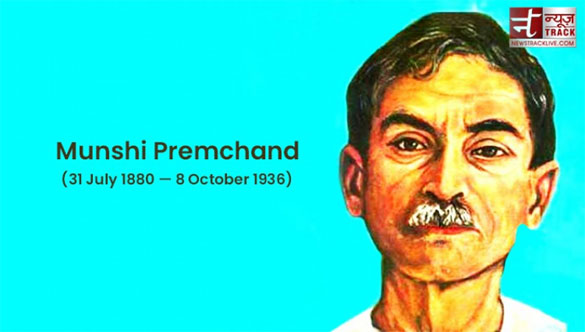
Munshi Premchand – A Bridge between Hindi and Urdu Literature


By S. Arshad, New Age Islam

2 August 2021

Premchand's Greatness Lies In His Universal and Timeless Appeal

Main Points:

1. He wrote both in Hindi and Urdu.

2. He wrote about the life of the poor and the downtrodden.

3. His fiction is not only the means of entertainment but also song of protest

4. He advocated widow remarriage in his fiction.

----


(A tribute on Premchand's birth anniversary)

Munshi Premchand was one of the greatest literary personalities of India in the 20th century. He wrote more than 300 short stories and novels in both Urdu and Hindi and contributed to the social and political awareness among Indians during the British rule.

Munshi Premchand started his literary career in 1907 with his short story "Dunya Ka Sabse Anmol Ratan"(the most precious gem of the world). The story had patriotic undertone as the writer symbolically conveyed the message to the reader that a drop of blood shed for the motherland was the most precious jewel.

His first collection of short stories Soz-e-Watan was published in 1909. The collection was seized by the British government because of its anti-imperilialist content. The government imposed censorship on his writings. He was told to present his stories for scrutiny before publication. Premchand felt gagged and left the government job to avoid government pressure. After that he started writing with a greater zeal.

The short story in Premchand's age was generally based on feudal topics and revolved round love and romance. Munshi Premchand started writing short stories on social issues of the middle class and poor sections of India. He depicted the lives and plight of the farmers under the oppression of the feudal system and the oppressive policies of the British government. He wrote stories and novels with the purpose of reform and bringing change. Protest was the undercurrent of his creative stream.

Not only did he depict the life of the farmers but also of the plight of women, particularly of the widows and young widows. In his stories and novels he advocated the remarriage of widows. The evil of dowry, bribery in the police and the bureaucracy, tyranny of Zamindars are some of other themes of his stories. Gowdan, Chowgan-e-Hasti, Nirmala, Ghaban are some of his path-breaking novels that paved the way for progressive literature in India. He was the pioneer of progressive movement in literature long before the progressive movement was institutionalised in the sub-continent. The first conference of the Progressive writers Association was held under his Presidentship and under the guidance of Sajjad Zaheer.

Premchand wrote both in Hindi and Urdu and produced many short stories in Hindi and Urdu. He is regarded as the greatest fiction writer by the critics of both the languages. Renowned critic of Urdu Prof Aal Ahmad Suroor wrote:

"Various revolutions of the 20th century and the influence of Premchand brought new trends in fiction writing. The new fiction writing did not remain mere a means of entertainment, rather it became a song of protest."

Salahuddin Ahmad, the editor of the magazine Adabi Dunya wrote:

"Premchand was not influenced by outer factors. The atmosphere of his novels and his characters are out and out Indians. Premchand emerged with a universal attitude and he observed life from many angles. Although he had turned a little reformist and this trend is reflected more in his later day novels and though sometimes he wrought his stories around some social evil with the purpose of reform and his style was in harmony with the social and economic system and values of the age before the War but it is also a fact that he also laid the foundation of psychological fiction and he was the first to realise the importance of construction of the characters in the story."

The realistic and progressive fiction produced by Premchand led the fiction of that era out of Tagorean influence and a whole lot of fiction writers of his era and of later generations like Ahmad Nadeem Qasmi, Manto, Upendra Nath Ashk, Bedi, Ismat Chughtai, Krishan Chander, Ali Abbas Hussaini etc were influenced by Premchand.

This is the greatness of Premchand that even 85 years after his demise, he continues to influence and inspire generations of Urdu and Hindi fiction writers.

-----

S. Arshad is a columnist with NewAgeIslam.com.

URL:    https://www.newageislam.com/current-affairs/premchand-hindi-urdu/d/125163


New Age Islam, Islam Online, Islamic Website, African Muslim News, Arab World News, South Asia News, Indian Muslim News, World Muslim News, Women in Islam, Islamic Feminism, Arab Women, Women In Arab, Islamophobia in America, Muslim Women in West, Islam Women and Feminism

More and More Islamic Countries Monitor Friday Sermons to Prevent Extremism

 Some Preachers Deliver Hate Speech from the Pulpit

Main Points:

1. Jordan imposed restrictions on Friday sermons.

2. Egypt, Pakistan and Bangladesh imposed restrictions on Friday sermons.

3. Pakistan has suggested 44 topics for Friday sermons.

4. In Bangladesh, preachers have to read out written sermons.

5. Many preachers openly support terrorist organisations.

-----

New Age Islam Staff Writer

2 August 2021

Friday sermons have been a powerful platform for disseminating Islamic knowledge and forming public opinion and imams and Khateeb (preachers) have used this platform for educating and guiding Muslims on important issues in every age. Since the Friday prayers attract a large population of Muslims in the locality, the imams and preachers find this opportunity to deliver important messages of larger public interests.

However, many imams and preachers with political affiliations and sectarian bias also started using Friday sermons for their petty political or sectarian purposes. Speeches full of sectarian hatred or inciting Muslims against popular elected governments were also delivered in many Muslim countries. Some extremist preachers also supported extremist organisations. After the emergence of the ISIS, many preachers openly supported or glorified the ISIS as the flag bearers of caliphate. This caused chaos and violence in many Islamic countries.

As Friday sermons became more and more problematic for the governments and the society, the respective governments felt the need to monitor the sermons and reign in 'firebrand' preachers.

This need was felt more after the emergence of the ISIS as preachers affiliated to hardline Islamic organisations supported the ISIS and encouraged youth to join it.

In 2014, Jordan was one of the countries that was the first to decide to monitor the Friday sermons because the ISIS was gaining ground in the country due to the support of some Salafi preachers. The Islamic Affairs Ministry told the preachers and imams to preach moderate Islam in their Friday sermons and warned them of strict action if they violated the order. The minister told them to deliver the sermon only for 15 minutes citing the example of the holy prophet pbuh whose sermons were short and concise. Not only that, the ministry even suggested the preacher’s topics for Friday sermons. Here are some of the topics:

1. Security and Stability: the need for unity in a time of crisis

2. The Hijra New Year: Lessons derived from the prophet's flight from Mecca

3. The beginning of the rainy season--- safety measures in preparation of winter.

In 2016, Bangladesh government also decided to monitor the Friday sermons after a number of terror attacks particularly attacks on a bakery took place allegedly by the ISIS and some attackers acknowledged that they were influenced by the speeches of Dr Zakir Naik.

In Bangladesh, preachers often deliver sermons that incite extremism or spread sectarian hatred. This prompted the government to control the Friday sermons in 300,000 mosques across the country. The Islamic Foundation, an institution of the Bangladesh government decided to send pre-written texts to the preachers before the prayers.They were instructed to deliver sermons against terrorism and extremism in order to prevent the spread of extremist ideas among the youth.

In 2018, the government of Pakistan also took a similar decision. Since a section of the imams and preachers of Pakistan subscribing to sectarian and extremist ideology often deliver incendiary speeches inciting hatred and violence, the National Counter-terrorism Authority imposed restrictions on Friday sermons delivered by preachers and imams. The government suggested 44 subjects on which preachers could deliver Friday sermons. However, the preachers said they will co-operate with the government but would not accept any written script.

In 2016, Egypt's Ministry of Religious Endowment imposed similar restrictions on imams of mosques. Imams were directed to read identical sermons on suggested topics to prevent terrorism and extremism. The ministry will set themes for Friday sermons. For example, one theme was:

"Importance of redeveloping squatter settlements and helping the poor"

Though monitoring Friday sermons is not new in most of the Gulf States like Saudi Arabia, UAE and Egypt as the kingdoms and Emirates want to suppress dissent, other democratic countries like Pakistan and Bangladesh had to implement such restrictions because the preachers had made the pulpit a platform to spread sectarian and extremist ideas which were promoting extremist ideologies. In principle, the government should not dictate imams what to say and what not to as they have the knowledge of Shariah but the imams also should realise that the pulpit should not be used for sectarian or political purposes. In May this year, a preacher named Ameer Hamza was arrested for inciting violence and glorifying militants. Another preacher of Pakistan Syed Muzaffar Shah Qadri who openly supported the killing of Salman Taseer and glorified Mumtaz Qadri was banned from preaching in Pakistan but he was invited to the UK to deliver sermons in some mosques.

Such extremist preachers spread hatred and incite the Muslim youth to revolt against the democratic governments and encourage them to join extremist organisations. Therefore, the governments of Islamic countries had to form.mechanism to monitor the Friday sermons delivered from the pulpit.

URL:   https://www.newageislam.com/radical-islamism-jihad/sermon-friday-extremism/d/125164


New Age Islam, Islam Online, Islamic Website, African Muslim News, Arab World News, South Asia News, Indian Muslim News, World Muslim News, Women in Islam, Islamic Feminism, Arab Women, Women In Arab, Islamophobia in America, Muslim Women in West, Islam Women and Feminism

Madrasas, Caste and Islam


By Arshad Alam, New Age Islam

2 August 2021

They Were Meant For Ashraf Muslims, But Today, Madrasas Are Populated By Ajlafs

Main Points:

•        Muslims have a tendency to deny the presence of caste system amongst them.

•        Deobandis and Barelwis both started with the idea that education should be restricted to the four upper castes.

•        Given the fact that today madrasas are inhabited by Ajlaf teachers and students; will we see a critique of caste emerging from these institutions?

-----

The persistence denial of Muslims notwithstanding, caste is as ubiquitous within the Muslim society as it is in the Hindu society. Sociologically, this makes sense because caste (not religion) is the most important fault-line in this country. Its denial Muslims is largely a result of their desire to make themselves different from other religious communities. Moreover, this denial largely comes from upper caste or Ashraf Muslims and serves two related purposes. Firstly, it reproduces the hegemony of the Ashraf Muslims as caste does not become the axis around which a politics of redistribution can be envisaged. Not talking about caste within Muslims leads to an exclusive focus on the religious or communitarian identity which largely benefits upper caste Muslims to maintain their dominance. Secondly, this denial, often indulged in by the religious elite, marks Islam as different from all other religious communities, thus promoting exclusivity and supremacy.

Muslim historical practice on the question of caste, has hardly been different from other religious communities. Historians like Nizami have informed us that despite the claims of Islamic egalitarianism, madrasas in medieval India were only accessed by upper caste Muslims. The education of low caste Muslims stopped soon after he had done an elementary recitation of the Quran. To be fair, during those times, denial of educational access to lower castes was not the preserve of Muslim society alone. What is unique, however, is the tendency amongst Muslims to argue that such practices were not part of their society.

Scholars like Imtiaz Ahmad and more recently Masood Alam Falahi have sensitized us that caste was not just a matter of practice but was also legitimized at the level of ideas. Falahi has shown how even the most revered of Ulama had blatantly casteist views. Coming to those Ulama who were active in teaching and establishing madrasas, we see a similar pattern. Barbara Metcalf, the historian of Deoband informs us that the founder of the madrasa, Qasim Nanotvi, was firmly wedded to the idea that God had entrusted education to the four upper castes and that it was their duty to become the flag bearers of Islamic knowledge. The disparaging views on low caste Muslims of the Barelwi ideologue, Ahmad Raza, is well known. His reverence for the Syed caste was such that once when he came to know that one of his pall bearers was a Syed, he got out of the palanquin and insisted on exchanging places with this person. His collection of fatwas, the Fatawa Rizviyya, as well as his Malfuzat, at many places justifies not just caste endogamy but also upper caste superiority. In this book considered as authoritative by many Barelwis, he has argued that even if a low caste Muslims becomes an Alim, he cannot be considered equal to Ashrafs.

For a different audience, the same Ulama would also argue that the only basis of distinction in Islam was piety. But in their writings and conduct they would give precedence to distinctions based on birth rather than religious merit. Despite their understanding that education (including religious education) should be kept within the four upper castes, the social reality around was changing. For the first time, the British colonial state had made education open to all castes. Many low castes, including the Ajlafs, would benefit from it. Moreover, the lure of government jobs meant that the upper caste Muslims had started to access modern English education through spaces like the MAO College at Aligarh. The space vacated by the Ashrafs was increasingly filled up by Ajlaf Muslims. This presence of low caste Muslims within upper caste institutions would lead to much heart burn. It was in such a context that the famous (or infamous?) Deobandi Alim, Ashraf Ali Thanvi would complain that ever since the lower caste have starting getting educated, madrasas are no longer producing scholars like al Ghazali.

It will not be an overstatement to say that cotemporary madrasas are primarily a low caste phenomenon in India. The majority of teachers as well as students come pre-dominantly from the Ajlaf category. That being the case, it is important to ask as to what they gain from this kind of education? For many such Muslims, madrasas are only avenue to accumulate cultural and social capital. For some, it provides a backdoor entry into university education via government credentialing exams. For others, Islamic learning and Arabic skills open the doors to geographic mobility to other countries. Because English medium and convent schools are simply out of reach for the majority of these students, madrasa education is seen as having real economic utility in imparting some degree of white-collar career skills and stable employment- at little or no cost to students’ families.

But more important perhaps is the role of this education in terms of caste empowerment. The son of an Ajlaf becoming an imam in a local mosque is an incredible moment. His leading of the Islamic prayer ruptures many social solidarities of the old order, most importantly of caste. Historically made fun of because of their caste, today it is the low caste Muslim who is bearing the mantle of Islam. However, it remains to be seen if this change in the social composition of Islamic education would bring about some rethinking on the caste of in these seminaries. After all, it must be difficult to live with the fact that their most important ideologues had offensively casteist ideas. One strategy adopted by various organization is that they remove these offensive passages from the newer editions of books. But will that be enough remains to be seen. Will madrasas become the loci of a counter hegemonic narrative on caste mounted by Ajlaf Muslims?  

----

Arshad Alam is a columnist with NewAgeIslam.com

URL:   https://www.newageislam.com/islam-sectarianism/madrasa-caste-ashraf-ajlaf/d/125165


New Age Islam, Islam Online, Islamic Website, African Muslim News, Arab World News, South Asia News, Indian Muslim News, World Muslim News, Women in Islam, Islamic Feminism, Arab Women, Women In Arab, Islamophobia in America, Muslim Women in West, Islam Women and Feminism