Pages

Tuesday, March 9, 2021

Muslim Preachers Must Introspect On How to Curb Suicide and Murder in the Muslim Community


By Ghulam Ghaus Siddiqi, New Age Islam

 9 March 2021

Ayesha Arif Khan’s Suicide and Sayed Mental’s Killing His Wife and Daughters with a Hammer

Taking one's own or another's life in depression, anxiety, enmity, dispute, or otherwise has become a routine affair worldwide. Geographical, racial, sectarian, religious, marital, be it at any level, it needs to be curbed, primarily on the humane ground and value. The major factor in this connection may be lack of education or the non-practicing of what is taught in the educational programs relating to the characteristic and behavioural values on how to treat wife, daughters and the human fellows, beyond the shackle of prejudice, immorality, injustice, oppressive power and low attitude. The lack of education, or the non-practicing behaviour, predominantly rooted in our multicultural society, is a challenging but not an impossible task ahead of us. Thereby we must work for social awareness, propagate human ethos and relevant religious teachings to eradicate this social evil, that is, taking one's or other's life.
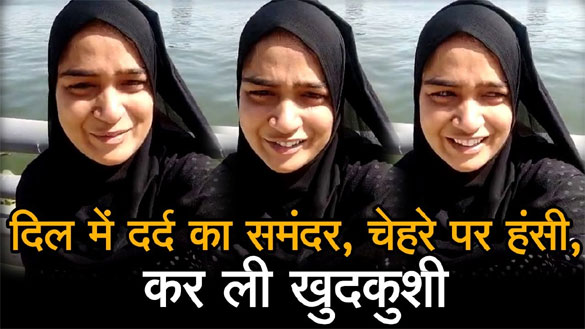

 For the case study of the subject, two examples can be taken. One of them is the incident of Ayesha’s (23) taking her own life by way of suicide, and the other is that of Sayed Mental’s (60) hammering to death his wife Safeela (50) and two daughters Rajia (20) and Shabana (15) while the third daughter Sultana (18) is battling for life in the hospital. In both the examples, either of the two reasons; lack of religious education or the non-practicing upon the religious information can be traced.

---------------------------------------------------------------------------------

Also ReadSuicide Attacks By ISIS or Any Other Muslim Militants Are Brazenly Un-Islamic and Categorically Forbidden [Haram] Under All Circumstances: Evidence from the Quran and Hadith

---------------------------------------------------------------------------------

 Ayesha is reported to have suffered torture and harassment due to dowry or her husband’s illicit affair with another girl, the case of which still needs to be properly investigated by the police, and hence we are not sure enough to describe the exact sort of harassment which compelled her to commit suicide. Our point of discussion is beyond judging the nature of harassment that compelled Ayesha to commit suicide. Not even can we call Ayesha back to life but raise a question; can her suicide be justified under any such pressing circumstances? The simple answer is: ‘No, It can’t be justified. If it can’t, then why did Ayesha commit her suicide? Had she, being a Muslim lady, a lack of religious education which definitively forbids suicide, or did she deliberately commit suicide, despite knowing the fact that it is strongly prohibited to commit suicide in Islam under all circumstances, dowry pressure or otherwise?

 Another incident, which is related to Sayed Mental’s killing his wife and daughters, narrates the act of brutality inflicted not just upon his family but also upon Islam in the sense of disrespecting the divine command which forbids taking other’s life unjustly. Again the same question can be repeated here for Muslim community; can Sayed Mental’s killing his family be justified? Their answer would be in negation. But why did Sayed Mental take his step towards killing his family, due to lack of religious education or non-practicing behaviour?   

 These questions related to both the incidents will definitely lead to represent the shortcoming within the Muslim community in general. That shortcoming could be either lack of religious education or the act of not practicing the religious command that vehemently lays emphasis on the value of one’s or other’s life as a blessing of Allah Almighty. Both the incidents indicate that Muslims are living either with a lack of religious education or have become non-practicing. If it is reported that some Muslims are aware of Islamic teachings and that they are practicing Muslims too, then they can’t deny the fact that they have failed to curb the growing evil of taking one’s own life by suicide and another’s life by unjust killing.   

 Ayesha’s life was, above all, a blessing of Allah Almighty, which she should not have wasted by committing suicide. She could have intended to maintain safety for this God-gifted blessing in several possible ways. For the sake of her so-called lover, she could not seek to uphold her love to Allah Almighty Who endowed her with the blessing of life. She could have loved her life just for obeying the following commands of Allah Almighty and the sayings of the Prophet peace be upon him,

 “Do not kill yourself” (4:29) “But whoever will do that through transgression and injustice, we shall soon throw him into the Fire (of Hell) and that is very easy for Allah” (4:30).

This verse denotes the value of life by declaring all types of suicide forbidden. Hence a believer is not permitted to commit suicide, whether to take one’s own or another’s life.

 In another verse, Allah Almighty says,

“And do not cast yourselves into destruction with your own hands, and adopt righteousness. Verily, Allah loves the righteous” (2:195)

The Prophet Muhammad (peace and blessings of Allah be upon him) said, “The one who commits suicide will go to Hell, and will keep falling into it and will abide there forever” (Sahih Bukhari, The book of Medicine, Chapter: Taking poison and using it for medical treatment or using what may be dangerous or Impure)

Narrated Hadhrat Abu Hurairah (Allah is pleased with him) that the prophet Muhammad (peace and blessings of Allah be upon him) said, “Whoever stabs himself to death will continue to stab himself in Hell. And whoever throws himself off a cliff will continue to throw himself off a cliff in Hell. And whoever hangs himself will continue to hang himself in Hell”. (Sahih Bukhari, The book of Funeral Rites, Chapter: What has come to us about someone who kills himself’?)

Hadhrat Abu Hurairah reported that the Messenger of Allah Almighty (peace and blessings of Allah be upon him) said:

“Whoever purposely throws himself from a mountain and kills himself, will be in the (Hell) Fire falling down into it and abiding therein perpetually forever. And whoever drinks poison and kills himself with it, he will be carrying his poison in his hand and drinking it in the (Hell) Fire wherein he will abide eternally forever; and whoever kills himself with an iron weapon (stabbing himself), will be carrying that weapon in his hand and stabbing his abdomen with it in the (Hell) Fire wherein he will abide eternally forever.” (Sahih Bukhari, The book of Medicine, Chapter: Taking poison and using it for medical treatment or using what may be dangerous or Impure)

The afore-mentioned Quranic verses and Ahadith are stern warnings (wa’eed) for those who intend for committing suicide for killing themselves or others. We seek forgiveness for Ayesha who committed a mistake by committing suicide, and indeed Allah is the Most Forgiving and the Most Merciful.

 However, we should make the common Muslim masses aware of these verses and Ahadith related to the forbiddance of suicide, in order that they never go to take such an extreme step, whatever the case may be. Thousands of people including women are suffering from hardships in several forms; poverty, starvation, injustice, helplessness, and severe harassment. Despite that, they are living their life with patience and perseverance because they know suicide is not a solution to their problem. They are to be heartily saluted because they are facing all their difficulties with courage, and tantamount to valuing the blessing of life granted by God Almighty.

 With regard to the UP’s Bulandshahr case in which Sayed Mental killed with a hammer, his wife, and two daughters whereas his third daughter is battling for life in the hospital, the police are yet to ascertain what exactly led the father to kill his family, while villagers told the police that the man often used to beat his wife and daughters without any reason. The man was reportedly and mentally unsound and therefore the villagers had added the word Mental to his name. This case can also be taken to deduce the idea that how far our common Muslim masses have gone from Islam that they have transgressed all the limits of transgression.

---------------------------------------------------------------------------------

Also read: The Stark Problem of Family Violence: How Does Islam Resolve It?

---------------------------------------------------------------------------------

One of the objectives of marital relations in Islam is that love, friendship, peace, and good ties of kinship prevail between the spouses. It is for this reason that Allah Almighty ordered the husband to live with his wife lovingly and honourably. He says: “treat them (wives) honourably”. The context of the verse is about the duty of a husband towards his wife. In its broader understanding, treating a wife honourably means the prohibition of violence over a wife. So, a husband in Islam is prohibited to exercise violence over his wife.

 In another verse, Allah the Almighty says, “Live with them in kindness; even if you dislike them, perhaps you dislike something in which Allah has placed much good” (Quran, 4:19).

 Allah Almighty also says:  “Retain them (wives) in kindness or release them in kindness. But do not retain them for injury; so that you exceed the limits, and whoever does this, he indeed is unjust to his own soul” (2:231). The word “Dirar” (ضرار) has multiple meanings; such as ‘hurt’, ‘injury’ ‘harm’, ‘damage’, ‘detriment’ and ‘wound’ etc. With any of these meanings, it would be fully appropriate to derive a sense from this verse that practicing any kind of violence over wife to cause injury or harm or damage is forbidden in Islam.  

 In addition to the Qur'anic verses, there are many Ahadith that teach the husband to maintain good ties of kinship, love, and gentleness for his family. The prophet Muhammad (peace be upon him) said, “The best among you are those who behave well with their women (wives) and daughters” (Al-Baihaqi). To be best for wife and daughter in the modern-day, it is binding upon a husband to keep away from the practice of violence over his wife and daughter.

 Once someone asked Prophet Muhammad (peace be upon him) what the obligations of husbands towards their wives are. He replied: "Feed her when you eat and provide her clothing when you provide yourself. Neither hit her on the face nor use impolite language when addressing her" (Mishkat Shareef, the chapter on the maintenance of women).

 In another Hadith narrated by Imam al-Bukhari, the lady Aisha (may Allah be pleased with her) said “the prophet (peace be upon him) was in the service to his family”. (Bukhari)

 The sacred texts of the Qur’an and Sunnah imply that both husband and wife are obliged to fulfil their respective duties towards each other. Obedience to each other’s responsibilities is binding upon them. The spouses ought to take care of each other’s emotions and sentiments. Their primary purpose must essentially focus on co-operating each other in joy and sorrow with patience. They should never let themselves be possessed by anger, as it is unlawful in Islam. Anger destroys the faith of a man and often breaks even good ties. The Prophet (peace be upon him) said, “Verily anger spoils faith just as aloes spoils honey” (Al-Tabrani and al-Baihaiqi). Therefore, the husband and the wife must avoid getting angry, as it causes nothing but tension, depression, frustration, mental torture, and violence. Adhering to Islamic teachings is therefore binding upon both of them to bring prosperity and peace in their married life, and thus to save from every kind of violence.  

 Our Islam lays emphasis on maintaining a good relationship between the spouses and on the value of one’s and other’s life, by prohibiting the act of unjust killing. But it is the members of the Muslim community who fear neither the divine punishment on the Day of Judgment nor the law of punishment enforced by their country. Is this the result of lack of education or that of not practicing the divine guidance which strongly prohibits hurting, torturing, and hitting the wife and children? It is the responsibility of Muslim preachers to ponder over this question for hours and find out the ways to curb the growing suicide and murder in the Muslim community and come out of facing further shame.          

---- 

A regular Columnist with NewAgeIslam.com, Ghulam Ghaus Siddiqi Dehlvi is an Alim and Fazil (Classical Islamic scholar) with a Sufi background and English-Arabic-Urdu Translator.

URL: 

New Age IslamIslam OnlineIslamic WebsiteAfrican Muslim NewsArab World NewsSouth Asia NewsIndian Muslim NewsWorld Muslim NewsWomen in IslamIslamic FeminismArab WomenWomen In ArabIslamophobia in AmericaMuslim Women in WestIslam Women and Feminism

Saturday, March 6, 2021

Ideological Nexus of Turkey and Pakistan — Preachers of Human Rights on Kashmir

 New Age Islam Special Correspondent

6 March 2021


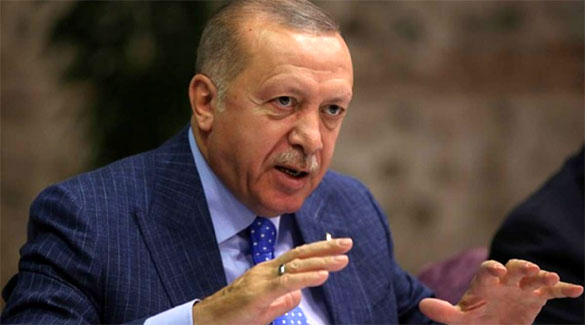
In order to achieve clearly ulterior ideological motives, Turkey and Pakistan have been blindly supporting each other not only in defense relations but also at the diplomatic level globally. Recently, when there was a border dispute with Greece in the Mediterranean Sea, Pakistan had openly declared its support for Turkey without even assessing the conflict and its ramifications. Similarly, in the Mediterranean Sea, the navies of Pakistan and Turkey also declared solidarity by conducting military exercises. In return, Turkey openly supports Pakistan when it comes to Kashmir, be it an international platform or a regional diplomatic conclave. Turkish President Erdogan has consistently raised the issue at the UN forum to the extent of averring in February 2020 that the Kashmir issue is as important to Turkey as it is to Pakistan.

Since then, the Turkish President Erdogan is constantly trying to preach India on its human rights record in Kashmir in its bid to gain sympathy from South Asian Muslims to challenge Saudi Arabia's monarchy in the Muslim world. Therefore, he teamed up with then-Malaysian PM Mahathir Mohamad and Pakistani PM Imran Khan to form an alliance of non-Arab Islamic countries in a sharp contrast to the Saudi-led OIC.

Earlier also, Erdogan has repeatedly raised the Kashmir issue at the United Nations on several occasions. In September last year, flagged the Kashmir issue while addressing the UN General Assembly, and said that Kashmir was a burning issue and crucial for peace and stability in South Asia. “This has become even more serious problem after the removal of the Special Status of Jammu and Kashmir (Article 370). We want to solve this problem under the UN resolution” Erdogan said in a gesture to openly support Imran Khan, the prime minister of Pakistan during his address.

On the occasion of Eid-ul-Azha in August last year, Turkish President Recep Tayyip Erdogan assured Pakistani President Arif Alvi of earning him an avid international support for Kashmir. Erdogan has compared Kashmir to Palestine many times. Not only that, he has also falsely accused India of perpetrating more grievous atrocities in Kashmir after the outbreak of the Covid-19. While the truth is that Erdogan, who is trying to teach India a lesson of democracy on Kashmir, is known in Turkey’s progressive cohorts as a populist and a staunch Islamist dictator who supports several radical Salafist organizations across the world including the notorious Ikhwan-ul-Muslimin which is banned in Egypt.


Turkey has now emerged as the second largest center of 'anti-India propaganda’ after Pakistan. According to reports, radical Islamic organizations in all parts of the country, including Kerala and Kashmir, have their sources of funding from the Turkish establishment.  Most deplorably, Turkey is trying to dissuade Muslims in India, disassociate them with their local culture and ethos, pluralistic Indo-Islamic values and thus recruit extremists to further political ends. His attempt to expand his influence through the nostalgia of the Ottoman Caliphate/Khilafat-e-Usmaniya among South Asian Muslims is an open secret now.

Egregious abuses of human rights within Turkey— persecution of the Hizmet Movement Sufi followers, jailing of interdependent journalists, enforced disappearance of scores of judges and lawyers, arrest and arbitration of teachers and many pregnant woman teachers accused of being linked to the Gulenist Network, sectarian attacks on the Shiite minority, and last but not the least, the conversion of the historic Hagia Sophia Museum into a mosque that remained a church until 1453; All these candidly expose the height of duplicity of Turkey on the issue of Human Rights. Violators of human rights only preach and never practice.

The Syrian Observatory for Human Rights has claimed in recent reports that Turkey is in the process of deploying Sadat—an organization of its mercenaries active in Syria—in Kashmir. Sadat is led by Adnan Tanarivardi, Erdogan's military adviser. Who has appointed a Kashmir-born terror sympathizer and a 24-hour anti-India propagandist Ghulam Nabi Fai set up a base in Kashmir. Fai has been sentenced to two years in a US jail for recruiting mercenaries and tax evasion against India at the behest of Pakistan. An active member of the radical organization Jamaat-e-Islami, Fai set up the American Council of Kashmir (KAC) to plot against the developments in Jammu & Kashmir in the US.

In fact, the current Erdogan government in Turkey is an Islamist regime in a country which was actually a cradle of democracy, human rights and freedom of religion and a glaring example for most Muslim nations in terms of secular ethos. But of late, it has become a populist state full of political duplicity and moral bankruptcy and hypocrisy. This can be clearly seen that Turkish President Recep Tyep Erdogan is now habitual to preach to the world about what is right and wrong, and thus 'enjoining good and forbidding evil' (an Islamist doctrine of religious reformism often quoted by the radical and extremist organizations across the Middle East, based on some misunderstood Verses of the Qur'an).

Clearly motivated by political ulterior motives, Turkish President Erdogan has been propagating the misleading rhetoric on the internal regional issue of Kashmir in a crazy bid to target against the interests of India to back up Pakistan in its ruthless propaganda on international forums including in the ongoing United Nations Human Rights Council session in Geneva.

Until now, India has responded to Erdogan's blunts by merely focusing on bilateral relations. But this time, it's too much, and it cannot be easily digested. While Pakistan, China and Turkey don't pull any punches in collectively targeting India on international platforms like the United Nations in a collaborative and coordinated manner, India continues to looks up to the mankind, including of course, all the different types of nations and the world as 'One Family' in tandem with the Indian idea of "Vasudhaiv Kutumbakam". But as the saying goes on in Arabic language, don't remain innocent and saintly enough to let your enemies totally destroy you.


This is precisely why, it seems, India on has asserted itself with a strong position to counter Turkish President Erdogan and his allies on the issue, especially the Organisation of Islamic Countries (OIC). "OIC was misled by Pakistan during its submissions at the UN Human Rights Council (UNHRC)", India said.

Exercising its right of reply to the statements made by Pakistan and the OIC, Indian diplomat Pawankumar Badhe rejected the reference to the UT of J&K in the OIC statement. The 57-member organisation, he said, has no locus standi to comment on matters related to J&K, which is an integral and inalienable part of India. He expressed great regret that the “OIC continues to allow itself to be exploited by Pakistan to indulge in its anti-India propaganda".

The United Nations Human Rights Council began its 46th session on Monday. The foreign ministers of each country took turns: India's foreign affairs minister, S Jaishankar spoke about terrorism, the pandemic, and vaccines; US Secretary of State Antony Blinken spoke about democracy, harmony, and stability; but Turkey's foreign minister stooped too low to speak on the run of the mill topic of Kashmir to score a goal in the Islamist circles and gain more Muslim sympathizers in South Asia and South East Asia, particularly in Pakistan and Malaysia.


Isn't it a clear duplicity and irony that Turkish Foreign Minister Mevlut Chavu-Shoglu, while speaking on Kashmir at the UNHCR, pulled no punches in targeting India but uttered no single word on the rights of Kashmiris in PoK? Blatantly, Turkish FM made no mention of the state-sponsored terrorism of Pakistan in Kashmir and the entire South Asian region.

URL:   URL:    https://www.newageislam.com/the-war-within-islam/new-age-islam-correspondent/ideological-nexus-of-turkey-and-pakistan-preachers-of-human-rights-on-kashmir/d/124475


New Age IslamIslam OnlineIslamic WebsiteAfrican Muslim NewsArab World NewsSouth Asia NewsIndian Muslim NewsWorld Muslim NewsWomen in IslamIslamic FeminismArab WomenWomen In ArabIslamophobia in AmericaMuslim Women in WestIslam Women and Feminism

Friday, March 5, 2021

Ayesha’s Suicide Lays Bare the Sickness of Muslim Society


By Arshad Alam, New Age Islam

5 March 2021

A young Muslim woman, Ayesha Khan, decided to end her life by jumping into the Sabarmati. A video which she made just before committing suicide tells us that she could no longer put up with the abuse directed against by her in-laws. She does not blame anyone, especially her husband, but her statement makes it very clear that her life had come to a breaking point; that she had already become an emotional wreck and reached the point of no return. In such a state, the line between life and death gets blurred. Her decision to end her own life must have come after a lot of thought wherein she must have realised that she had reached a dead end. A life which could have contributed much to society, a life which was bubbly and so full of energy, was wasted simply because as a Muslim woman, she could not think of an independent life for herself. 


Ayesha Khan

------

In all such matters, people jump to conclusions and our very first instinct is to blame the husband and his family. This may as well be the case with Ayesha and whatever became of her, but ultimately we should not forget that her poignant death is a collective failure, including that of her own family and of the Muslim society more generally. After all, it appears from the video that she was reasonably well educated and if that was the case, why is it that she did not walk out of an abusive relationship to chart out her own course of life?

While having all the sympathy for her parents, let us also acknowledge that it is their failure also. They must have known for some time what was happening to their daughter and yet they did nothing to address the issue. Like most parents in India, they must have told their daughter to stay put at her husband’s place, fully knowing the repercussions. Indian parents, including Muslim ones, succumb to the demands of more dowry and despite knowing the ill treatment which their daughters receive due to this scourge, decide to remain silent about it. In majority of the cases, despite knowing about violence committed on their daughters, they tend to send them back to their husband’s home.

The amount of money that a family saves for the dowry of a daughter can easily be invested in her education in order to make her financially independent. But then, the priorities of Indian families are very different; the sufferings of their daughters are simply immaterial. Muslim and non-Muslim families have been behaving similarly in this country for centuries.

Any death, especially of a young girl, should be a cause of concern for any community and should be an occasion to introspect what is wrong the practice of the community. It is true that Ayesha’s death disturbed many Muslims but far from analysing the reasons, most Muslims became pedantic and started to sermonise why it is wrong to commit suicide.

23 Year Old Ayesha Recorded Video Before Jumping into Sabarmati River

-----

For these Muslims, the reasons why this woman took such a step was not important; what was more important was to tell the world that suicide was haram in Islam. The implications of such useless and bogus pedantry is obvious: since Ayesha’s indulged in a forbidden act, she was at fault. As true Muslim, she should not have taken her own life. And if she hadn’t done, then this problem wouldn’t have arisen in the first place. These Muslims are therefore more concerned about what ‘others’ will think about Muslims, rather than being concerned about a life lost. They are the same kind of Muslims who tried to ‘prove’ that Imrana was not raped by her father-in-law simply because such things are not permissible in Islam.

Then there are other sorts of Muslims, high on energy but low on content, some of them calling themselves Islamic feminists, but who also end up blaming the victim rather than offering any serious critique of the problem. These Muslims were aghast as to why Ayesha did not divorce her husband if she was abused by him. For them, Ayesha should have simply walked out of her marriage rather than ending her life. These kind of Muslims, women included, are extremely shallow in their understanding of both religion and society. They do not even know that Islam does not grant the right of divorce to women. That right only and unequivocally belongs to the Muslim man alone. Under the weight of women’s movement, such unequal laws have been changed in Muslim countries and Muslim women have been granted the right to divorce. Not so in India, where the Muslim personal law revels in its regressive provisions against women. And when some Muslim women campaign to change such laws, then they are branded as BJP agents. Muslim women in India can only ask for khula, which is to plead the husband to give her divorce. And it entirely depends on the husband whether he wants to accede to such a request or not. Why will a Muslim husband, who wants to torture his wife, agree to the request of a Khula?

Muslims who are arguing that Ayesha should have divorced her husband simply do not know how Islamic law works in India. It is painful to know that rather than advocating reforms in the Muslim personal law, they are blaming the victim for taking her own life. These Muslims are not very different from some of the third rate Muslim clergy whose sole purpose in life is to ‘rescue’ Islam, no matter whether certain aspects need rescuing or not. However, it is also heartening to note that politicians like Owaisi have spoken strongly on the issue and linked it with the menace of dowry. 

Technically, Islam does not have the concept of dowry. Rather Muslim marriage is essentially about bride price, and hence dowry is a typical Indian Muslim practice. Often, demand for more dowry becomes the reason for mistreatment of women, as seems to have happened in Ayesha’s case. There should be a debate within Muslim society about the need to get rid of such practices as it is detrimental to scores of families whose sole purpose becomes to arrange dowry as soon as a daughter is born. There should also be a debate regarding Muslim women’s right to divorce their husbands in case they are abusive. For it is only with this right that she can walk away from a wasteful marriage and live her life with full human dignity. If, instead of these, we are debating whether suicide is permissible in Islam or not, then it must be said that a malevolent sickness has gripped us and that perhaps we are now beyond redemption.

----

Arshad Alam is a columnist with NewAgeIslam.com

URL:    https://www.newageislam.com/islamic-society/arshad-alam-new-age-islam/ayeshas-suicide-lays-bare-the-sickness-of-muslim-society/d/124465


New Age IslamIslam OnlineIslamic WebsiteAfrican Muslim NewsArab World NewsSouth Asia NewsIndian Muslim NewsWorld Muslim NewsWomen in IslamIslamic FeminismArab WomenWomen In ArabIslamophobia in AmericaMuslim Women in WestIslam Women and Feminism

Thursday, March 4, 2021

Sunnis, Shias and Sufis - Disunity in Muslim Ummah

 By Syed Asad, MD FACP, New Age Islam

3 March 20221

The world's 1.6 billion Muslims are united in their belief in God and the Prophet Muhammad. However, Muslims have widely differing views about many aspects of their faith. Raising the question of how important religion is to their lives, who counts as a Muslim, and what is acceptable in Islam, according to a worldwide survey by the Pew Research Centre’s Forum on Religion & Public Life.


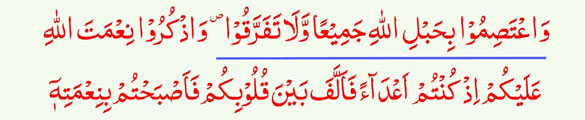
[Quranic Reference: Surah Al-Imran, 103]

------

The survey finds many Muslims worldwide share other faith articles, including belief in angels, heaven, hell, and fate (or predestination). While there is broad agreement on Islam's core tenets, Muslims across the 39 countries and territories surveyed differ significantly in their religious commitment levels, openness to multiple interpretations of their faith, and acceptance of various sects and movements.

There are three major well-recognized sects, Sunnies, Shias, and Sufis. The survey asked Muslims whether they identify with various sects of Islam and their attitudes toward other sects and subgroups. The survey suggests that many Muslims worldwide either do not know or do not care about them.

Muslims in the Middle East and North Africa tend to be most keenly aware of the distinction between the two main branches of Islam, Sunni, and Shias.  In most countries surveyed in the region, at least 40% of Sunnis do not accept Shias as fellow Muslims. Only in Lebanon and Iraq – nations where sizable populations of Sunnis and Shias live side by side – do large majorities of Sunnis recognize Shias as fellow Muslims and accept their distinctive practices as part of Islam. In 32 of the 39 countries surveyed, half or more Muslims say there is only one correct way to understand Islam's teachings. By contrast, in the United States, 57% of Muslims say Islam is open to multiple interpretations.

Sectarianism is the primary source of disunity and conflict among Muslim society, particularly in the Middle East and Pakistan. The political context of the Middle East necessitates the political mobilization and manipulation of sectarian identities to survive. Authoritarianism is the political context that allows sectarianism to flourish. In the last two decades, we have witnessed the rise of Shiite power all over the Middle East. Sunni rulers have viewed with much anxiety the new Shiite crescent that extends from Iran to Lebanon. Consequently, the Syrian crisis became more of a regional problem than a local and seen as an opportunity to weaken the Shiites and replace them with a Sunni government.

Saudi Arabia and Iran have been the two main actors of conflict in the Middle East. Saudi Arabia overwhelmingly represents Salafism's ideology, and the country historically sees itself as the Muslim world leader since its territory includes the birthplace of Islam. On the other hand, Iran is directed by Shiite policies, especially since 1979 when the Islamic revolution of Iran took place, forming a theocracy that aims to spread its ideology to the outside world. 

The Ummah is broadly divided against itself, torn up and fragmented into nearly fifty nation-states separated by artificial boundaries designed to create and ensure continued tension and confrontation, especially among neighbouring states. None of these states has had the chance to attain the outright freedom and stability, or social integration that would enable it to concentrate its energies on construction and development. Sectarianism, factionalism, and nationalism, all of which cause disharmony, have dominated affairs and have led to a continual state of instability, allowing foreign powers to manipulate at the time of their choosing. Such a situation only leads to more turmoil and anarchy. The lack of individual freedom prevents the people from pursuing their intellectual and cultural, and natural psychological development.


Muslims continue to live under the shadow of poverty, oppression, and terror, from military dictators who seize power and set their own frivolous, arbitrary, and whimsical policies through force, torture, and intimidation. In such dictatorships, political and administrative bodies and institutions' roles prevent and destroy all of the people's qualities and artistic potential. The few Muslim states that have followed the industrialization path have not attained complete self-sufficiency because they still depend on foreign sources for most of the equipment and the capital needed to develop their industries. As a result, these foreign sources can control the nascent industries and direct them according to their own political and economic interests.

The overwhelming majority of the Ummah is illiterate. The people's needs far outweigh the goods, materials, and services they can provide. Even in the critical and vital necessities of life, almost no Muslim state is self-sufficient. This deficiency is usually made up by imports, which only increases dependency on foreign powers. What makes the situation even more intolerable is that raw materials are bought from Muslim states at the lowest prices, or even taken for nothing, and are returned to them as manufactured goods at the highest prices.

In most cases, "Muslim industry" was not designed to meet the Muslim world's desperate, immediate, and vital needs but to meet only its inhabitants' tangential and secondary needs and satisfy and cater to the consumeristic desires.  Unfortunately, the Muslim world has developed the habit of consuming new non-Islamic civilization products and has adopted many of its outer aspects, such as "modern" roads, buildings, and entertainment places in its capitals. It has also established some political and economic institutions based on the western model. Unfortunately, such measures have failed to bring about the desired transformation.

The Muslim world's current education system has failed to instil fundamental beliefs, sound vision, standards, or motives. Materialism has become widespread among the educated classes, which have lost any sense of a clear purpose in life. Academic syllabi have failed to establish a useful purpose in the Muslim conscience. In contrast, despite their secularism, the West's secondary schools teach students about western heritage, cultural history, and traditions in an integrated and comprehensive manner. It gives the students a sense of belonging and instils their nation's primary goals and strategy. They grow up with this feeling and carry their nation's vision and concepts of life, the universe, humanity, other cultures, as well as other aspects of its worldview.

In the USA, we have mosques and Islamic centres in all major cities and suburban areas. They are predominantly Sunni centres, and few are Shia and others. A majority of them are ethnically centred and have no cross-links between them. Unlike Churches and Synagogues, the Mosques lack centralization in education, which has created a power vacuum. In house Fitna, power politics and tribalism have hampered progress. The clergy is not inclined to adapt to modernity, tolerance, and pluralism, leading to chaos and isolation.

In light of the above, the first step toward formulating an Islamic cultural strategy is to redefine knowledge in terms of Islamic epistemology and in a way that will be acceptable to Muslims everywhere. In this context, we need to emphasize that all knowledge is derived from revelation, reason, perception, or experiment. Religious pluralism, interreligious dialogue, democracy, and a good functioning secular state are essential tools to overcome sectarianism within the Muslim community.

------

Annotation:

"Toward an Islamic Alternative in Thought and Knowledge." Issues in Contemporary Islamic Thought, by Shaykh Taha Jabir Al-Alwani, International Institute of Islamic Thought, London; Washington, 2005, pp. 9–20. JSTOR, www.jstor.org/stable/j.ctvk8w1ww.6. Accessed 12 Feb. 2021.

Nasr, Seyyed Hossein. "Islamic Unity — The Ideal And Obstacles In The Way Of Its Realization." Islamic Studies, vol. 36, no. 4, 1997, pp. 657–662. JSTOR, www.jstor.org/stable/23076035. Accessed 11 Feb. 2021.

URL: 

New Age IslamIslam OnlineIslamic WebsiteAfrican Muslim NewsArab World NewsSouth Asia NewsIndian Muslim NewsWorld Muslim NewsWomen in IslamIslamic FeminismArab WomenWomen In ArabIslamophobia in AmericaMuslim Women in WestIslam Women and Feminism