Pages

Wednesday, March 3, 2021

The Price of Disagreement - Operating Religion at Instinctual Level Results In Sectarianism, Intolerance And Violence


By Mushtaq ul Haq Ahmad Sikandar, New Age Islam

3 March 2021

Tolerance, mutual respect and honor for dissent are the values that we profess daily. Most of the ills in society happen because we fail to tolerate each other give space to dissent and are non-democratic in our personal lives. We want and expect our government to tolerate, cherish and even prostrate before dissent, while in our daily relationships we are quite intolerant, abhor dissent and curtail alternative points of views. It is true even for those who publicly have created a false image of being protagonists, ideologues, upholders and stalwarts of dissent, freedom of speech and vibrancy of democracy.


Our educational system has failed to inculcate among us the values of pluralism, diversity and co-existence. We do not know how to handle criticism, alternative, antagonistic points of view; cherishing it is out of question. The culture of democracy does not have these flaws. The society becomes democratic only when the opposite view is tolerated and celebrated. It has little relation with the conduct of periodic electoral elections based on first past the post system that further reinforces the bias, prejudices and issues prevalent in the society, polarizing it further leading to greater divide among the communities.

People mostly exist at instinctual level where attaining the self-fulfilling needs of body is the ultimate zenith. At this level the world is centered on the self only. So any opinion that is different one from what one believes is witnessed as hostile, thus needs to be decimated. It is this mentality that gives rise to sectarianism in religion as every sect upholds its interpretation of religion as the only gospel truth and last word. Any other opinion and interpretation is to be opposed vehemently. So operating religion at instinctual level certainly results in sectarianism, intolerance and violence.

It is true for society too and this absence of democratic culture results in the birth of demagogues who feed on the fear of masses while making way to the corridors of power. But most of the liberal section complains that people are gullible so clergy and politicians exploit them in the name of religion and community. But these liberal elite too do not cherish the values that it claims to uphold and profess. It can be proved by examples and experience. It is just as a fashion statement that they flaunt to stand for values like democracy, dissent and freedom of expression.

I did experience one such incident recently that made me reinforce the belief that most of us are a bunch of intolerant lot who use the values of democracy and dissent as per our convenience. I am regularly invited to present academic papers or deliver speeches on different topics by various forums. I rarely do the background check of the organizations hosting such events, as I believe that one should speak without mincing words at every forum. If we start to do the background check of every hosting institution, forum and platform then we will have to opt for boycott or silence. It is good for sectarian mullahs and ideologues that boycott each other’s events and mosques as it is against their belief system to listen or pray behind each other.


I believe in an interpretation of Islam that is tolerant, egalitarian and believes in co-existence. So for me different forums mean interaction with people of varied hues. So I attended this particular event as a speaker and a friend who leaves no opportunity to be in limelight informed me that it was sponsored by agencies. The team agencies for Kashmiris invoke a very suspicious idea of a deep state. Also when someone is to be discredited he is labeled as being on the payroll of agencies. Sometimes I am intrigued by these allegations because every other person who is in limelight or public figure is supposed to be working for some agency in Kashmir.

It is something similar for sectarian mullahs too because they label their opponents as Israeli or U.S agents. The progressive Islamists and those working towards a liberal interpretation of Islam have to face it quite regularly.

Anyways every activity has its hazards so has the public life. I brushed aside these allegations by stating that it may be true but at least I am not on any payroll and spoke my mind quite freely at the event. Further the sectarian mullahs, some of who are on payroll and others who unconsciously through their sectarian interpretation did help the West particularly U.S.A win its war against U.S.S.R, this making the world become unipolar.

The mullahs still have not acknowledged their contribution to the goals of U.S that they now describe as Satanic, Taghooti system and enemy number one of Muslims. So in fact mullahs are the agents of West, particularly those who did spread Wahhabism in South Asia. Now it has been acknowledged by the Saudi Prince Muhammad Bin Salman too that they were doing the bidding of West when they funded and advanced Wahhabism. Also the Afghanistan Jihad for a large part was funded and even the emphasis on Jihad in the form of violence was undertaken as a policy by different think tanks.

Anyways the said hungry minion for fame got himself listed in the editorial board of a magazine published by the same group who had invited me for the talk. Earlier that group was being funded by agencies and doing their dirty work of social engineering but now they must be indulging in saintly and godly work as the said person joined it. So when I tried to question this step, enquiring that how come he did join the same ‘agency institution?’ His reaction was escapist and revengeful. He knew he was exposed and all his lofty talks and claims had proved a great deception, he blocked my cellphone number and social media handles. It ended a decade long acquaintance that had evolved to friendship.

This experience made me ponder deeply about the human nature particularly in South Asian societies. People do not want to listen to criticism particularly the one that exposes them. The person who depicts the flaws of others, society and clergy becomes their enemy. They go to any extent to silence the voice. It is true for Prophets, Saints, Reformers and Revolutionaries. They disturb the status quo, lay bare the lived realities, point out the flaws and criticize the wrongs happenings in the society. These are crimes enough for them to be incarcerated, assassinated or sent to gallows.

The lives of most Prophets and reformers depict the similar trend. The minions, masses and criminals cannot stand the truth that leaves them exposed; the wise absorb the criticism as it helps them grow and remain thankful to their critics, whereas the dumb, mediocre become enemies of those who point out their shortcomings. So these people do everything to silence these critics. We have witnessed that in Muslim majority countries number of scholars have been assassinated or coerced to migrate. In case of Kashmir if I continue to toe such a line I may meet the fate similar to other critics, because these minions to cover up their mediocrity, illiteracy and flaws have to seek patronage of deep state to survive and eliminate critics like me.

To conclude, unless we do not strive for establishing a democratic culture in our personal spaces where dissent is not only tolerated but even cherished till then decrying curbs on dissent and freedom of speech by the government is certainly futile.

-----

M.H.A.Sikander is Writer-Activist based in Srinagar, Kashmir

URL:   https://www.newageislam.com/spiritual-meditations/the-price-of-disagreement--operating-religion-at-instinctual-level-results-in-sectarianism-intolerance-and-violence/d/124445


New Age IslamIslam OnlineIslamic WebsiteAfrican Muslim NewsArab World NewsSouth Asia NewsIndian Muslim NewsWorld Muslim NewsWomen in IslamIslamic FeminismArab WomenWomen In ArabIslamophobia in AmericaMuslim Women in WestIslam Women and Feminism

Tuesday, March 2, 2021

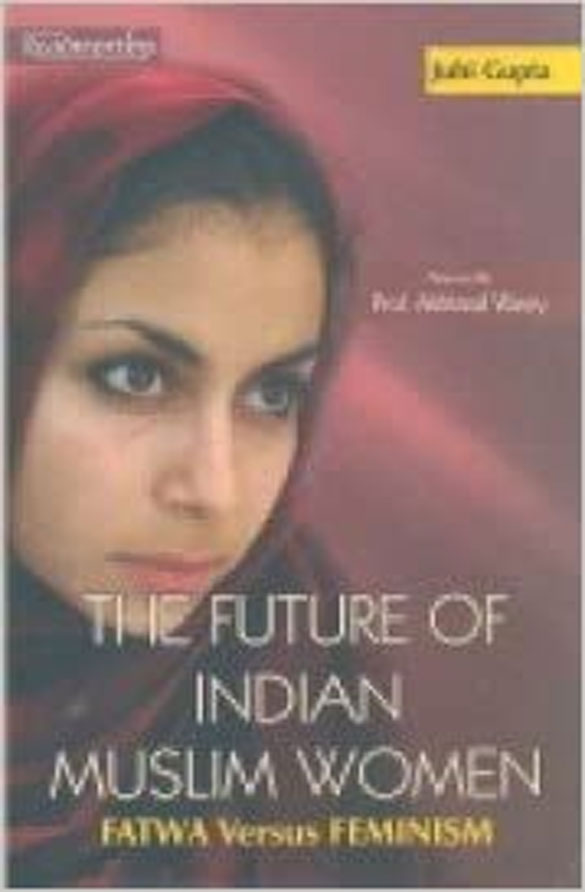
‘The Future of Indian Muslim Women: Fatwa Versus Feminism’, Author, Juhi Gupta


By Mushtaq Ul Haq Ahmad Sikander, New Age Islam

 The Future of Indian Muslim Women: Fatwa Versus Feminism,

Author: Juhi Gupta

Publisher: Readworthy Publications, New Delhi, India

Pages: 378                                                        Price: Rs 1595

ISBN: 9789386228536

Women since time immemorial have been victims of gross abuse and atrocities. These atrocities against women have been justified under different pretexts. They include social norms, religion, and misogyny. Women have been bearing them, accepting it as their fate, religious orders, or social responsibilities. Indian Muslim women have been bearing their own burden of patriarchy and misogyny like women of the world. But women in particular the Muslim women confronted peculiar problems that were rooted in religion, culture, and social milieu. Indian Muslim women are not a monolith so they face a plethora of issues given their environment, region, and society. But they do confront some general problems that are rooted in a selective interpretation of religion and following the same school of jurisprudence. This misogynist interpretation of Islam has resulted in disempowering women, and there are voices that now call for the reinterpretation and even doing away with the misogynistic message of constructed religion.

Islam has empowered women like any other despised section that existed at the time of its revelation. But over the centuries whatever the rights Islam had granted to women that empowered them and rendered them equal citizens were snatched away by men who were rooted in a patriarchal culture. These men could not do away with their patriarchal leanings when it came to the interpretation of Islam, so they evolved an interpretation of Islam, its shariah, and jurisprudence in a patriarchal manner. Against this patriarchy, undermining and opposing it arose the movement of equality demanding equal rights, wages, status, and opportunities for women known as feminism. Feminism as a movement was based on secular tradition and values antagonistic to organized religion and God. It evoked a huge response, and even some Muslim women scholars, jurists, and theologians adopted it, but with massive changes. God and religion were central to Islamic feminism. Islamic feminism as a movement again is not a monolith; it has diverse leanings and outlooks.

The present book written by a young academic and women studies scholar, Juhi Gupta engages with the question of Indian Muslim women for whom religion is an important aspect of their identity, culture, and whole life. Juhi discusses the future of Indian Muslim women in the context of changing trends in society, religious interpretation, and empowerment. Indian Muslim women are among the most marginalized sections of the Indian society, and very few studies are available about understanding them, their issues, how they view religion, misogynistic interpretation of religion, and new trends aiming at empowering them. Fatwa becomes essential because religion is the most potent driving force that gives meaning to their lives. Feminism as the new trend both empowers and threatens their religious understanding and roles.

In his Foreword, Prof Akhtarul Wasey, a prominent scholar and academic writes, “The basic premise of the book is that both Fatwa and Feminism, if applied in a positive and constructive mode, are indispensable for implementing attitudinal change among Indian Muslims in a bid to improve on the present status of their women and hopefully, this is viable, considering the present trends.” Thus Prof Wasey provides a gist of the book and what it covers regarding Muslim women. Fatwa has been given a negative connotation by media, because all of them are rooted in a certain medieval interpretation of Islam, that too in a sectarian context. In contemporary times the context, social milieu, society, and issues have changed but the jurists are trying to find answers in the same canonized and fossilized juristic schools that lead to retrogressive results. These results in the forms of Fatwas are then criticized by media as they are based on redundant interpretation of Islam, not a dynamic one conducted through Ijtihaad.

In her Preface, Juhi Gupta writes about the purpose and scope of the book in these words, “My solemn intention of research on this topic is to throw enough light on the present and future status of Indian Muslim women in face of the march of fatwas and feminism, and to develop new insight into certain social realities of India. The purpose of my research would be fulfilled if it could draw any attention towards the plight of Muslim women in India and bring any upliftment in their status.” (P-xii)

The economic, social, educational, health, regional and specific problems of women have been specified along with the reasons for the low participation of Muslim women in politics. Literature survey about Muslim women in India has added to the academic merit of the book. Juhi further discusses the role and status of women in Islam while drawing the inference, “It may be noted that it does not even associate sex with gender: There is not a single verse in the whole of the Quran suggesting that biological differences existing between men and women make them unequal.” P-54

The issues related with Fatwas, their impact on masses particularly women and misconceptions revolving around them are discussed too. While discussing the role of Fatwas and the tryst of Ulema with them, Juhi writes, “Ulema have never been the only educated class in the Islamic society but because they explained Shariah to the public, they used their moral power to control political clout and their role in politics surpassed that of any philosopher or natural scientist.  The significance of traditional Fatwa can be judged adequately in the light of Islamic history which highlights that a number of renowned Islamic scholars refused to accept the most prestigious and coveted official positions offered by ruling powers of the day in order to resist their whims. Actually, some of them were killed for their refusal. In fact, the history of Fatwa is the history of Muslim Ummah’s quest to seek Allah’s pleasures, frequently at the cost of one’s life.” P-118

Media has always been painting Fatwas in a wrong color although there are Fatwas that do condemn domestic violence, dowry, female feticide but they are hardly covered by the media. Instead, patriarchal fatwas related Sania Mirza, Gudiya, Imrana, Taslima Nasreen are given huge publicity and coverage as they help in reinforcing Islamophobia. But Juhi also condemns the Fatwa giving institutions for their callous approach, “But if a fatwa is only for consumption a particular person who queried in his/her specific context, why print their collections or post them without any qualification on the web for global publicity and cross-referencing? The problem of context is ever so intriguing yet unnoticed.” P-159

Juhi also discusses fatwas as tools of progress and women empowerment. She also engages academically with feminism, its different strands, and schools of thought as well as with Islamic feminism. Overall the book is a very important contribution to the gender studies in Islam, in the context of new trends of Muslim feminism and Fatwas.

…………..

M.H.A.Sikander is Writer-Activist based in Srinagar, Kashmir, and can be reached at sikandarmushtaq@gmail.com

………

URL:  https://www.newageislam.com/books-and-documents/mushtaq-ul-haq-ahmad-sikander-new-age-islam/the-future-of-indian-muslim-women-fatwa-versus-feminism-author-juhi-gupta/d/124432


New Age IslamIslam OnlineIslamic WebsiteAfrican Muslim NewsArab World NewsSouth Asia NewsIndian Muslim NewsWorld Muslim NewsWomen in IslamIslamic FeminismArab WomenWomen In ArabIslamophobia in AmericaMuslim Women in WestIslam Women and Feminism

Monday, March 1, 2021

Bengal Elections and the Muslim Vote


By Arshad Alam, New Age Islam

March 1, 2021

For decades, Muslims in West Bengal voted for the Left. One of the less talked about aspects of the Sachar Committee Report was that Muslims in West Bengal were the most deprived community. In parts of the state where Muslims had traditionally voted for the Congress, the situation was no better. The Left Front rule in the state meant the consolidation of Hindu upper castes and Muslims were told to be grateful simply because they were not being killed off in ‘riots’ which beset other parts of the country. The Muslim question for the Left was basically about providing security to the detriment of the socio-economic prospect of the community.

Muslims, made aware of their condition by the Sachar report, decisively shifted their loyalties to the Trinamool Congress (TMC), which led to the decimation of the Left in the state. In the 2019 elections, a huge section of the CPM cadre shifted their loyalty to the BJP which for the first time grabbed 18 parliamentary seats. The party now seeks to consolidate its gains further and is leaving no stone unturned in trying to become the number one party in the upcoming assembly elections. But then, Muslims comprise nearly 30 percent of the electorate and no party can form a government without taking this into consideration. Muslims have never trusted the BJP as the party has been brazen about its anti-Muslim politics. However, how the Muslims choose to vote will certainly impact whether the BJP is able to form the government in West Bengal or not.

Preventing the BJP from coming to power is an important issue for Muslims, not just in the state, but elsewhere also. However, of late, there is an increasing realization within the community that they have been taken for a ride by the so-called secular political parties. That these parties are solely interested in getting their votes rather than thinking in terms of Muslim socio-economic development. Such realization has made Muslims experiment with floating their own political formations, the latest one being in West Bengal. The formation of Indian Secular Front, led by Abbas Siddiqui, should be seen in this light. That Muslims have now realised that they need their own platform is certainly a happy development as it is only through political power that a politics of just redistribution can be done which will be beneficial to Muslims. Those who are calling it ‘communal’ are basically afraid of the Muslim vote slipping away from them. They have no principled position on the issue of defending secularism as such.

How should we understand this new alignment of Muslim consciousness in West Bengal? In the previous two elections, Muslims have largely voted for the ruling TMC, barring in some pockets dominated by the Congress. The TMC has largely tried to control Muslim sentiments through the Jamiat Ulema e Hind and its West Bengal leader Siddiqullah Chaudhary. The Jamiat is a Deobandi organization which has facilitated the entry of Tablighis in the state while the majority of Muslims are Barelwis. Abbas Siddiqui, as one of the custodians of the popular shrine of Furfura, seems to be hitting back at the Deobandi control of Muslim politics by floating his own political party. Barelwi consolidation in West Bengal is not an exception but should be seen together with similar efforts elsewhere in Bangladesh and Pakistan.

One important aspect of the political party launched by Abbas Siddiqui is that it has adequate representation from Dalit and Tribal social groups which feel left out. This message of inclusivity is important: the posturing suggests a coalition of the marginalised and oppressed who now want their voices to be heard. Moreover, it seems that the Left and the Congress, having realised their folly, now want to ally with this new emerging Muslim political force. The Left especially seems to be making conciliatory gestures towards Abbas Siddiqui and it appears that they will be more than willing to give this Muslim platform their fair share. If this alliance performs, then perhaps for the first time, Muslims would have gained some political power on their own terms.

AIMIM, the Hyderabad-based party, is also seeking to become part of this alliance but so far nothing has been formalised. Asaduddin Owaisi’s party has had success in the recently held Bihar elections and it is with this enthusiasm that they want to contest West Bengal elections also. However, they must remember that their success in Bihar was partly a result of four years of hard work which they had put in some constituencies. Moreover, they had the good fortune of getting some well-established Muslim leaders from other parties. Both these factors are absent in the case of West Bengal.

They have no work to show on the ground and till now they have hardly attracted any known face to their party. As such, AIMIM would not be able to cut much ice with the Muslim voters. Additionally, it has the tag of being an outsider party, which might not be able to understand the specificities of Muslim situation in West Bengal. It is true that Owaisi has a following amongst a section of Muslim youth, especially those who are Urdu speaking. His chances are far better if he concentrates on those seats which are bordering Bihar. He should not, as a matter of strategy, contest those seats where there is even a slight appeal of Abbas Siddiqui.

And it is not just a matter of strategy but should also be a matter of principle. The Indian Secular Front led by Abbas Siddiqui is an organic growth from within the Bengali Muslim community. As such this political articulation needs to be respected and all right thinking Muslims should support this front. While it is true that AIMIM has opened up the much-needed political space for Muslims, it is important to realise that there is no need for this party to have a presence in each and every state. Local and state-level political expressions are better suited to serve Muslim political need rather than having a single all-India Muslim party. Just as Owaisi is not venturing into Assam because Badruddin Ajmal’s AIUDF is already working there, similarly he should stay away from West Bengal. Rather, the sole effort should be to strengthen the hands of people like Abbas Siddiqui.

Whether the Indian Secular Front would be able to make a huge impact on Bengal elections remains to be seen. But one thing is sure that after the formation of this political front, it will be difficult for any party to take the Muslims for granted.

............

Arshad Alam is a columnist with NewAgeIslam.com

...........

URL: https://www.newageislam.com/islam-and-politics/arshad-alam-new-age-islam/bengal-elections-and-the-muslim-vote/d/124422


New Age IslamIslam OnlineIslamic WebsiteAfrican Muslim NewsArab World NewsSouth Asia NewsIndian Muslim NewsWorld Muslim NewsWomen in IslamIslamic FeminismArab WomenWomen In ArabIslamophobia in AmericaMuslim Women in WestIslam Women and Feminism

Book Review: ‘The Future of Indian Muslim Women: Fatwa Versus Feminism’, Author, Juhi Gupta


By Mushtaq Ul Haq Ahmad Sikander, New Age Islam

 The Future of Indian Muslim Women: Fatwa Versus Feminism,

Author: Juhi Gupta

Publisher: Readworthy Publications, New Delhi, India

Pages: 378                                                        Price: Rs 1595

ISBN: 9789386228536

 Women since time immemorial have been victims of gross abuse and atrocities. These atrocities against women have been justified under different pretexts. They include social norms, religion, and misogyny. Women have been bearing them, accepting it as their fate, religious orders, or social responsibilities. Indian Muslim women have been bearing their own burden of patriarchy and misogyny like women of the world. But women in particular the Muslim women confronted peculiar problems that were rooted in religion, culture, and social milieu. Indian Muslim women are not a monolith so they face a plethora of issues given their environment, region, and society. But they do confront some general problems that are rooted in a selective interpretation of religion and following the same school of jurisprudence. This misogynist interpretation of Islam has resulted in disempowering women, and there are voices that now call for the reinterpretation and even doing away with the misogynistic message of constructed religion.

Islam has empowered women like any other despised section that existed at the time of its revelation. But over the centuries whatever the rights Islam had granted to women that empowered them and rendered them equal citizens were snatched away by men who were rooted in a patriarchal culture. These men could not do away with their patriarchal leanings when it came to the interpretation of Islam, so they evolved an interpretation of Islam, its shariah, and jurisprudence in a patriarchal manner. Against this patriarchy, undermining and opposing it arose the movement of equality demanding equal rights, wages, status, and opportunities for women known as feminism. Feminism as a movement was based on secular tradition and values antagonistic to organized religion and God. It evoked a huge response, and even some Muslim women scholars, jurists, and theologians adopted it, but with massive changes. God and religion were central to Islamic feminism. Islamic feminism as a movement again is not a monolith; it has diverse leanings and outlooks.

The present book written by a young academic and women studies scholar, Juhi Gupta engages with the question of Indian Muslim women for whom religion is an important aspect of their identity, culture, and whole life. Juhi discusses the future of Indian Muslim women in the context of changing trends in society, religious interpretation, and empowerment. Indian Muslim women are among the most marginalized sections of the Indian society, and very few studies are available about understanding them, their issues, how they view religion, misogynistic interpretation of religion, and new trends aiming at empowering them. Fatwa becomes essential because religion is the most potent driving force that gives meaning to their lives. Feminism as the new trend both empowers and threatens their religious understanding and roles.

In his Foreword, Prof Akhtarul Wasey, a prominent scholar and academic writes, “The basic premise of the book is that both Fatwa and Feminism, if applied in a positive and constructive mode, are indispensable for implementing attitudinal change among Indian Muslims in a bid to improve on the present status of their women and hopefully, this is viable, considering the present trends.” Thus Prof Wasey provides a gist of the book and what it covers regarding Muslim women. Fatwa has been given a negative connotation by media, because all of them are rooted in a certain medieval interpretation of Islam, that too in a sectarian context. In contemporary times the context, social milieu, society, and issues have changed but the jurists are trying to find answers in the same canonized and fossilized juristic schools that lead to retrogressive results. These results in the forms of Fatwas are then criticized by media as they are based on redundant interpretation of Islam, not a dynamic one conducted through Ijtihaad.

In her Preface, Juhi Gupta writes about the purpose and scope of the book in these words, “My solemn intention of research on this topic is to throw enough light on the present and future status of Indian Muslim women in face of the march of fatwas and feminism, and to develop new insight into certain social realities of India. The purpose of my research would be fulfilled if it could draw any attention towards the plight of Muslim women in India and bring any upliftment in their status.” (P-xii)

The economic, social, educational, health, regional and specific problems of women have been specified along with the reasons for the low participation of Muslim women in politics. Literature survey about Muslim women in India has added to the academic merit of the book. Juhi further discusses the role and status of women in Islam while drawing the inference, “It may be noted that it does not even associate sex with gender: There is not a single verse in the whole of the Quran suggesting that biological differences existing between men and women make them unequal.” P-54

The issues related with Fatwas, their impact on masses particularly women and misconceptions revolving around them are discussed too. While discussing the role of Fatwas and the tryst of Ulema with them, Juhi writes, “Ulema have never been the only educated class in the Islamic society but because they explained Shariah to the public, they used their moral power to control political clout and their role in politics surpassed that of any philosopher or natural scientist.  The significance of traditional Fatwa can be judged adequately in the light of Islamic history which highlights that a number of renowned Islamic scholars refused to accept the most prestigious and coveted official positions offered by ruling powers of the day in order to resist their whims. Actually, some of them were killed for their refusal. In fact, the history of Fatwa is the history of Muslim Ummah’s quest to seek Allah’s pleasures, frequently at the cost of one’s life.” P-118

Media has always been painting Fatwas in a wrong color although there are Fatwas that do condemn domestic violence, dowry, female feticide but they are hardly covered by the media. Instead, patriarchal fatwas related Sania Mirza, Gudiya, Imrana, Taslima Nasreen are given huge publicity and coverage as they help in reinforcing Islamophobia. But Juhi also condemns the Fatwa giving institutions for their callous approach, “But if a fatwa is only for consumption a particular person who queried in his/her specific context, why print their collections or post them without any qualification on the web for global publicity and cross-referencing? The problem of context is ever so intriguing yet unnoticed.” P-159

Juhi also discusses fatwas as tools of progress and women empowerment. She also engages academically with feminism, its different strands, and schools of thought as well as with Islamic feminism. Overall the book is a very important contribution to the gender studies in Islam, in the context of new trends of Muslim feminism and Fatwas.

…………..

M.H.A.Sikander is Writer-Activist based in Srinagar, Kashmir, and can be reached at sikandarmushtaq@gmail.com

………

URL:https://www.newageislam.com/books-and-documents/mushtaq-ul-haq-ahmad-sikander-new-age-islam/book-review-the-future-of-indian-muslim-women-fatwa-versus-feminism-author-juhi-gupta/d/124422


New Age IslamIslam OnlineIslamic WebsiteAfrican Muslim NewsArab World NewsSouth Asia NewsIndian Muslim NewsWorld Muslim NewsWomen in IslamIslamic FeminismArab WomenWomen In ArabIslamophobia in AmericaMuslim Women in WestIslam Women and Feminism