Pages

Tuesday, February 2, 2021

Maulana Wahiduddin Khan: Re-Engineer The Minds Of Those Who Think In Terms Of Violence


By Mushtaq Ul Haq Ahmad Sikander, New Age Islam

2 February 2021

Peace and its relationship with Islam is the most debatable topic in Islam. For most scholars violence has been an inevitable part of Islam. Even now when the futility of violence has been evident still most Muslims uphold violence as a part of Muslim discourse. The rise of Nation states has rendered violence as the prerogative of state only, but many Islamic revivalist movements justify the violence perpetuated by the non state actors. They legitimize this violence in the name of Islam, although few voices do condemn this trend. Among such valiant voices is that of Maulana Wahiduddin Khan, who in his new book discredits the violence perpetuated in the name of Islam. In his Foreword Maulana depicts violence being akin to intervening in the creation plan of God, “Killing a human being is tantamount to intervening in the creation plan of God. It is to deprive a person of the chance to live his full life and play the role destined for him by his Creator.” (P-5)
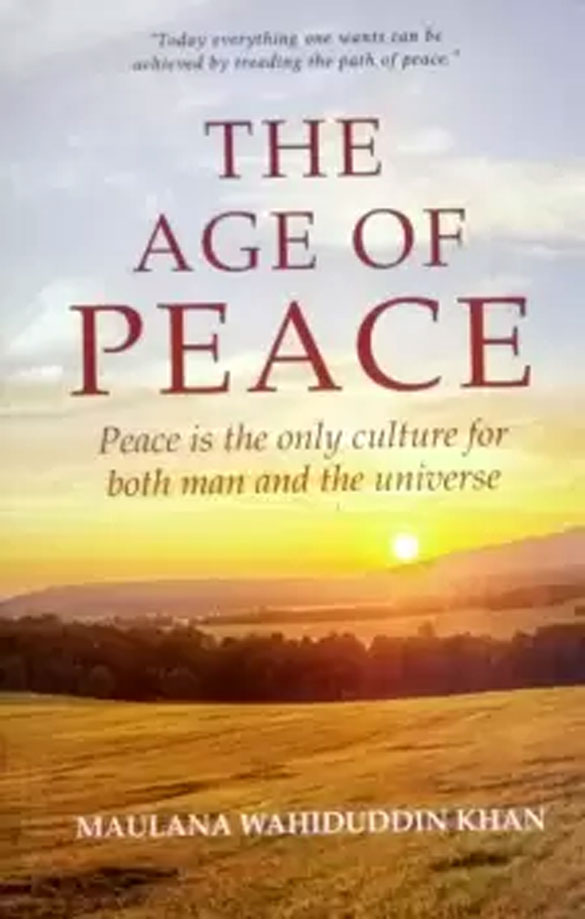


The Age of Peace” Peace is the only culture for both man and the universe

Author: Maulana Wahiduddin Khan

Publisher: Goodword Books, New Delhi, India

Year of Publication: 2018

Pages: 192 Price: Not mentioned


Maulana describes his work as, “The purpose of this book is to re-engineer the minds of those who think in terms of violence. The book aims at making such people realize that it is entirely possible for them to successfully achieve by peaceful means what they are unable to achieve by violent means.” (P-7) So Maulana is critical that India achieved justice through protest and states that, “Injustice can be removed through education and hard labour, not by demand. The strategy of complaint and protest will not give you justice.” (P-16-17). Hence despite independence of India a culture of protest and violence still exists and prevails.

Maulana observes that De monopolization over religious studies, economy and political power has rendered many things possible, which include avoiding the wars, “The age of de-monopolization has practically eliminated the option of war.” (P-26) For him violent activism in our times is an outdated concept (P-33) but then he does not engage with the issue of state terrorism that breeds the violence and reinforces it. State terrorism is an overwhelming issue that Maulana avoids to engage with, thus he misses one of the important reason that fuels the violence and terrorism by non state actors. People will have to learn the means and options to settle down their differences peacefully but our education is not preparing us for such a negotiation. Also the progress achieved through peace will form the concrete basis for strengthening Peace. Again that culture is missing from our social milieu.

Positive planning, policy of de linking and the ideals being pragmatic are the basis that will lead towards what Maulana calls as the culture of peace. If the ideal is not pragmatic then every pursuit towards achieving it will be futile and people have pursued these ideal non pragmatic goals that lead to violence. So to achieve these goals violence is romanticized. Thus there is no need for starting movements that aim at achieving abstract goals. Maulana uses this pragmatic thinking in case of Palestine and Kashmir dispute but one can be critical on this account that no colonized nation would have achieved freedom if his pragmaticism is to be believed. The art of crisis management is important for ushering peace both for nations and individuals. So Maulana believes that accepting status quo for Peace is the way out, again an option that can be criticized.

Radicalization and internet have a symbiotic relationship. The violence that is countered by violence leads to a vicious cycle but states are failing to understand this important fact because they have interests to pursue. Further the arms industry is the biggest capitalist venture and these capitalists want that wars should start in every place so that they keep on earning profits by selling their goods both to countries and non state actors. This important aspect seems to be oblivious to Maulana, but he is correct in observing that violence needs to be countered ideologically and through education instead of counter violence that has proved its inefficiency in curtailing it. The glorification of violence in form of muslim warriors like Salahuddin should be desisted and understood in a specific context, and peace as the only way forward should be presented before the community. So as the law of nature that believes in avoiding conflicts and tussles should be adapted to achieve success and progress.

Maulana laments that Muslims have least contribution in every facet of life today, so they have just been rendered as takers and consumers. To add insult to injury they are not able to understand the current challenges and times in which they are living where guns and violence have lost their power and are being replaced by ideologies and education. Muslims yet have to acknowledge this fact that human life is based on interdependence and by fighting with others they are killing the chances of interdependence. Hence absolute universal peace remains a distant dream for most Muslim countries.  

Maulana describes terrorists in his peculiar manner as, “Terrorists are not basically corrupt individuals. They are rather wrongly conditioned human beings. We should try to alter their thinking by applying reason, and without doubt terrorism will disappear.” (P-158). This is the most important aspect that should be emphasized and reinforced. Instead of eliminating the individual terrorists by labelling them as a threat to the community and nation they need to be countered and counselled ideologically.

Overall the book is an important addition in building the peace theology of Islam. Maulana as a prolific writer of Islam does not disappoint the readers and his writings about the peace theology of Islam are essential reading for anyone interested in understanding how Islam engages with the challenges and issues that threaten the peace in our current times. 

-----

M.H.A.Sikander is Writer-Activist based in Srinagar, Kashmir .

URL:    https://www.newageislam.com/books-and-documents/mushtaq-ul-haq-ahmad-sikander-new-age-islam/maulana-wahiduddin-khan--re-engineer-the-minds-of-those-who-think-in-terms-of-violence/d/124205


New Age Islam, Islam Online, Islamic Website, African Muslim News, Arab World News, South Asia News, Indian Muslim News, World Muslim News, Women in Islam, Islamic Feminism, Arab Women, Women In Arab, Islamophobia in America, Muslim Women in West, Islam Women and Feminism

Monday, February 1, 2021

Maulana Wahiduddin Khan Stands For Introspection: His Criticism Of Islamic Revivalist Movements Like Jamaat e Islami And Ikhwan ul Muslimoon Is Valid


By  Mushtaq Ul Haq Ahmad Sikander, New Age Islam

1 February 2021

Islam is the most misunderstood religion of our era. The violence perpetuated by few fringe elements and non state actors in the name of Islam that are later exaggerated by the media has painted the religion in bleak colours. It is not just violence, the issue of gender, politics, Muslims as minority and other issues need to be discussed in relation with Islam. Very few Islamic scholars have engaged with these issues and provided a succinct response to them. Among this rare breed of scholars Maulana Wahiduddin Khan has craved a niche through his writings. He engages with the questions of the modern mind, and addresses the burning issues of Muslims in the light of Islam. One can certainly differ with his opinions but his is a voice that cannot be ignored.


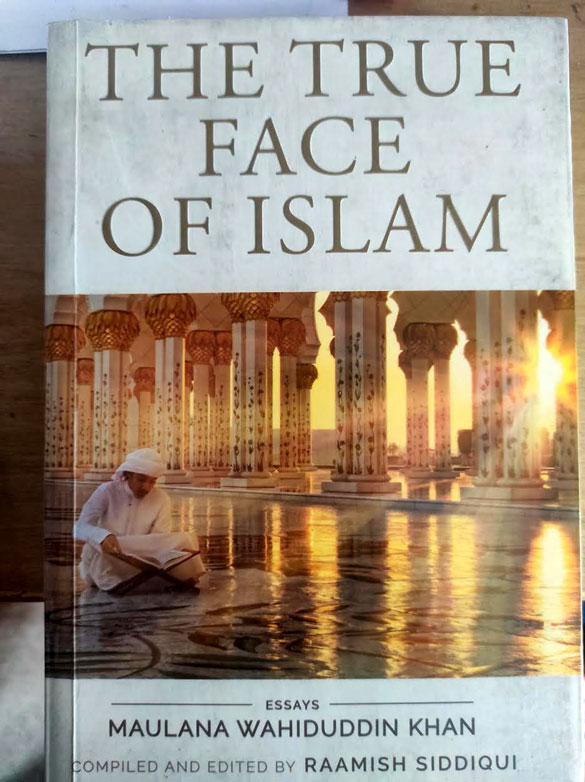
The True Face of Islam: Essays of Maulana Wahiduddin Khan

Compiled and Edited by Raamish Siddiqui

Publisher: Harper Element, Noida, India

Pages: 222  Price: Rs 325

ISBN: 9789351775928


The current book under review is a collection of his various articles that have been compiled and edited by Raamish Siddiqui. Siddiqui in his Introduction to this work writes, “Through this work, I hope to bring clarity in the minds of the many who like me have been grappling to find answers to their questions. This book is an attempt to clear the dust of interpretation which has shrouded the Islamic Scriptures. And after performing intensive research, I am convinced that the writings of Maulana Wahiduddin Khan are the conclusive answers that will put these restless minds to rest.” (P-xii) This book consists of thirty eight essays that deal with different aspects of Islam including Prophethood and life after death. Maulana always strives for the principle of adjustment as man cannot exist independently so adjustment becomes inevitable.

Maulana articulates a new interpretation of Tasawuff or Sufism while advocating to change its form from heart to head because he says that we are existing in post scientific age, “Importance should be given to the reformation of the mind rather than reformation of the heart. This change of approach and emphasis is not a simple matter. In its magnitude it is equal to a revolutionary change. If we acknowledge this new approach, it would amount to saying that Sufism or mysticism must undergo a complete overhaul. As far as the question of the goal is concerned, it shall remain the same as it was in ancient Sufism or mysticism. But when we talk about the method, then definitely Sufism must be transformed into a completely new discipline. All the rules and regulations will have to be revised taking into account the new premises, and then written afresh.” This call for overhaul is certainly huge and will be severely resisted by the upholders of traditional Sufism, who spend years to train the heart and cleanse the soul.

The need for interfaith dialogue has been emphasized given its essence in bridging the divide among various faiths. Also the need for understanding Hinduism, Judaism and other religions becomes very important if any meaningful dialogue is to take place. So Maulana says, “Islam, wants Muslims and Christians to join together in the later period of history for the cause of Allah, and they must eliminate evil by joint effort.” (P-61) For dialogue to be fruitful people need to know the art of difference management rather than art of difference elimination as that is not a possibility. So the principle of give and take becomes a pre requisite for a successful dialogue.

The freedom of speech and expression helps the progress of any nation and any curbs hampers progress as succulently pointed out by Maulana, “If curbs are placed on freedom of expression, people’s thinking cannot be ceased; the only result will be that their thinking will not come to their lips and pens. Any institution or state which places curbs on freedom of expression will be ultimately brimming with hypocrites. In such an atmosphere, sincere people can never be produced.” (P-104) It was this freedom that helped Muslim construct a strong enlightened civilization as there was no persecution of scholars, scientists and free thinkers in the Muslim world. Also the principle of difference between Islam and Muslims has been emphasized by Maulana, but that is a very problematic principle. The majority of Muslims is influenced by religion although all of their acts are not driven by Islam, but Muslims love to flaunt their religion everywhere and wear it on their sleeves. So it becomes difficult for non Muslims not to judge Islam from the practice of Muslims.

Maulana stands for introspection and his criticism of Islamic revivalist movements both Jamaat e Islami and Ikhwan ul Muslimoon is valid but his support for the state of Israel stands on very shaky grounds and exposes his lack of political acumen, “During this period the establishment of the state of Israel took place in Palestine in 1948. This, to the Muslims, was intolerable. To the writer, however, this was not wrong in principle, and not wrong a decision, for, according to the Balfour Declaration, under the limited quota system, the Jews were allowed to return to one part of Palestine. These Jews were, in fact, the same who were a part of the Diaspora. And, according to the Quran itself, the return of the diasporic Jews was right in principle (5:21). But Muslims, already enraged at the Western nations because of the colonial yoke they had imposed, now became bent on waging a war against them and against Israel.” (P-127)

This criticism is not confined to state of Israel only but about Kashmir he appears to be prejudiced too. Also his information appears to be incorrect particularly about this incident, “In the Jammu region, the Shrine Board acquired a piece of land measuring 100 acres (800 canals) in order to perform the services of the Amarnath Yatra in a more effective way.” (P-160) It was not in Jammu division but in Kashmir valley that the transfer of land led to a strong agitation in year 2008.

Maulana is correct that not all non Muslims can be termed as Kaafir (infidels) and Islam per say does not advocate a particular form or structure of the government in strict terms. Islam basically aims at creating ideal individuals not an ideal state. So creation of patriotism as a means of nation building seems to be a way out and secular democracy is not something that should be abhorred and desisted by Muslims. Maulana states, “Secular democracy is neither an absolute theory nor an eternal system. It is only a practical settlement which is made according to situation. Its basic purpose is to provide opportunities by maintaining peace in social life…Holding secular democracy against Islam is extremism, and there is no place for extremism in Islam.” (P-149) Maulana laments that political parties and media is failing Muslims on all accounts so they continue to remain marginalized because instead of education they chose emotional issues as basis for their community preferences.

Overall these essays offer new and different insights into various issues baffling Muslims and should be on the reading list of any person interested in the engagement of Islam with the current challenges and issues.

-----

M.H.A.Sikander is Writer-Activist based in Srinagar, Kashmir.

URL:   https://www.newageislam.com/books-and-documents/mushtaq-ul-haq-ahmad-sikander-new-age-islam/maulana-wahiduddin-khan-stands-for-introspection-his-criticism-of-islamic-revivalist-movements-like-jamaat-e-islami-and-ikhwan-ul-muslimoon-is-valid/d/124195    


New Age Islam, Islam Online, Islamic Website, African Muslim News, Arab World News, South Asia News, Indian Muslim News, World Muslim News, Women in Islam, Islamic Feminism, Arab Women, Women In Arab, Islamophobia in America, Muslim Women in West, Islam Women and Feminism

Black Metal Music Gaining Ground In Islamic Countries

 New Age Islam Special Correspondent

1 February 2021


Black Metal is a subgenre of modern music originating in the 70s and assuming a distinct identity in Norway in the late 80s. The genre owes its name to the musical band Venom's album titled Black Metal appeared in 1982. The genre became popular in Europe and North America in 1990s. The main characteristic features of this musical phenomenon were its unconventional music, its revolt against authoritarianism and Christianity. It criticised in harshest words religious hypocrisy of adherents of Christianity and other organised religions. It criticised the bloodshed perpetrated by the followers of religions in the name of religion and God.

However, their criticism is most of time blasphemous. In fact blasphemy is central to black metal music.

Other characteristic feature of the black metal music is its harsh and heavy blasting music. It is filled with high pitched intense vocal sounds accompanied by blast beating drumming and music played at high tempo. Thanks to this, sometimes the lyrics is difficult to understand without printed lyrics.

During the 1990s, many black metal bands came up in Europe and North America. Some of them are Mercyful Fate, Bathory and Hellhammer.

The Black metalists are generally Satanists and occultists. Often the covers of their albums have images of Satan. They criticise religion, particularly Christianity and Judaism. One of the lyrics of the Norwegian band Golgororh is as follows:

When Jehovah's hordes are slaughtered

When disciples twelve are dead

When beheaths of Easter lands

And raped and raped again

When the whore of Babylon rides

When fury turns of hate

When all sons of Satan

Sodomise the lands of Christ

This lyrics gives an idea of the style, diction of black metal poetry and attitude of the black metalists to religion. Therefore, the authors of “I am Satan”! black metal, Islam and blasphemy in Saudi Arabia and Turkey” describe black metal phenomenon in the following words:

"Black metal is highly multi-model expression and both the lyrics and the brutality of the musical and visual expression ate central to understanding the genre's metanarrative which reeks of anti-establishment and anti-authoritarian rhetoric, part of which is provocative resistance to and disdain of religion. The bands very often use consciously blasphemous verbal expressions and images putting blasphemy at the heart of black metal meta narrative." 1

Since blasphemy against Christianity or Christ does not become a religious issue in Christian or Jewish society as it becomes in Islamic society, the black metal bands thrived in the western society without facing legal, religious and social action from the church or the governments. But it is surprising that black metal bands have come up and thrived in the conservative Islamic societies. Black metal bands have been reported from Turkey, Iran, Saudi Arabia and other Islamic countries where blasphemy laws exist that prescribe death for blasphemy.

Black metal bands have come up in Saudi Arabia and Turkey since 2005 or even earlier. Probably Witchtrap is the first black metal band formed in Turkey in 1988. Some of the prominent bands are Zifir, Hellsodomy, Engulfed and Sarinvomit are based in Turkey while Al Namrood, Immortal Seth and Mephisophilus ate based in Saudi Arabia. Though these bands do not hold public concerts in Turkey or Arabia, their mere existence in these Islamic countries demonstrate their courage because their lyrics is highly blasphemous and critical of the establishment and clergy. They hold secretive concerts in private houses and they produce their albums through production houses in Europe. For example, Al Namrood's album was released through Shaytan Productions of Canada in 2008. The lyrics of these bands contain highly blasphemous verbal expressions against Islam and Islamic clergy. One of the lyrics of Turkish band Sarinvomit is reproduced here:

Infinite aeon began for hellish nuclear dominance

Pandemonium began to devastate the holiness

Goetic demons gathered, tubes of VX gas were filled

During the circumambulation Kaaba was encircled

Pleasures of massacre, escape of worshippers

Shameful religious supplication

Drowned in their vomit while they are praying

Paramount viewz of depravation

Islamic scriptures were totally destroyed

By the sacrilegious abhorrence

Ejaculation of goat-lord who stands on dead prophets

Hadjis ate agonising under the radioactive mass blood of the devil stoners of Mina

Emblazoned goats are inseminating their wives with semen mixed with VX gas

Genocide weapons created miasmatic black sky

End of fucking sanctified lives

Tempestuous lethal gas for the victory of slaughter rites

Celebration chemical armament against the devotees

Befouled divine bodies exploded and spilled out around

Those who fled to shelters were impaled on poles in heat

Spreading VS gas over Kaaba, lust of mass poisoning

Spreading VX gas over fucking Kaaba

Finally coming of radiational whirlwinds

Spreading VX gas over fu king Kaaba

Collapsing of fucking Muslim empire

One of the lyrics of Saudi band Al Namrood titled "Jabroot al Shar" is reproduced here:

The Arrogance of Evil

Let the demons run towards great destruction.

A straight path laid for them.

I am Satan and in proudness I reside.

My power rises and to me is clear victory.

To play on the desires of people.

I am the tale of a terrifying subject.

Blood and amputations.

Hammer and axe.

There is no escape and no retreat.

Because I am close.

The soul of satan covers these bones. It has taught us old hatefulness, lo humanity.

There is no reconciliation between us and no peace.

Lo, soldiers of evil, come to battle. Spread fear into the hearts of the slaves. Ring the bells and play the instruments of sadness.

The screams of the demons between the snakes and the crows.

Lo, you who are in love with yourself.

O, human.

You are dead.

Immediately, the convicted reaps vengeance.

It is not that the bands are not known by the governments of Turkey and Saudi Arabia. There are reasons that the media and the judiciary have ignored them. Since they do not express their ideas in the open and the general public is not directly influenced by their ideology, the media and the government choose to ignore them to avoid giving publicity to them. The bands perform in western countries and post their lyrics and songs on the internet. But still iit is a matter of research why Muslims of conservative Islamic countries like Saudi Arabia and Iran and revivalist Islamic countries like Turkey have witnessed such "anti-Islam" musical bands. The reason of their growth may be found in a statement of a member of Al Namrood:

"We hate religion and anything connected to it. You are the reason we hate it because we are severely abused by the Islamic people; since childhood they were trying to intoxicate our brains with their religious bullshit." 2

Such rebellious black metal trends also exist in other Islamic societies. For example, a folk artist of Bangladesh, Rita Dewan was booked under the Blasphemy laws for singing "Allah is the greatest Satan". Rita’s song was very much in line with Lebanese band’s song “Alahiya Khinzir” (My God is a swine). Though she may not consciously subscribe to black metal ideology, she also demonstrates her unhappiness over the hypocritical behaviour of the clergy and the genocidal behaviour of the Islamic governments bent upon killing their own brethren in the name of religion with the help of chemical weapons.

Therefore, the growth of black metal music in Islamic countries where blasphemy means death merits in-depth research.

__

Courtesy:

1.Springer: “I am Satan”! black metal, Islam and blasphemy in Saudi Arabia and Turkey

2.  “            “                     “               “


URL:   https://www.newageislam.com/islamic-culture/new-age-islam-correspondent/black-metal-music-gaining-ground-in-islamic-countries/d/124196


New Age Islam, Islam Online, Islamic Website, African Muslim News, Arab World News, South Asia News, Indian Muslim News, World Muslim News, Women in Islam, Islamic Feminism, Arab Women, Women In Arab, Islamophobia in America, Muslim Women in West, Islam Women and Feminism

Are Saudi Reforms for Real?


By Arshad Alam, New Age Islam

1 February 2021

The ‘opening’ up of Saudi Arabia, initiated by Muhammad bin Salman (MBS) has generated a lot of interest worldwide. The loosening of strict cultural norms by introducing cinema, women being allowed to travel and drive, have all been received very positively, especially by the West. The earlier imagery of Saudi women, in black Abayas, is now being slowly but surely replaced by women taking the wheels and going to universities. This certainly has made a huge difference to Saudi Arabia’s regressive image in the international community. But these changes will also have a direct impact on the Muslim world too, as Saudi Arabia is considered as the ideal normative state by many Sunni Muslims. Any change which emanates from the centre will have consequences for the periphery too.

Beneath the social reform is the harsh Saudi realisation that in the long run, they will have to reduce their dependency on oil revenues. With petroleum stocks depleting and the world moving towards cleaner alternatives, the Saudis will need to invest heavily in their service sector. As outlined in the Saudi Vision 2030, this is precisely the plan. But a move towards a service economy has always been accompanied by changes in social and cultural norms. A modern economy does not go with traditional and medievalist norms. Therefore, cultural lifestyle and modes of thought must be brought in line with the new political economy. This is perhaps the most important reason behind the ongoing Saudi reforms.

Another important geo-political reason has been the normalisation of ties with Israel. Although the Saudi government is yet to make any such formal move, some middle-eastern states have already done so which could not have been possible without Saudi approval.

Partly, the religious orthodoxy and anti-Jewish feelings arise out of the existing theology which is taught in Saudi Arabian schools. Not surprisingly, Saudi textbooks have been full of anti-Semitic hatred, misogynist passages and eulogizing of concepts like jihad. It seems that now the Saudi authorities have woken up to the dangers which such texts pose to their own future generations. Recently, they have made certain important changes in the content of these textbooks. According to a review of selected textbooks done for 2020-2021 by the Institute for Monitoring Peace and Cultural Tolerance in School Education (IMPACT-se), these changes seem to be small but nevertheless significant.

The new Saudi texts have removed the infamous hadith which taught students that a war between Jews and Muslims was inevitable and in which Muslims will kill all the Jews. Similarly, a passage which stated that Muslims will kill the Jews on the Day of Judgment has been removed. The glorification of jihad has also reportedly been curtailed in the new textbooks. Another problematic passage, which condemned homosexuality and stated that such people should be punished by death for the ‘crime of sodomy’ has been removed which certainly represents a progressive shift towards greater tolerance. However, certain problematic passages still remain. At many places in these textbooks, Jews and Christians have been replaced by the more generic ‘enemies of Islam’.

At other places, these texts continue to remain harsh on polytheism arguing that their punishment will be severe on the day of resurrection. The presence of such passages does not augur well for an open and tolerant society, yet the general thrust of textbook reforms should be welcomed.


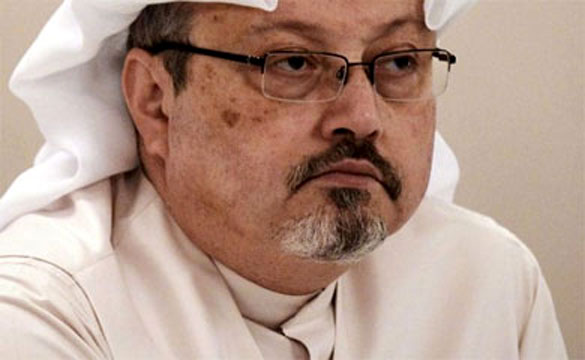
Jamal Khashoggi

-----

While choices are certainly widening in Saudi Arabia, there is one very crucial aspect which is being severely controlled. If the Saudis are trying to convince the wider world that they are genuine in their desire to usher liberalism, then free expression of political opinion should be the corner stone of such a policy. However, what we see in Saudi Arabia is the very negation of right to free and fair expression.


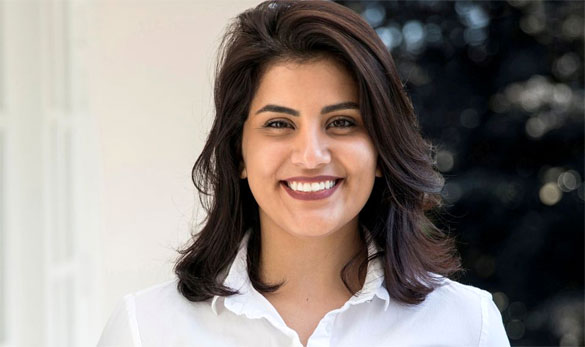
Lujain al-Hathloul, women’s right activist

-----

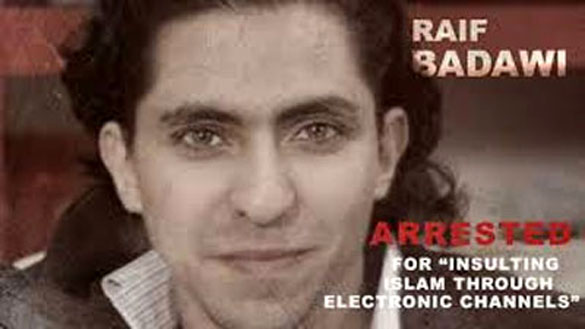
Despite the fact that MBS opened up spaces for women which were hitherto closed for them, but at the same time, he has also severely punished those very same women who were in the forefront of demanding such rights. The case of Lujain al-Hathloul particularly stands out. She had been campaigning for women’s right since nearly a decade but is now behind prison. Similar is the case with many men and women who were demanding cultural, social and political reforms. While some like Raif Badawi, after being publically lashed, are spending their time in jail, others have had to seek asylum in different countries. The case of Jamal Khashoggi, who was dismembered for being critical of the Saudi regime, hardly inspires confidence over the intention of reforms in Saudi Arabia.


Raif Badawi

-----

That fundamental changes are underway in Saudi Arabia is beyond doubt but these changes are coming at punishing costs. It appears as if the government is only interested in a top-down approach which means that it distrusts its own citizen and civil society’s capacity to reform. Authoritarianism certainly does not go down well with even the pretence of making a more open and tolerant society.

Sooner or later, the citizens are going to demand political rights as has been seen in many other countries during the Arab spring. Perhaps, it is this future political assertion of its own citizens that Saudi Arabia does not want and hence any political articulation is being heavily repressed. What the Saudi government needs to understand is that its state led reforms have already raised the expectations and aspirations of people and it will be very difficult for the state to curb them now. The best way forward for the Saudis is to trust their own people and initiate political reforms along with social and cultural reforms.


Arshad Alam is a columnist with NewAgeIslam.com            

URL:     https://www.newageislam.com/islamic-society/arshad-alam-new-age-islam/are-saudi-reforms-for-real/d/124197


New Age Islam, Islam Online, Islamic Website, African Muslim News, Arab World News, South Asia News, Indian Muslim News, World Muslim News, Women in Islam, Islamic Feminism, Arab Women, Women In Arab, Islamophobia in America, Muslim Women in West, Islam Women and Feminism