Pages

Monday, January 4, 2021

Assam: Abolishing Madrasas or Converting Them into Dysfunctional Government Schools?


By Arshad Alam, New Age Islam

4 January 2020

The Assam government recently passed an Act by which government madrasas in the state will be converted into regular schools. The subsequent opposition within the state, has created an impression that the Assam government has shut these madrasas altogether. This is simply not true. What has been done is simply to convert state controlled madrasas into government schools. No teacher of such a madrasa is going to lose his or her job. Neither is her salary and service condition to be compromised in any way. Rather than being teachers in madrasas and controlled by the Assam Madrasa Education Board, now they will be directly administered by the regular education departments of the state. The students within this erstwhile madrasas will now be called students of regular schools. 

-----------------------------------------------------------------------------------

Also Read:  When Assam Govt Decides To Shut down Madrasas Muslims Agree on Madrasa Modernisation

-----------------------------------------------------------------------------------

Certain changes will happen as a consequence of this Act. The first is that the word madrasa will be dropped from the names of these educational institutions. Secondly, religious content of the existing curriculum will be completely dropped. A more long term consequence will be felt in terms of employment within these institutions. Since it will now be controlled by the state, they can appoint any ‘qualified’ teacher, without paying heed to the religious identity of the appointee. The opposition (Muslims and others) has criticised the move by positing it as an attack on Muslim identity and culture. We need to scrutinise such claims more closely.

Madrasas literally means the ‘process of education’. Over time, this process found a locale and now madrasa means a ‘place of study’. In fact, in modern parlance, both madrasa and school mean the very same thing and it is pointless to object whether an institution is called a madrasa or a school, especially if the content and quality of education are comparable at both places. Over the years, Muslims have come to regard madrasas as centres of religious teaching but this is not true. History of this institution tells us that religion was only one of the many subjects taught within these institutions. In fact, in the 18th century curriculum of madrasas, the study of Quran and hadis was peripheral whereas the sciences of the day like geometry, medicine and philosophy were taught in much greater detail. The understating that madrasas are about the teaching of Islamic religion is a specific contribution of Deoband which fundamentally altered the pedagogy and curriculum within madrasas. Most madrasas which were founded after Deoband followed this model and simply ignored the teaching of modern subjects. It is rather rich of this constituency now to turn around and demand the teaching of religious subjects in regular schools.
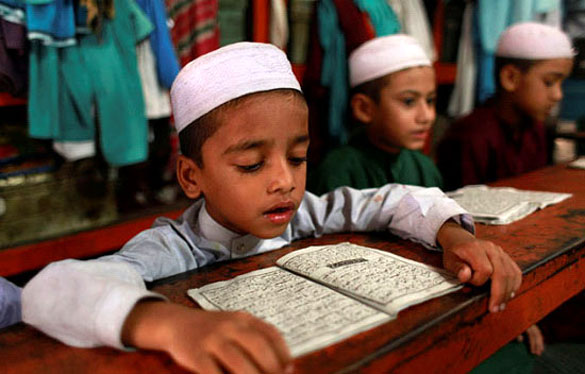


State madrasas in Assam taught the regular government subjects along with some Islamic theology. What the recent Act has done is to throw out the teaching of Islamic theology and rename madrasas as schools. Studies have pointed out that state run madrasa students are overburdened because they have to study the government syllabus along with religious content. This overburdening means that they are at a disadvantage as compared to regular school students who can solely focus on the prescribed government syllabus. For the students of these madrasas (now schools), it must be a huge relief that they are now at par with the other school students.

However, this has become a problem for cleric run political parties like the AIUDF for whom this is move by the government is an attack on Muslim identity. One can only hope that better sense prevails amongst them and they should realise that matters of religious identity must be divorced from matters of education. Also, all schools needs better teachers, no matter from which religious group they come from. Over the years, Muslims have come to see even their government supported institutions like state madrasas less as centres of education and more as sources of employment. This attitude needs to change if the community has to progress educationally.          

This conversion of madrasas into schools is being done in the name of secularism. The government’s argument is that a ‘secular’ state cannot fund the religious education of a particular community. Technically, this argument is right, but the Indian practice of secularism so far has been different. Both BHU and AMU are government funded universities and both have departments which ‘teach’ religion. Moreover, the government organises and funds many religious events like the Mansarovar pilgrimage and the Kumbh. Coming from a BJP government, which positions itself as a ‘Hindu’ party, this lecture in secularism will certainly not have too many takers, even within the Hindu community. Over the last few years, Muslims in Assam haven’t had it easy. The faulty implementation of the NRC has created considerable anxiety within the Muslim community regarding the intentions of the government. Himanta Biswa Sarma, the home minister and one who introduced the madrasa bill, indicated not very long ago that Muslims were waging a war on Hindu culture and civilization. It is not surprising therefore that Muslims are not trusting their own government and are suspicious of the real motive behind transforming madrasas into schools.  

However, to be fair to the BJP government, this Act applies only to state funded madrasas and not to those which are funded and controlled by the community. For this reason, the argument that this constitutes an attack on ‘Muslim identity’ does not sound convincing as the private madrasas are free to teach any curriculum of their liking.



But that perhaps is a bigger problem for Muslims. At least in government madrasas, there is regular teaching of modern subjects but in the majority of community owned madrasas, only traditional religious subjects are taught. As a result, the graduates from these institutions do not find any employment in the modern job market and keep swelling the ranks of clerics. Moreover, students studying in these madrasas number much more in comparison to students in government madrasas. Actually, the community controlled madrasas are in dire need of reform. From time to time, governments have adopted policies to incentivise the introduction of modern subjects in these madrasas but to little avail due to the opposition from clerics.

The BJP government has been particularly suspicious of these community funded madrasas and have periodically labelled them as ‘dens of terrorism’, without much evidence. In keeping the community funded madrasas out of its reformist orbit, the Assam government perhaps wants Muslims to remain educationally backward. Of course, this whole process has been willingly aided and abetted by Muslim clerics who neither want to change nor are willing to let anyone else change the state of madrasas.
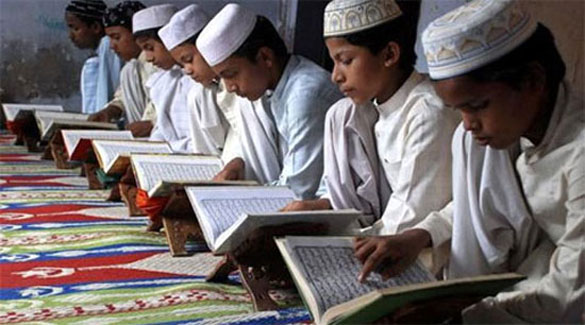


Changes effected in government madrasas are mere tokenism: it is only a change in nomenclature. Its real intention perhaps lies in sending an appeasing signal to the Hindu right wing voters that the government is fundamentally ‘altering’ the structure of madrasas. At the same time, the Muslim opposition to this move is facile. Instead of wasting their energy in protesting against a change in name, their energies will be better utilised in demanding better educational infrastructure in the state.             

----

Arshad Alam is a columnist with NewAgeIslam.com

URL:   https://www.newageislam.com/islam-and-politics/arshad-alam-new-age-islam/assam-abolishing-madrasas-or-converting-them-into-dysfunctional-government-schools/d/123973


New Age IslamIslam OnlineIslamic WebsiteAfrican Muslim NewsArab World NewsSouth Asia NewsIndian Muslim NewsWorld Muslim NewsWomen in IslamIslamic FeminismArab WomenWomen In ArabIslamophobia in AmericaMuslim Women in WestIslam Women and Feminism

Saturday, January 2, 2021

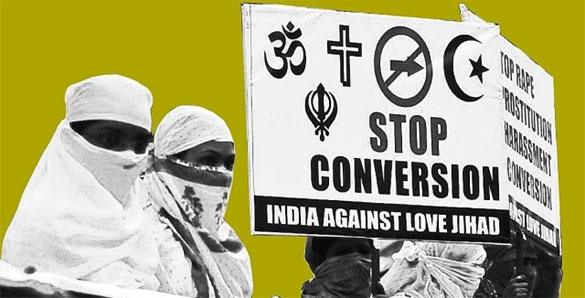
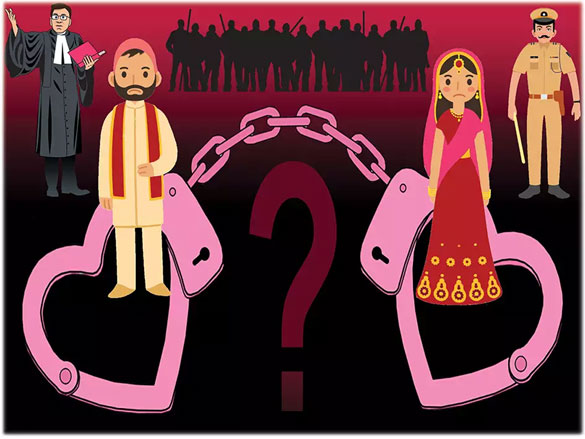
What Is New In The ‘New’ Anti-Conversion Laws, Popularly Known As Anti-Love Jihad Laws?


By Arshad Alam, New Age Islam

31 December 2020

With Madhya Pradesh and Uttar Pradesh enacting laws to prohibit religious conversions through force, fraud or allurement, there is a lot of opposition from those proclaiming themselves to be ‘secular’. Such pious protestations ring hollow when we realise that similar laws have been on our statutes all along and for decades, these so-called secular and progressive forces have been silent about it. In arguing this, I am not supporting the recent laws which have been enacted; clearly they are deigned to target a particular religious minority, namely Muslims. All that I am saying is that opposition to such laws should be consistent, irrespective of which government is in power. After all, what this government has done is to simply build upon the existing laws. Forgetting this genealogy is akin to forgetting the complicity of the so-called progressive forces and parties in bringing us to where we are as a nation. 


The first thing to realise is that such laws have been enacted not just by MP and UP but, at different times, also by Himachal Pradesh, Uttarakhand, Jharkhand, Arunachal Pradesh, Chhattisgarh, Gujarat, Odisha, Rajasthan and Tamil Nadu. In some states (like Tamil Nadu), the law was repealed, while in others (like Himachal Pradesh), it was struck down by the high court. One must not forget that Himachal Pradesh had a Congress government in 2006 when the law was given shape, even though some of its provisions were later struck down by the high court. So although, legally, the government was not successful in implementing the law, it definitely showed its political intent to do so at that time. It was this law which was later reworked into a more stringent bill (supported by the Congress party in the state assembly) by the BJP government in 2019. Let us also not forget that one of the earliest such laws was enacted in 1968 in Congress-ruled MP. The current BJP government has built upon that same edifice. 

------------------------------------------------------------------------------------

Also Read:  Controversy over a Beautiful, Inclusive Tanishq Ad That Had To Be Pulled Down: The Troll Is Not the Problem, Religious Division Is

------------------------------------------------------------------------------------

One of the most problematic aspects of these recent laws is that the burden of proving oneself innocent rests on the accused. This turns the criminal justice system on its head where normally the burden of proof lies on the person who is making the accusation. We saw this when the UAPA was amended in 2019. Under it, all that the state has to do is to accuse someone of terrorism. It is then incumbent on the accused to absolve herself of such a charge in the court of law. But let us also not forget that this provision was first introduced in the anti-sexual harassment laws enacted during the Congress government, where the burden of proof still lies on the accused and not on those who are making the accusation. It is rather rich of the ‘progressive and secular’ forces now to turn around and criticise these laws when they campaigned for including the same provisions not very long ago.


Hindu nationalists have always argued that they are losing ‘numbers’ to other religions. In one news report from Gujarat, out of 1,838 applicants who wanted to convert in 2016, an overwhelming 94% were Hindus wanting to leave their religion. It is now increasingly clear that the prime motive of these laws is to target and harass non-Hindu religions and particularly their men. The new laws in MP and UP, by making it illegal to convert for the purpose of marriage, taps into an old Hindu fear that Muslim men are ideologically programmed to lure Hindu women with the express intention of increasing their numbers. It is for this reason that a word like ‘allurement’ has been made part of the law and which is deliberately kept vague. In the Madhya Pradesh law, one of the ways to allure is to invoke ‘divine displeasure’, while in the Uttar Pradesh law, promising ‘divine pleasure’ comes under allurement. It is clear, therefore, that the law is not religiously neutral but is primarily designed to stop conversion from Hinduism to Christianity and Islam because it is the latter religions who either promise ‘divine pleasure’ or threaten the wrath of ‘divine displeasure’.

------------------------------------------------------------------------------------

Also Read:  Why Hindu Women (And Men) Should Oppose the ‘Love Jihad’ Law

------------------------------------------------------------------------------------

It is true that initially, Hinduism was not a proselytizing religion; it did not seek to convert people into the faith. However, the same could no longer be argued after the Arya Samaj came on to the national scene and started actively seeking converts through its elaborate program of Shuddhi. In its presentations to the colonial state, the Arya Samaj argued that Hinduism was a religion like Christianity because the former also engages in proselytization. Historians tell us that the conversion program of the Arya Samaj was extremely widespread, so much so that it not just face opposition from Muslims and Christians but also from other Hindu groups. Thus, there is no denying the fact that Islam, Christianity and Hinduism, all are proselytizing religions. In such a situation, it is important to ask if all these three religions are provided with a level-playing field in India.


When the Constitution, through Article 25, gives the freedom to propagate one’s religion, one assumes that it includes the right of proselytization since it is intrinsic to the religious calling of many faiths. However, the Supreme Court made it clear in its judgment of 1977 (Rev. Stainislaus vs. state of Madhya Pradesh) that the right to propagate does not include the ‘right to convert any person’. It is precisely to escape the effects of this judgment that Hindu groups now talk of ghar-wapsi rather than conversion. But as we all know, it is one and the same thing. In fact, in Rajasthan and Uttarakhand, ghar-wapsi is excluded from anti-conversion laws. Thus, the effect of the 1977 SC judgment was to severely limit the proselytizing activities of Islam and Christianity. It is good to have non-partisan expectations from the judiciary but in matters of ‘critical national importance’, the courts have generally sided with existing political normativity.

What is the meaning of ‘freedom of conscience and religion’ enshrined in Constitution when some of the extant laws still make it mandatory to inform state authorities well in advance one’s intention of converting to another religion. In states like UP, MP, Gujarat and Himachal, the ‘freedom’ to convert is not a matter of individual volition and conscience, but the prerogative of the state. It is true that in some states, these provisions are new, but in others they have been there for decades.

------------------------------------------------------------------------------------

Also Read:  Interfaith Marriage: The Dilemma of Inequality In Religion Facing Muslim Female In Modern World

------------------------------------------------------------------------------------

Whether a religion should have an alienable right to convert or not is another issue. All I am arguing is that there should be a level-playing field between religions which does not appear to be so in our country. The extant legal system tends to privilege Hinduism. And yet, this is not something which is new. Consider the 1950 Ordinance which restricted Scheduled Caste status to the Hindus alone. This means that if a person converts to a non-Hindu religion like Islam or Christianity, then she loses the constitutional and other benefits which devolve because of their historical, social and cultural exclusion. This law gives a direct incentive to SCs to remain within the fold of Hinduism and in a fundamental sense dis-incentivizes conversions to Islam and Christianity. The argument that these latter religions do not have the concept of untouchability and therefore they cannot have SCs within their fold is specious. Buddhism and Sikhism too are against untouchability and yet Dalits within these communities are granted SC status. The presence of this discriminatory legal provision and the silence of progressives and seculars only makes us painfully aware how the latter have been part of this ‘nationalist’ consensus.    


Agreed that there is a certain brazenness with which these laws are being made more stringent by BJP-ruled state governments, but please don’t sermonise to Muslims that this is something new. They have been in this place for decades.

-----

Arshad Alam is a columnist with NewAgeIslam.com

URL:  https://www.newageislam.com/islam-and-politics/arshad-alam-new-age-islam/what-is-new-in-the-new-anti-conversion-laws-popularly-known-as-anti-love-jihad-laws/d/123936


New Age IslamIslam OnlineIslamic WebsiteAfrican Muslim NewsArab World NewsSouth Asia NewsIndian Muslim NewsWorld Muslim NewsWomen in IslamIslamic FeminismArab WomenWomen In ArabIslamophobia in AmericaMuslim Women in WestIslam Women and Feminism

The Jihadists' Suicide Attacks or Martyrdom Operations Strictly Forbidden in Islam


By Ghulam Ghaus Siddiqi, New Age Islam

2 January 2021

Suicide has been the most lethal weapon of the Jihadists. This Jihadist weapon is produced through the act of fabrication. They appear to call it ‘permissible (jaaiz) in Islam but they fail to invalidate the verses of the Quran and the sayings of the Prophet in which Islam definitively forbids suicide under all circumstances, as exclusively discussed in my article:

Suicide Attacks By ISIS or Any Other Muslim Militants Are Brazenly Un-Islamic and Categorically Forbidden [Haram] Under All Circumstances: Evidence from the Quran and Hadith

After failure, they have now started rejecting the use of the term “suicide operations (Amaliyyat Intihariyya)” and insisting on the euphemistic label “martyrdom operations” (Amaliyyat Istishadiyya), “sacrifice operations” (Amaliyyat Fidaiyya) or “Jihadi operations” (Amaliyyat Jihadiyya).

Such labelling, however, has not been sufficient to suppress the divine command which prohibits self-immolation under all circumstances.  They needed to bring a stronger argument to parry the criticisms of the Muslim scholars and clerics who had timely convinced the mainstream Muslim world that the suicide attack is forbidden under all circumstances.

So under the narrative of “martyrdom operation”, they point out that the Quran recognizes and venerates the martyr, citing the following Quranic verses;

“Indeed, Allah has purchased from the believers their lives and their properties [in exchange] for that they will have Paradise. They fight in the cause of Allah, so they kill and are killed. [It is] a true promise [binding] upon Him in the Torah and the Gospel and the Qur'an. And who is truer to his covenant than Allah? So rejoice in your transaction which you have contracted. And it is that which is the great attainment.” (9:111)

“And do not say about those who are killed in the way of Allah, "They are dead." Rather, they are alive, but you perceive [it] not.” (2:154)

In addition to these Quranic verses, they quote numerous Ahadith to glorify the martyrs, giving the references to the popular books of Ahadith, such as, Sahih Bukhari and Sahih Muslim. Moreover they feel pride in the fighting “for the cause of God or Allah Almighty”.

-------------------------------------------------------------------------------------

Also Read:   Suicide Attacks By ISIS or Any Other Muslim Militants Are Brazenly Un-Islamic and Categorically Forbidden [Haram] Under All Circumstances: Evidence from the Quran and Hadith

-------------------------------------------------------------------------------------

When a person, secretly involved in looking for the means of real peace and real recognition of the True God, ponders over the Jihadist narratives vs. Islamic narratives, he finds out the alarming fact in the Quranic verse (5:32) that the True God cannot allow taking the life of innocent civilians in brutal ways. This fact becomes enough for him to maintain the idea that the Jihadists are serving to destroy the creatures of Allah Almighty, including Muslims and non-Muslims and the Jihadist path is not the path of God or the cause of God. So they are not killing and getting killed in the cause of God but in the cause of going against the command of Allah Almighty (see the Quranic verse 5:32) which forbids the unjust killing of human beings.

Suicide attack is strictly forbidden under all circumstances—a creed of the mainstream Muslims. One can read my article referenced above. In this write-up, I would urge the readers to rethink how could the unjust killing of innocent civilians, which is strictly forbidden under the use of the term “suicide attacks”, be permissible under the euphemistic label “martyrdom operations”? A misdeed cannot be called a good deed simply because its name has been changed. Whether the Jihadists call it, “suicide attacks”, “suicide operations” or    “martyrdom operations”, we will continue to reject such operations under the light of the divine statement (5:32) which forbids the unjust killing of human beings. In our rejection of the Jihadist narrative, we must say that the causes on the basis of which the suicide attacks are forbidden declare the Jihadist “martyrdom operation” forbidden, as a wrong act cannot be considered lawful by the use of the term “martyrdom”.

----

A regular Columnist with NewAgeIslam.com, Ghulam Ghaus Siddiqi Dehlvi is an Alim and Fazil (Classical Islamic scholar) with a Sufi background and English-Arabic-Urdu Translator.

URL:   https://www.newageislam.com/radical-islamism-and-jihad/ghulam-ghaus-siddiqi-new-age-islam/the-jihadists-suicide-attacks-or-martyrdom-operations-strictly-forbidden-in-islam/d/123960


New Age IslamIslam OnlineIslamic WebsiteAfrican Muslim NewsArab World NewsSouth Asia NewsIndian Muslim NewsWorld Muslim NewsWomen in IslamIslamic FeminismArab WomenWomen In ArabIslamophobia in AmericaMuslim Women in WestIslam Women and Feminism

Three Iranian Sufis Of The 4th And 6th Century Hijri Killed For Practising Wahdat-ul-Wujud Before An Arab Philosopher Ibn Arabi Institutionalised The Concept Of Unity Of Existence


By S. Arshad, New Age Islam

1 January 2020

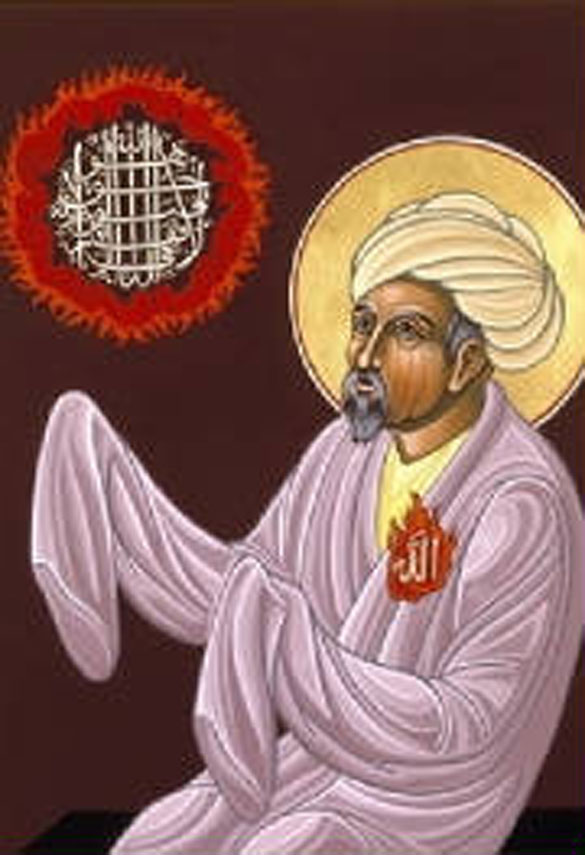
It is generally believed that the Arab Sufi and philosopher Ibn Arabi was the first to introduce the Upanishadic philosophy of Advaitavad in Islam which was known as Wahdat-ul-Wujud. It is true that Ibn Arabi authored the first book on the philosophy of Wahdat-ul-Wujud named Fusus-al-Hikam and established and institutionalised Sufism, especially the philosophy of Wahdat-ul-Wujud in Islamic religious discourse. The book was largely inspired by a Sanskrit Book Amrit Kund which was available in Arabic. The philosophy of Advaitavad is based on the Upanishadic belief that God is manifest in all His creations and dwells in all the living and non-living beings as its soul. Therefore, He is called sarvabhutantaratma (indwelling soul of the entire material world). The Upanishads also say that every part of the universe is a part of the Supreme Being and so His realisation can be achieved by contemplating on self and annihilation of self into Him.


Arab Sufi and philosopher Ibn Arabi

-----

Ibn Arabi borrowed the idea of Wahdat-ul-Wujud from Upanishads but presented arguments in its favour from the Quran. Thanks to this, Muslim ulema of his time could not refute it or reject his philosophy with plausible arguments. Though there were still some ulema who termed his philosophy un-Islamic, his philosophy gained acceptability among the larger section of ulema and sufis in the 7th century Hijri.

But before Ibn Arabi institutionalised the philosophy of Wahdat-ul-Wujud in Muslim religious thought in the 7th century and made it acceptable to the Arab world, three prominent sufis from Iran were killed by the then rulers at the provocation of the then ulema. The reason was that before Ibn Arabi, the philosophy of Wahdat-ul-Wujud was a new theory and was considered un-Islamic, indeed even declared Kufr.

Though Ibn Arabi gave the philosophy a concrete foundation in Islamic religious thought, it was the legendary Sufi Hussayn bin Mansur Hallaj (d. 309) who first introduced the idea to the Muslim Sufis. He had travelled to India and had come in contact with the Hindu sages who believed in Advaitavad. He learnt about the Upanishadic Shloka "Aham Brahmasmi" ( I am Brahma) which a siddha asserts after his dissolution in Brahma (God). Hussayn bin Mansur's slogan 'An al Haque' (I am God) was inspired by the Sanskrit Shloka Aham Brahmasmi. The then ulema declared his slogan based on heresy as Haq is one of the 99 names of God.


An-al-Haq’ (I am the truth) – this statement would be the death of Mansur Al-Hallaj.

-----

This  philosophy was new to the ulema of the Arab world in the the early centuries. Therefore he was declared a heretic (Kafir) and was brutally killed and his body was burnt. He was killed on the fatwa of the ulema of his time.

Another Sufi who was martyred for his belief in Wahdat-ul-Wujud or the absoluteness of the existence of God was Aynal Qazath Hamdani. His real name was Abul Mo'ali Abdullah bin Mohammad and he was a disciple of the great Sufi Ahmad Ghazali Tusi. He was well versed in Islamic sciences and was influenced by the Greek philosophy. Like many other Sufis, he was also influenced by the ideas of Mansur Hallaj and believed in wahdat-ul-Wujud. The ulema of his times issued a fatwa against him declaring him Kafir. The minister of the caliph ordered his hanging. After he died due to hanging, his body was burned.

It is also said that Aynal Qazaath's grandfather Abul Hasan was a Qazi and a very influential person. Therefore, the post of Qazi was transferred to his son and then to his grandson. This caused a heartburn among the ulema of his time. They conspired to dislodge him from his post. His belief and practices provided them a golden opportunity and they were able to convince the caliph that Aynal Qazaath's beliefs and ideas were against the principles of Islam. He was killed in 525 Hijri at the young age of 33.

The third Sufi who was killed for having belief in Wahdat-ul-Wujud was Shahabuddin Suhrawardy. Like his two predecessors he was also an Iranian. His real name was Abul Fat'h Yahya bin Habsh. The ulema of his time ran a vilification campaign against him and the entire Damascus started calling him Kafir. Finally, Sultan Salahuddin Ayyubi ordered his execution in 587 Hijri.

The killing of the three great Sufis of the 4th and 6th century Hijri demonstrates that the Islamic world could not reconcile to the new philosophy of Wahdat-ul-Wujud introduced by Hussayn bin Mansur in the end of the 3rd century Hijri as the Islamic religious thought was dormant and stagnant. The conservative ulema did not accept any new idea or way of realising God. The Sufis on the other hand were liberal minded people and travelled to distant lands in search of knowledge and during their travels and meeting with the scholars of other religions, they came across new ideas which broadened the horizon of their thought. They did not hesitate to assimilate new ideas that did not clash with their religious beliefs in their thought process.

But the contemporary ulema who stuck to the traditional beliefs and way of thinking could not accept the new ideas and declared them Kafir.

However, when Ibn Arabi, an Arab philosopher, presented the philosophy of Wahdat-ul-Wujud with the help of irrefutable arguments from the Quran, the Arab Islamic world reluctantly and gradually came to terms with the new reality. It also speaks of the Arab supremacism which prevents the Arabs from accepting any new idea from the Ajami (non-Arab) people. So when an Arab philosopher presented the same philosophy in their own language, they accepted it. After that no sufi from Iran was killed on charges of heresy.

-------

S. Arshad is a columnist with NewAgeIslam.com

URL:  https://www.newageislam.com/islamic-ideology/s-arshad-new-age-islam/three-iranian-sufis-of-the-4th-and-6th-century-hijri-killed-for-practising-wahdat-ul-wujud-before-an-arab-philosopher-ibn-arabi-institutionalised-the-concept-of-unity-of-existence/d/123946


New Age IslamIslam OnlineIslamic WebsiteAfrican Muslim NewsArab World NewsSouth Asia NewsIndian Muslim NewsWorld Muslim NewsWomen in IslamIslamic FeminismArab WomenWomen In ArabIslamophobia in AmericaMuslim Women in WestIslam Women and Feminism