Pages

Thursday, September 3, 2020

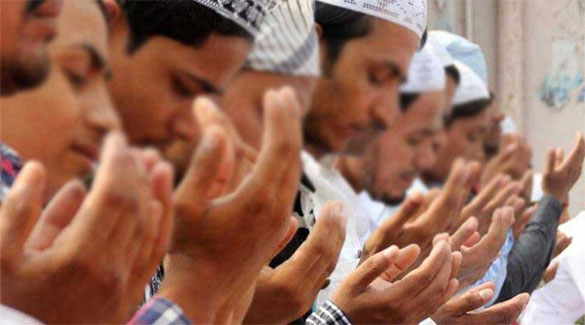
Human Mind Recognizes the Truth for What It Is and Accepts It as Such


By Maulana Wahiduddin Khan for New Age Islam

03 September 2020

The human mind is a mirror of reality. Everyone knows the function of a mirror: it reproduces anything that is placed in front of it. The image it produces corresponds exactly to the reflected object, leaving nothing out and adding nothing of its own. So, it is with the human mind. When reality is placed before this mirror, it is reproduced exactly. The image of truth which is reflected in the human mind is the same as that which stands before it. It recognizes the truth for what it is and accepts it as such.

This being the case, why is it that truth comes before many people, yet they fail to accept it? The answer to this question is that it is always   personal   attachments   and   commitments   that   prevent one from accepting the truth. There can be no sound reason for denying the truth; those that do so are motivated by their attachment to something else which prevents them from attaching themselves to the truth.

If a third object is placed in between a mirror and the thing that is meant to be reflected, then the image will be obscured. So, it is with truth and the human mind. If something else comes in between the two, then the image of truth that should be cast on to the mind becomes obscured. It is essential, therefore, that nothing should be allowed to come in between oneself and truth: there should be nothing to prevent one from accepting it. This is a basic precondition for realizing the truth, yet it is one that people are usually unable to fulfil. All too often they let something else come in between themselves and the reality that has been placed before the mirror of their minds.

Sometimes it is people to whom one is attached who come in the way of truth. Sometimes it is self-interest, or some other commitment. In every day and age people have let some unconnected thing come in between themselves and the truth, with the result that they remained bereft of what should have been lodged in their souls.

Abu Jahl was a major opponent of Prophet Muhammad. He failed to accept the truth due to concern for his own power and position. Taif was one of the places that the Prophet visited in his early days in Makkah. The people of Taif refused to accept the truth that he presented before them because he appeared to them to be an insignificant person. How, they thought, is truth being taught by one who does not rank high among the mighty of this world? The reason for them doing so was their superiority complex.

The Roman Emperor Heraclius showed clear signs of recognizing the truth. Yet he did not accept it, the reason being that he did not want to become isolated from his people: in each case the truth had been recognized. There was no sound reason for these people’s denial, only their blind commitments to something else which they could not break away from.

Truth only accepts one who has accepted it without any reservation, who has given himself entirely up to it. Those who are attached to something else which they cannot break away from can never find truth, for they cannot give it the attention it demands. The only ones who can succeed in the search for truth are those who forsake everything else and give themselves up to it entirely when it comes before them.

URL:  https://www.newageislam.com/spiritual-meditations/maulana-wahiduddin-khan-for-new-age-islam/human-mind-recognizes-the-truth-for-what-it-is-and-accepts-it-as-such/d/122782


New Age Islam, Islam Online, Islamic Website, African Muslim News, Arab World News, South Asia News, Indian Muslim News, World Muslim News, Women in Islam, Islamic Feminism, Arab Women, Women In Arab, Islamophobia in America, Muslim Women in West, Islam Women and Feminism

Wednesday, September 2, 2020

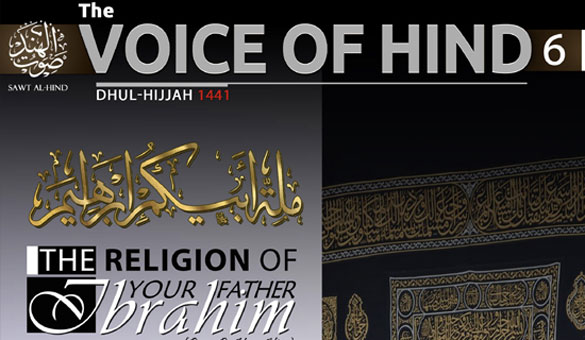
Does Islam justify the Spread of Disease as a Tool for Striking Enemies? Refutation of Claims Made by India-Specific ISIS Magazine Voice of Hind

 New Age Islam Edit Desk

02 September 2020

To deal with this question, first let us ponder over ‘the enemies’ referred to in the India-specific online propaganda magazine of ISIS ‘Voice of Hind’ published by a pro-ISIS group through its Al-Qitaal Media Centre of Junudul Khilafah al-Hind. In its article on coronavirus published in (the latest) the fifth issue of ‘Voice of Hind’, the magazine says,

“COVID 19 has plagued the disbelievers and it is time to make it worse… believers can wreak havoc on disbelievers by spreading the disease among them so that they are forced to bow down before Allah’s rule before they are wiped out from the earth,” (Voice of Hind 5th issue)


The magazine reiterates that “every brother and sister, even children, can contribute to Allah’s cause by becoming the carriers of this disease and striking the colonies of the disbelievers, wherever they find them” and that “no disease can harm even a hair of a believer”.

Also Read:  Mysterious Silence of Indian Ulema on ISIS Magazine Voice of Hind’s Serious Attempt to Radicalise Indian Muslim Society

The quotations above unravel the truth of savage hearts of ISIS that seek to wreak havoc on “the disbelievers” by spreading the COVID-19. It would be shocking to recall here that the disbelievers, according to ISIS’s creeds inspired by Kharijites, are not just non-Muslims but also the non-Wahhabi Muslims.


Issue 2 Voice of Hind, p. 7. [Screen Shot of an Image in the Corona Virus Article]

-----

Islam does not hold any justification for the spread of diseases even for enemies, not to speak of the non-Muslims and Muslims living under the law of unity and integrity. On the contrary we find that the Prophet of Islam (peace be upon him) and his companions proposed ideas of quarantine and social distancing to avoid the plague. This proposition was meant for the safety of all humanity from the plague.  However, ISIS’s supporters have invented the idea of spreading diseases. This idea conflates the idea of prevention of diseases enshrined in the Ahadith, some of which are as follows;

It is reported by Saad that the Prophet Muhammad (peace be upon him) said, “If you hear a plague in a land, then do not go into it. If it happens in land where you are, then do not go out of it” (Source: Sahih al-Bukhari 5395)

The Prophet’s guidance on preventing diseases and enforcing quarantine become clear from the hadith which reads, “a healthy person should not be brought near a sick person” (Source: Abu Dawud, Ahmad, Ibn Majah)

Also Read:  Refuting ISIS Magazine ‘Voice of Hind' on What It Calls The ‘Disease of Indian Nationalism:’ ISIS should Know India Is Muslims' Beloved Homeland

The traditional interpretation of these Ahadith encourage the idea that the people should not depart from the land afflicted by the plague 1) as they can’t avoid Allah’s appointed destiny and 2) if the afflicted people of one land go to another land, the people of other land might be afflicted with the plague.


Taliban—From Jihad to Apostasy. Voice of Hind (Islamic State in Hind Province).

----

A big difference could be traced here between how the Prophet of Islam treated the contagious plague and how the people of ISIS are treating the contagious Coronavirus. The Prophet of Islam suggested some effective ways for the prevention of diseases for the entire humanity whereas the ISIS has called upon spreading the diseases. This difference suggests that the path of ISIS is not the path of Islam and the Prophet (peace be upon him). Moreover, we can see a number of articles on newageislam.com which have refuted several points of the radical online magazines including ‘Azaan, Daabiq, Rumiya, ‘Voice of Hind’. All works of refutation are substantially supported by the Quran and Ahadith and ensure the gullible Muslims that ISIS is not walking on the path of Islam.

Also Read:  Where are Indian Ulema? Why No Refutation of the so-called Ghazwa-e-Hind, India-Specific online ISIS Propaganda in its Magazine ‘Voice of Hind?’

In the present world where the believers and disbelievers have largely supported the values of peaceful coexistence and democracy, the ISIS supporters leave no stone unturned to degrade these values down to the pit of violence. Since we believe in peace, harmony and human-sympathy, we ourselves must bear the responsibility to decry the tones of the ISIS’ supporters by raising our voice of pluralism, togetherness, human ethos, unity and integrity.

If we Indians continue to display our togetherness despite differences in our religions, it will be a timely retort for anyone who wants to damage the peace of our country. To a great extent, our people have already demonstrated their unity and integrity, facing the outbreak of Covid-19. In several parts of India, Muslims and non-Muslims helped the needy around them during the Coronavirus lockdown, regardless of religion, caste and culture. The demonstration of this togetherness, as long as it continues, will not let the radical Islamists succeed in their motive.

Also Read:

Sultan Shahin’s Response to Dr Ayman Al-Zawahiri’s Message Inciting Kashmiris for Jihad: Kashmiris Know Their Islam Better than You Think, Stop Trying to Misguide Them

After all, this is just a fantasy and should not make us inactive in our role in fighting against the radical narratives of ISIS. The arrest of alleged ISIS operative Abu Yusuf from the Delhi - Haryana border a few days ago is a grim reminder that the influence of ISIS in India should not be ignored simply with the fantasy that no one can break our integrity and unity. Just one enemy may be enough to persecute thousands of civilians. Therefore, it is not only the responsibility of securities to pounce upon the enemies of the country, but the Muslim clergy and Ulama should also play their responsibility to reform or refute the theology of violence more effectively than their anti-terror fatwas did in the past.  

Related Articles: 

Sultan Shahin’s Response to Dr Ayman Al-Zawahiri’s Message Inciting Kashmiris for Jihad: Kashmiris Know Their Islam Better than You Think, Stop Trying to Misguide Them

Mysterious Silence of Indian Ulema on ISIS Magazine Voice of Hind’s Serious Attempt to Radicalise Indian Muslim Society

Refuting ISIS Magazine ‘Voice of Hind' on What It Calls The ‘Disease of Indian Nationalism:’ ISIS should Know India Is Muslims' Beloved Homeland

ISIS Operative Abu Yusuf's Arrest Should Be an Eye-Opener for Indian Muslims: Role of Ulema in preventing radicalisation

Where are Indian Ulema? Why No Refutation of the so-called Ghazwa-e-Hind, India-Specific online ISIS Propaganda in its Magazine ‘Voice of Hind?’

URL: https://www.newageislam.com/radical-islamism-and-jihad/new-age-islam-edit-desk/does-islam-justify-the-spread-of-disease-as-a-tool-for-striking-enemies-refutation-of-claims-made-by-india-specific-isis-magazine-voice-of-hind/d/122775

New Age Islam, Islam Online, Islamic Website, African Muslim News, Arab World News, South Asia News, Indian Muslim News, World Muslim News, Women in Islam, Islamic Feminism, Arab Women, Women In Arab, Islamophobia in America, Muslim Women in West, Islam Women and Feminism

Mystics Expressed Their Experience of Islam Mostly Through Verses


By Mushtaq Ul Haq Ahmad Sikander, New Age Islam

27 August 2020

Kashmir has been a bastion of mystics. As usual mystics expressed their experience of Islam mostly through verses. The poetry of most of these local mystics is available in vernacular Kashmiri language. With each passing day the scope and readership of vernacular languages is dwindling. The state cultural academy and other literary groups are helping preserve this treasure trove, but their efforts have yielded very few positive results. New generation of readers are not interested in reading mystical poetry. It is pertinent to mention that government has introduced Kashmiri language as a subject to be taught compulsorily in the schools.


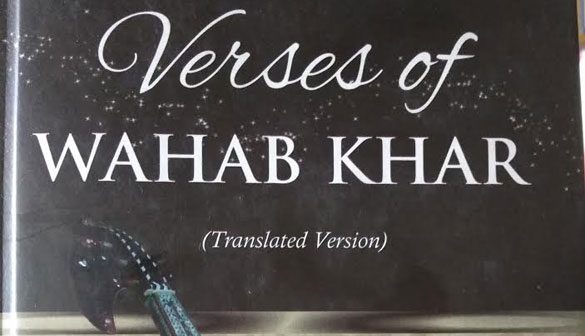
Verses of Wahab Khar (Translated Version)

Poet: Wahab Khar

Translated by Mushtaque B Barq

Publisher: Jay Kay Books, Srinagar, Kashmir

Pages: 127

Price: Rs 595

------

To bridge this divide, versatile writer, translator and poet Mushtaque B Barq, has come out with the translation of selected verses of Wahab Khar, a very famous local mystic. Wahab Khar’s mystical poems have been sung by many local singers and his shrine in Shaar area is thronged by thousands of people every year. In his Foreword Ayaz Rasool Nazki comments on the relationship of poetry and mystic experience as follows, “Poetry in general is the effort at externalizing an internal experience and language is the best available tool to express. Mystic experience is a complicated affair and mystics live in another world of consciousness which has its own day and night cycles, its own seasons and its own ways of life. Extrapolating that world to our world of sensibilities is a very difficult task.” (P-12)

While commenting on the beauty of Barq’s translation, Nazki observes, “The beauty of the Mushtaque Barq translations is its simple approach. He doesn’t take recourse to verbosity and tries his best to remain around the basic tenant of the verse. He has employed common day to day words to make the understanding of the meanings very easy. The translations are provided with an exhaustive glossary and that makes it much easier to comprehend the meanings of alien words.” (P-13)

The metaphor of flames and raging fire is usually used to describe the origin and experience of Love. It is essential to maintain here that when mystics talk about love and beloved, they are mentioning Allah, Prophet Muhammad (pbuh) or their Rahbar (Mentor or Guide). Rahbar is the spiritual guide who inducts the disciple in the sufi order. 

“O my valued friend!

You put me on flames

Do seek out Wahab Khar

All seven origins are my occupancy.” (P-27)

The influence of Islam on mysticism is quite clear that is depicted from the following verses of Wahab Khar

“The one who admire four caliphs

Shall be escort by Him

Pursue the way skilfully

O! Infancy abide here

What attempt Iblis did execute

A word led him astray

His pride put him to flames

O! Infancy abide here.” (P-33)

The immortal symbols of Love, Mansur Hallaj, Farhad are used frequently

“Do drink knowledge O lover

Came into bloom my gardens then Oh! Love

Fond of Thee is Mansoor

His ashes glowed brightly.” (P-35)

The inspiration from Quran and Shariah is quite visible too

“Draped in veils

(He) is not born from anything

He has no offspring

Ascertain Lo Lo

Paradise is Sharia

Garden is Tareeqat

All in attendance, Haqiqat

Ascertain Lo Lo” (P-53)

Also, mysticism remains shrouded in mystery, so Wahab Khar cautions Sufi mystics not to reveal everything that they have experienced

“O The friend of Wahab Khar!

Do come in the open, in the open

Being open is but forbidden

Whom to tell how adorable, adorable!” (P-79)

The story of Adam and Satan is recounted in the verses too, so is the fact about the Light of Muhammad (pbuh).

“The Light of Mohammad (saw) is the reflection of Lord

From that Light the worlds emerged

From that Light messengers become known

All and sundry rely on you.” (P-91)

The spiritual journey of Meraj holds a strong attraction for the mystics, as is evident from these verses

“Message to Nabi from above came

Came then to public with code of conduct

Behind the veil, unhook them

See the cheerful in person

Zaat came to view

Being in total isolation

Then walk around our Nabi (saw)” (P-101)

The tussle between reason and emotion, head and heart and which among them has the prominence is a theme that has been engaged by most mystics over the centuries. The debate still seems unresolved.

“Sharia, Tareeqat, Haqiqat and Ma’rifat

My mentor put in plain words all

All four are revealed by Wahab Khar

Oh! friend convey it to Beloved.” (P-105)

The translation of the selected verses is indeed very apt and insightful. Barq has done what our academies and university professors have failed to accomplish. It is true that translating the complete works of Wahab Khar will need more time, energy and resources; still this attempt is no small feat. However, many words are missing in the Glossary. Instead of Glossary the difficult terms could have been mentioned as footnotes. Khrew or Shar are names of places but Barq has not mentioned them (P-93) thus confusing the reader, Hazrat e Sultan (P-95) refers to Sheikh Hamza Makhdoom and Four companions (P-97) are the four Caliphs. If they would have been explained, certainly it would have added to the merit of the work. I hope in the next edition such issues will not be overlooked.

Both the translator and publisher need to be complimented and congratulated for making the mystic voices of Kashmir available to the general readers. The cheaper paperback edition of the book needs to be brought out so that the work gains a wider readership. 

----

M.H.A.Sikander is Writer-Activist based in Srinagar, Kashmir.

URL:  https://www.newageislam.com/books-and-documents/mushtaq-ul-haq-ahmad-sikander-new-age-islam/mystics-expressed-their-experience-of-islam-mostly-through-verses/d/122774

New Age Islam, Islam Online, Islamic Website, African Muslim News, Arab World News, South Asia News, Indian Muslim News, World Muslim News, Women in Islam, Islamic Feminism, Arab Women, Women In Arab, Islamophobia in America, Muslim Women in West, Islam Women and Feminism

Tuesday, September 1, 2020

Victimhood Narrative, Paternalistic Sympathy and The Muslim Predicament


By Arshad Alam, New Age Islam

01 September 2020

Couple of weeks ago, a serving IPS officer, Najmul Hoda wrote an article which appeared to blame Muslims for the mess in which they find themselves today. Tracing a historical genealogy of Muslim victimhood narrative, Hoda pondered why Muslims are complaining today when all objective indicators are telling us that they are much better off as compared to say a century ago. Hoda argues that the current Muslim ‘lament’ is because of the withering away of exclusive religious privileges which the community once exercised, which was partly the result of its theology of Islamic supremacism. Thus, Muslims must come out of their ‘victimhood narrative’, and must critically engage with their past in order to set right their present.


In promoting individual freedoms, India’s liberals must take on both Hindu and Muslim communalists (File)

----

The article was negatively received, by Muslims and others, who were quick to point out that the author was doing this to get close to the political establishment. Muslims journalists, some celebrated ones, similarly ran down the piece, without bordering to write a rejoinder or even engaging with it on other platforms. There was a feeling of unease amongst Muslims; they were at a loss to understand how one of their fellow Muslim could write such a piece. The only viable rejoinder came from N C Asthana, a retired IPS officer, who boldly stated that ‘it was unfair to blame Muslims for their own tribulations’. And yet, it must be said that despite his best intentions, Asthana did not understand the full import of the Hoda’s article.

Before dissecting Asthana’s piece, it is important to underline the function of Hoda’s article, even without going into its merits. This is probably the first time that an article has generated so much noise within the Muslim community. And the very fact it was written by a Muslim need to be appreciated. Mostly, Muslims have reacted to debates generated outside the community. The last time Muslims reacted in such a fashion was when Ramchandra Guha wrote this piece in a national daily. Guha’s article also generated a lot of heat amongst Muslims, but then it was not a debate which was engendered from within the community. It is good therefore that Muslims have started to figure in their own debates, rather than being written about by others which had become normal for the last many decades. It will be much better if, rather than complaining, Muslims write rejoinders to Hoda’s article so that some debate is generated in the community.


Representative Image. Photo: Meena Kadri/Twitter CC-BY-ND 2.0

-----

Asthana’s trope that colonialism was responsible for whatever wrong happened with Muslims is an oversimplification. First, colonialism was disastrous for the country as a whole, not just for Muslims. But it is also true that different communities engaged with their British masters, some more successfully than others. It is a fact that initially, Muslims boycotted English education and as a result suffered in terms of representation in public life. Another effect of this ill thought strategy was that it never produced a reformist middle class which would have spurred this community towards modernization. Experiments like Aligarh Muslim University came very late in the day and even then, it remained too much mired in the religious glory of the past.

Asthana reluctantly accepts that Muslim might have ‘erred’ in this project, but then refuses to draw the right conclusion by de-linking modern education with a transformative agenda. Instead, he points to the Sachar Committee Report to highlight that lack of education is not the only reason why Muslims are discriminated against. The problem is that nowhere in the document, Sachar Committee Report expressly acknowledges the prevalence of overt discrimination. It certainly tells us the lack of Muslim representation in comparison to other religious communities, but does not go into the reason as to why this is so. Lack of Muslim representation in the Indian Administrative Services, for example, may be due to acute sociological reasons, rather than solely due to discrimination.


Representative Image

-----

When it comes to caste divisions within Muslim society, Asthana again misses the point that Hoda is trying to make. By invoking the Ashraf-Ajlaf dichotomy, Hoda is saying that Muslim politics in India has always been done by the Ashrafs, without paying any regard to the developmental needs of Ajlafs who are the majority of Muslims in this country. Hoda links this Ashraf hegemony with their preoccupation with foreign origin and their innate belief, not just in their own superiority, but also in the superiority of Islam over all other religions. The religious supremacism of historians like Barani (which Hoda quotes) flows from such an understanding. Asthana will not understand but this politics of exclusivity has done immense harm to the ordinary Muslims of this country.

Asthana wilfully misreads what Hoda is trying to say over Muslim preoccupation with the identity question. No one is arguing that identities are not important or that Muslims should not be comfortable with their religious identity. The point that Hoda is trying to make, and rightly so, is that so far, Muslim politics has been singularly obsessed with its religious identity to the detriment of all other issues which a community should wrestle with. Muslims have been passionately defending Urdu, madrasas and their personal law because they consider them as an extension of their religious identity. It is not surprising therefore that we have not seen a single movement of Muslims in post-Independence India demanding better quality education. Those who argue that it is the state’s responsibility to provide education for all conveniently forget that other communities have successfully lobbied the state for educational provisions. Shouldn’t Muslims, aided by their numerous waqf properties, have done the same?

This is not to suggest that one is in complete agreement with whatever Hoda is arguing. For one, he certainly discounts the fear that has gripped Muslims with almost routine lynching, destruction of their property, arbitrary arrests of Muslim student leaders and negative stereotyping by government and the media. All these have an effect not just on the livelihood of ordinary Muslims, but inhibits their full participation as citizens. It is one thing to critique the past mistakes of Muslims, but quite another to be oblivious of the mental and physical violence which has engulfed them.

Asthana, as anyone else, has all the right to respond to Hoda. But a better critique can only emerge with an empathetic engagement with the Muslim community rather than this paternalistic rush to defend them. Muslims do not need such paternalism, they do not need to be ‘saved’, what they certainly need is an objective evaluation of their situation and the best placed to do so are members of the community themselves. It is rather rich that Asthana, evokes Martin Luther King and asks Hoda to understand the ‘inner fears and outer resentments’ of Muslims. Hoda, a Muslim, does not need either an Asthana or a King to understand the predicament of the Muslim situation today. His very being teaches him what others would fathom to understand in their lifetimes.

-----

Arshad Alam is a NewAgeIslam.com columnist. 

Related Article:

An Aatmanirbhar Musalman Could Be the Pride of An Aatmanirbhar Bharat

 The Left-Liberals, Muslim Leadership and the State, Sadly: A Reply to Harsh Mander and Ramchandra Guha

It is Wrong and Unfair to Blame Muslims Themselves for their Trials and Tribulations

URL:  https://www.newageislam.com/islamic-society/arshad-alam-new-age-islam/victimhood-narrative-paternalistic-sympathy-and-the-muslim-predicament/d/122767

New Age Islam, Islam Online, Islamic Website, African Muslim News, Arab World News, South Asia News, Indian Muslim News, World Muslim News, Women in Islam, Islamic Feminism, Arab Women, Women In Arab, Islamophobia in America, Muslim Women in West, Islam Women and Feminism